
 Christine Drews Sieger
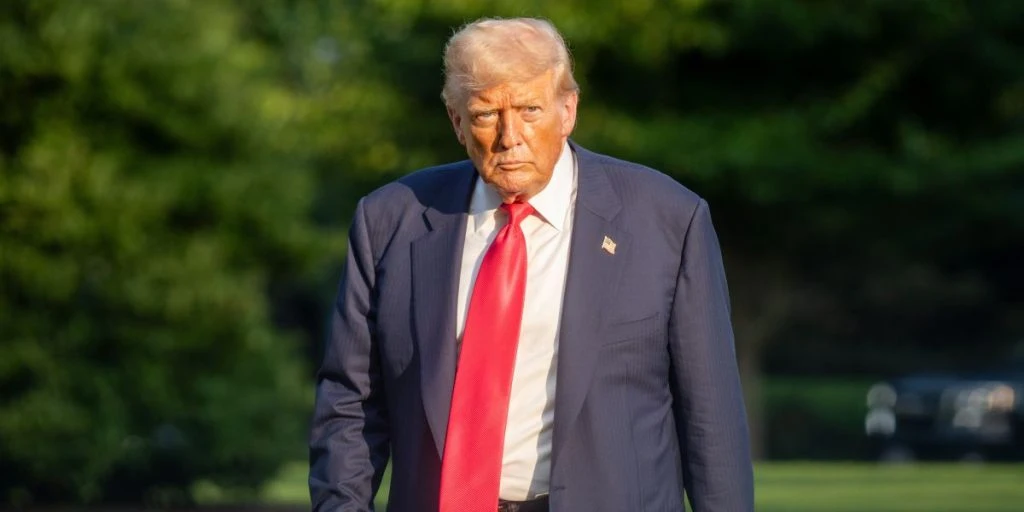
An Iowa judge has dismissed Donald Trump’s fraud lawsuit against the Des Moines Register over a 2024 pre-election poll.

Powerful leaders regularly challenge sharp media coverage, forcing judges to draw firm boundaries around constitutional rights. An Iowa courtroom just provided a defining moment for those legal limits.
District Judge Scott Beattie dismissed a civil fraud lawsuit that President Donald Trump brought against the Des Moines Register and pollster J. Ann Selzer.
The legal battle began over a late pre-election survey published in November 2024.
While the survey pointed to a victory for Kamala Harris, the actual vote gave Trump a decisive 16-point victory in the state.


Judge Beattie held that First Amendment protections shield political polling completely from civil fraud claims.
In his 64-page decision, he stressed that courts must not transform protected speech into civil liability.
“At its core, the plaintiffs’ petition seeks to stretch both Iowa statutory and common law beyond their current bounds, turning speech that enjoys the highest category of First Amendment protection into a liability,” Beattie wrote in his ruling, according to the Courthouse News Service.
The judge emphasized that forecasts regarding upcoming events cannot legally be classified as factual falsehoods, given the constantly changing nature of political contests.
Victory for press
Free press advocates welcomed the judicial decision immediately. USA Today chief legal counsel Polly Grunfeld Sack called the outcome a victory for press freedom.
According to Sack, ‘fake news’ accusations are merely tools used by political leaders to retaliate against critical reporting, the Courthouse News Service reports.
Robert Corn-Revere, who led the defense for Selzer, called the lawsuit laughable from the start.
“The First Amendment does not allow anyone in government, least of all the president, to punish people under the banner of ‘fake news,'” he said in a statement.
The ruling noted that political surveys represent brief glimpses of an evolving race rather than guaranteed outcomes, granting them full First Amendment protection.
Fight heading higher
Trump’s legal team stands firm despite the courtroom defeat. A spokesperson confirmed that the team will appeal the decision directly to the Iowa Supreme Court.
The campaign insists that publishing the survey right before Election Day was a fraudulent effort to mislead voters.
Two Republican co-plaintiffs joined the suit as well. They claimed the inaccurate survey harmed their reputations and forced them to redirect campaign funds during the final stretch, according to the Courthouse News Service.
The wider press question
The ruling also highlights the difficult line between an inaccurate prediction and legally punishable misinformation.
In his decision, Judge Beattie emphasized that political polls are snapshots of an evolving race and contain margins of error, while forecasts about future events cannot simply be treated as provably false statements.
That distinction matters beyond this particular lawsuit: if every inaccurate election prediction could trigger civil liability, news organizations and pollsters could face legal pressure whenever their projections failed to match the final result.
For now, the Iowa ruling reinforces the legal protection surrounding political speech and forecasting, while Trump’s planned appeal means the dispute is not necessarily over, according to the Courthouse News Service.



