
 Nicolai Haugsted
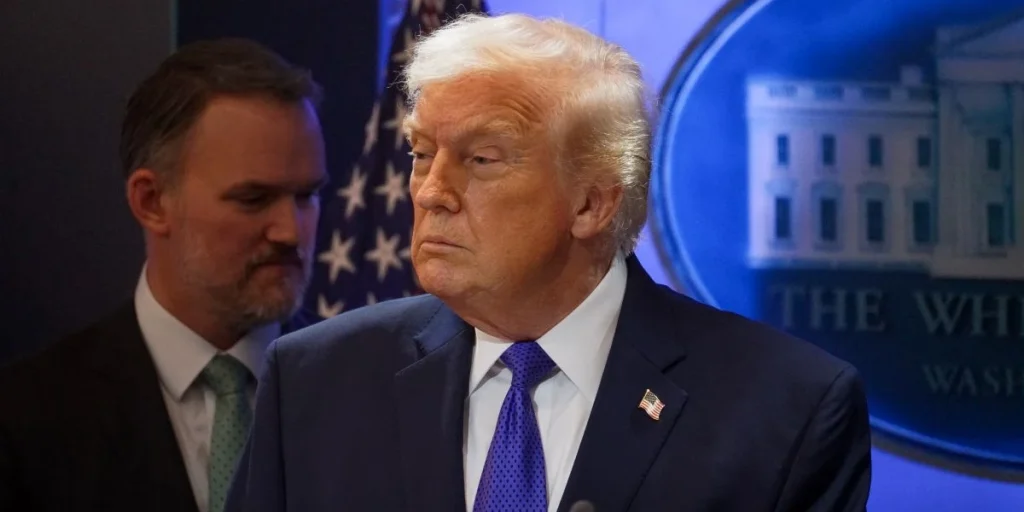
Republicans fear Trump is sacrificing Taiwan’s defenses to keep diplomatic relations with Xi on track.
Donald Trump is preparing to roll out the diplomatic red carpet for Chinese President Xi Jinping, but four Republicans in the Senate have something rather less ceremonial on their minds.
According to Reuters, more than $15 billion in US security assistance and arms sales connected to Taiwan remains stalled, according to a letter sent by the senators to Secretary of State Marco Rubio and Defense Secretary Pete Hegseth.
Timing has added an awkward ingredient to the dispute.
Xi is heading to Washington for a three-day visit, with Taiwan expected to rank among the most sensitive subjects on the agenda. People briefed on the preparations told Reuters that the Chinese leader is expected to push Trump to stop US arms sales to Taiwan altogether.


Senators Mitch McConnell, John Cornyn, Lisa Murkowski and Thom Tillis now want the administration to move in precisely the opposite direction.
Republicans have a warning for Trump
Public challenges from congressional Republicans toward the Trump administration have been relatively uncommon, making Wednesday’s intervention particularly notable.
The four senators pointed to several pots of money and military support that remain stuck.
Their letter cites $300 million in foreign military financing approved by Congress but not advanced by the State Department, another $1 billion that has yet to be obligated by the Pentagon and a roughly $14 billion arms package awaiting administration approval.
Trump’s own description of the latter package has clearly bothered them.
“We are concerned by President Trump’s description of Taiwan as ‘a very good negotiating chip’ in engagements with Xi Jinping and the Chinese Communist Party,” the senators wrote.
Trump used that language after meeting Xi in Beijing in May while discussing the $14 billion package, which he said he was keeping “in abeyance.”
Taiwan has long occupied one of the most combustible spots in the relationship between Washington and Beijing.
China considers the self-governed island part of its territory and has repeatedly demanded an end to American weapons sales. Washington does not maintain formal diplomatic relations with Taiwan, but the Taiwan Relations Act commits the United States to making defensive arms available to the island.
McConnell and his colleagues argue that delaying military support risks sending exactly the wrong message.
“It is difficult to imagine how the United States might credibly project influence deterrence in the Indo-Pacific if the price of keeping up diplomatic appearances is denying our partners key deterrent capabilities,” their letter said.
No immediate public response to the letter came from either the State Department or the Defense Department, according to Reuters.
Rubio says America’s weapons cupboard is not bottomless
Rubio offered a broader explanation for the administration’s caution when reporters asked him about Taiwan arms sales in New York.
His argument was less about Beijing and more about basic inventory.
“I know everyone’s focused on Taiwan, but I want you to focus globally for a moment. If we sell you something, we don’t have it anymore. Now, we may be able to make it in the future, but we don’t have it right now,” Rubio said.
Washington therefore has to balance Taiwan’s requirements against American military needs and commitments elsewhere, according to the secretary of state.
Such calculations come as Taiwan continues investing heavily in its defenses amid sustained Chinese military pressure. Taiwan has proposed a record defense budget of roughly $35 billion for 2027, while recent military exercises have included attack drones, missiles and other systems designed for a potential conflict.
Trump already approved a record package
Washington has hardly stopped selling weapons to Taiwan altogether.
Trump’s administration approved an approximately $11 billion package in December, described at the time as the largest US arms sale to Taiwan ever.
Another $14 billion package has proved considerably more complicated.
Trump openly connected its fate to his dealings with Beijing following his May summit with Xi.
“I may do it, I may not do it,” Trump said at the time.
“I’m holding that in abeyance, and it depends on China, it depends,” he added before calling the weapons package “a very good negotiating chip for us, frankly.”
Taiwanese President Lai Ching-te later defended US weapons purchases as an important deterrent against conflict and instability, while Taipei stressed that it did not believe Washington’s established Taiwan policy had changed.
Beijing has consistently described Taiwan as one of the most important and sensitive issues in US-China relations.
Xi delivered a particularly strong warning during his May talks with Trump, saying mishandling the issue could lead to “clashes and even conflicts.”
Fresh talks in Washington now arrive with the unresolved arms package hanging over the relationship.



