
 Noah Romsdal Hallundbæk Sørensen
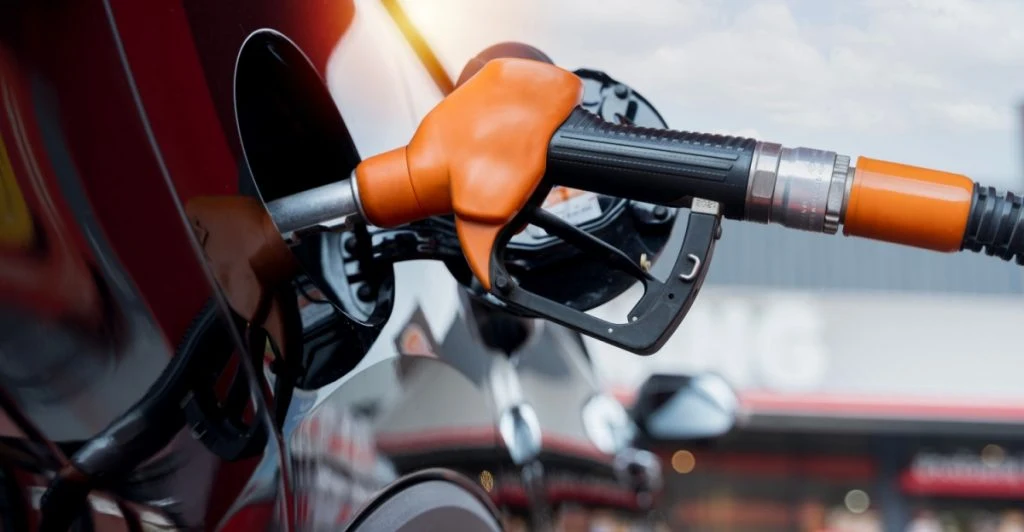
Hungary could be heading for another round of fuel price hikes as uncertainty surrounds key pipeline supplies.


Fuel costs in Hungary are set to climb again from Friday, adding new pressure on drivers and businesses.
The increase comes as concerns grow over the shutdown of a key oil pipeline and its potential impact on supply.
Recent government comments have intensified debate about how high prices could go.
Rising pump prices
Wholesale fuel prices will increase by 3 forints per litre for petrol and 6 forints for diesel, according to holtankoljak.hu.


From 26 February 2026, average prices at Hungarian filling stations are expected to reach 565 HUF per litre for 95-octane petrol and 586 HUF per litre for diesel.
The latest adjustments follow several days of scrutiny over domestic fuel costs after the closure of the Friendship oil pipeline and reactions from both the Hungarian government and Ukraine.
At a government briefing, Gergely Gulyás warned that if the Friendship pipeline remains out of service, it could trigger a sharp rise in petrol prices.
Cost calculations
A barrel of crude oil typically yields between 70 and 80 litres of petrol, depending on the refining process and the type of crude. Using an average of 75 litres, calculations suggest a significant difference between Russian and non-Russian oil.
Based on Gulyás’ remarks and an exchange rate of 318 forints to the dollar, a barrel of non-Russian oil would be 6,360 forints more expensive than Russian crude. That translates into roughly 85 forints more per litre of petrol.
Adding that difference to the current average price of 565 forints would push pump prices to around 650 forints per litre. While far below earlier projections of 1,000 forints, such a level would still rank among the highest in the region.
However, neighbouring countries that have long relied on non-Russian crude report similar retail prices, raising questions about predictions of an extreme surge.
Taxes and global risks
Around 95 percent of the price gap between Brent and Ural crude is absorbed by the Hungarian state through a special tax on the Brent-Ural spread, according to a presentation by MOL for investors. The revenue flows into the central budget rather than directly easing costs for specific market players.
External factors also play a major role in shaping domestic fuel prices. In addition to movements in the forint, global oil prices and refining margins are key drivers.
Since mid-December, oil prices have reversed course and begun rising sharply as markets factor in geopolitical risks, particularly the potential loss of Iranian oil exports.
Iran, one of OPEC’s largest producers, faces significant domestic unrest. Although former U.S. President Donald Trump has signalled openness to a deal with Tehran following talks with Israeli Prime Minister Benjamin Netanyahu, traders remain concerned about possible military action and supply disruptions. Refining margins have also increased in recent days, partly due to reduced supply following scheduled spring maintenance.



