
 Nicolai Haugsted

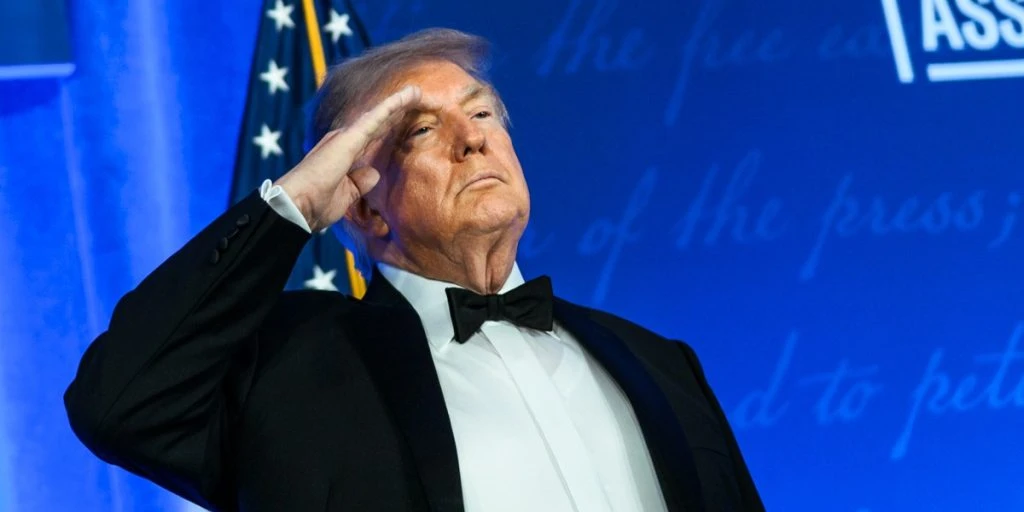
Trump’s election defeat sends his media shares and digital currencies into a dramatic downward spiral.


Donald Trump has spent decades building a public image around wealth, financial success and his ability to turn his name into a profitable business. From luxury real estate to television and cryptocurrency, the president has rarely missed an opportunity to attach his brand to another commercial venture.
His return to the White House in 2024 also proved remarkably lucrative, with several investments linked to his political popularity delivering substantial financial gains.
But following the Republicans’ crushing defeat in Tuesday’s midterm elections, investors appear to be reconsidering just how valuable the Trump name really is.
According to The Guardian, shares in Trump’s media company and several cryptocurrencies associated with his family have suffered sharp declines as Democrats celebrate their sweeping electoral victory.


The losses have wiped significant amounts from the market value of assets connected to the president.
And although Trump remains considerably wealthier than he was before returning to office, the latest figures suggest that his political troubles are beginning to affect his financial interests as well.
Trump’s media company sinks to a historic low
The most striking decline has come from Trump Media and Technology Group, the company behind his Truth Social platform.
Shares in the Nasdaq-listed business, which trades under the ticker DJT, fell to just over $5 on Wednesday morning.
According to the report, that represented the lowest share price in the company’s history.
The stock had been trading around $5.90 before election results began arriving on Tuesday evening, meaning it lost approximately 11 percent overnight.
For comparison, DJT shares previously reached an all-time high of approximately $101.
The difference illustrates just how dramatically investor enthusiasm has faded since the company’s most successful trading periods.
Trump has disclosed ownership of approximately 114 million shares, representing more than 40 percent of the company through a trust.
At a share price of $5, that holding would have a market value of roughly $570 million.
At $5.90 per share, the same number of shares would have been worth approximately $673 million.
That represents a decline of around $103 million in the market value of his reported holding over the period, although the precise amount depends on the share price used.
Such losses are changes in the estimated value of an investment rather than money necessarily withdrawn from Trump’s bank account.
Nevertheless, the decline demonstrates how closely the president’s financial interests can be connected to his political standing.
Cryptocurrency investments suffer another blow
Trump’s media company is not the only business linked to his family experiencing financial pressure.
World Liberty Financial, a cryptocurrency venture established by the Trump family and the family of businessman Steven Witkoff, has also seen the value of its digital tokens fall sharply.
The company’s WLFI token was trading below five cents following the election.
At its peak in 2025, the cryptocurrency had reached approximately 31 cents, more than six times its current value.
The decline began before election day, with the token losing ground during late October as political uncertainty increased.
A reported security breach involving Binance also unsettled cryptocurrency markets during the period.
However, WLFI experienced another pronounced drop on Tuesday evening, around the time polling stations began closing in several American states.
Trump reportedly still owns approximately 15 billion WLFI tokens.
At five cents each, those holdings would have a notional value of $750 million, although the actual amount that could be realized through sales would depend on market liquidity and any restrictions affecting the tokens.
Despite the recent decline, cryptocurrency has already proved highly profitable for the president.
According to his personal financial disclosures, Trump generated more than $500 million in profits from cryptocurrency sales during 2025.
The World Liberty Financial venture also has an unusual connection to the administration.
Steven Witkoff, whose family helped establish the business, is a longtime friend of Trump and a real estate developer.
The president subsequently appointed Witkoff to diplomatic assignments involving Gaza, Iran and Ukraine.
Trump’s political popularity may be driving the losses
The close relationship between Trump’s political reputation and his investments has attracted attention from financial experts.
Jim Angel, an associate professor at Georgetown University’s McDonough School of Business, believes investors are effectively placing bets on Trump’s political popularity when purchasing assets connected to his name.
“People think they’re investing in Trump. They really aren’t. They’re really betting on his popularity. That’s what they’re betting on,” Angel told The Guardian.
His assessment suggests that the financial performance of certain Trump-linked assets may depend as much on public sentiment as on conventional business fundamentals.
The professor also pointed to the president’s declining political support.
“Right now his popularity is at record lows,” Angel said, “and so we see the price of DJT and World Liberty at record lows.”
The midterm results have intensified questions about Trump’s influence after Democrats secured control of both chambers of Congress.
Republican candidates suffered significant defeats, including in several states traditionally considered favorable territory for the party.
While stock and cryptocurrency prices can move for numerous reasons, the timing of the latest declines has strengthened scrutiny of the relationship between Trump’s political fortunes and the value of his businesses.
Trump’s own cryptocurrency has also collapsed
Another Trump-branded digital asset has suffered substantial losses.
The cryptocurrency known as $TRUMP, which launched shortly before his second inauguration in January 2025, has fallen dramatically from its early trading highs.
The token briefly reached approximately $45 shortly after its introduction.
Following the midterm elections, it was trading at around $1.40.
That represents a decline of nearly 97 percent from its reported peak.
The cryptocurrency also lost approximately 10 percent of its value overnight as election results emerged.
Despite its poor performance for investors who purchased near the peak, the token has generated substantial revenue associated with the president.
According to the report, sales of $TRUMP generated approximately $636 million in 2025.
The figures highlight an important distinction between the financial returns received by those behind a cryptocurrency project and the investment results experienced by people purchasing its tokens.
Investors who bought near the highest prices have faced steep losses, while the venture’s earlier sales generated considerable proceeds.
World Liberty Financial also issues a separate dollar-pegged stablecoin, identified in the report as USDI1.
Unlike speculative cryptocurrencies, stablecoins are designed to maintain a relatively consistent value against an underlying currency.
The Trump administration recently granted the company a banking license, according to the report, adding another dimension to the family’s growing involvement in digital finance.
Trump is still billions richer than before his return to power
Despite the latest losses, Trump’s overall financial position remains substantially stronger than it was when he won the 2024 presidential election.
Forbes estimated in September that the president had increased his wealth by approximately $2.7 billion since his electoral victory.
That growth reflects the enormous financial gains associated with his business interests during the first part of his second presidency.
The recent declines in Trump Media shares and cryptocurrency tokens do not erase those earlier gains.
However, they demonstrate the volatility of investments closely associated with a political figure.
Unlike traditional businesses whose valuations are primarily assessed through revenue, profits and expected growth, some Trump-branded assets have attracted investors partly because of their association with the president.
Such enthusiasm can prove financially rewarding when political support is strong.
But the opposite can also occur when investor confidence weakens.



