
 Kathrine Frich
The Moon has long captured human imagination, inspiring generations to dream of reaching its surface.


Now, as those ambitions move closer to reality again, new challenges are emerging.
Launch pushed back
NASA has confirmed that the Artemis 3 mission will not launch before late 2027, marking a delay of several months from earlier expectations.
According to Wirtualna Polska, the mission will no longer attempt a lunar landing as originally planned.
Instead, the focus will move to testing spacecraft systems closer to Earth.


New mission plan
The updated mission will centre on trials of lunar landers developed by SpaceX and Blue Origin.
These include SpaceX’s Starship and Blue Origin’s Blue Moon, both of which are still in preparation for major test phases.
NASA officials said the mission will involve docking manoeuvres with the Orion crew capsule in Earth orbit.
Testing over landing
By shifting operations to near-Earth space, NASA aims to reduce risk while validating critical systems.
Engineers will be able to test life support and docking procedures in a safer environment, where crews can return to Earth quickly if needed.
A lunar landing has now been pushed to a later mission, currently planned for 2028.
Technology focus
NASA says the new landers are far more advanced than those used during the Apollo era.
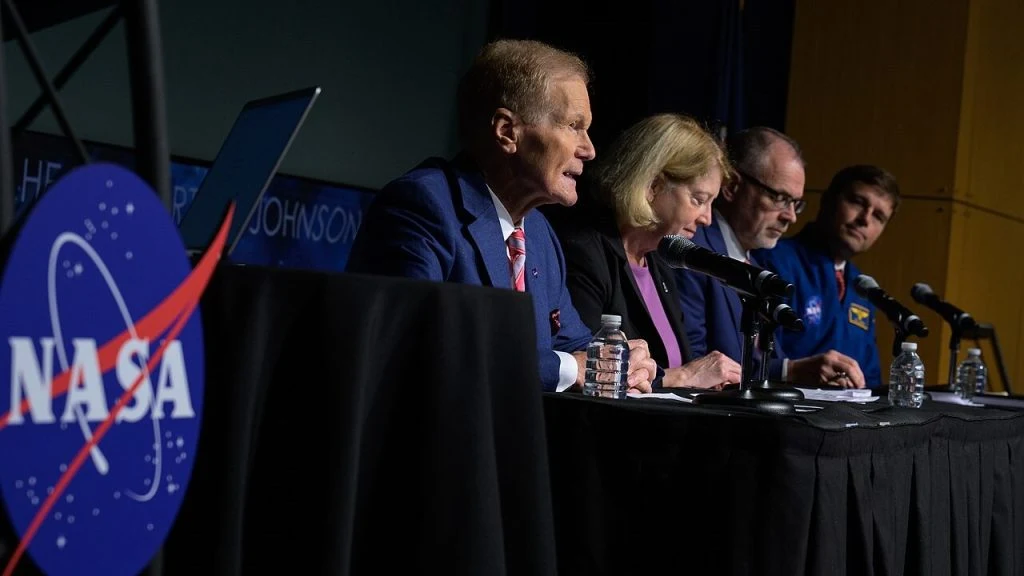
“It is thanks to this technology that we will be able not only to return to the Moon but also to build a base there,” the NASA administrator said.
The agency is also continuing work on new spacesuits and upgrading the Orion capsule following earlier test issues.
Preparations continue
Despite the delay, progress is ongoing. The core stage of the Space Launch System rocket has already been assembled at Kennedy Space Center.
Further decisions are still being made on how the mission will be carried out, including whether both landers could be tested in a single flight.
NASA hopes these steps will pave the way for future missions that will finally return humans to the lunar surface.
Sources: Wirtualna Polska, NASA



