
 Kathrine Frich

Timing the blast comes down to one key factor.


Stepping outside on a clear evening usually offers the exact same view we have known our entire lives.
For thousands of years, the familiar patterns overhead have barely shifted at all.
Soon, however, a sudden guest is set to crash that quiet picture.
A cosmic ticking clock
Space watchers are waiting for a “cataclysmic” blast that will put a “new light” into the night sky, according to UNILAD.


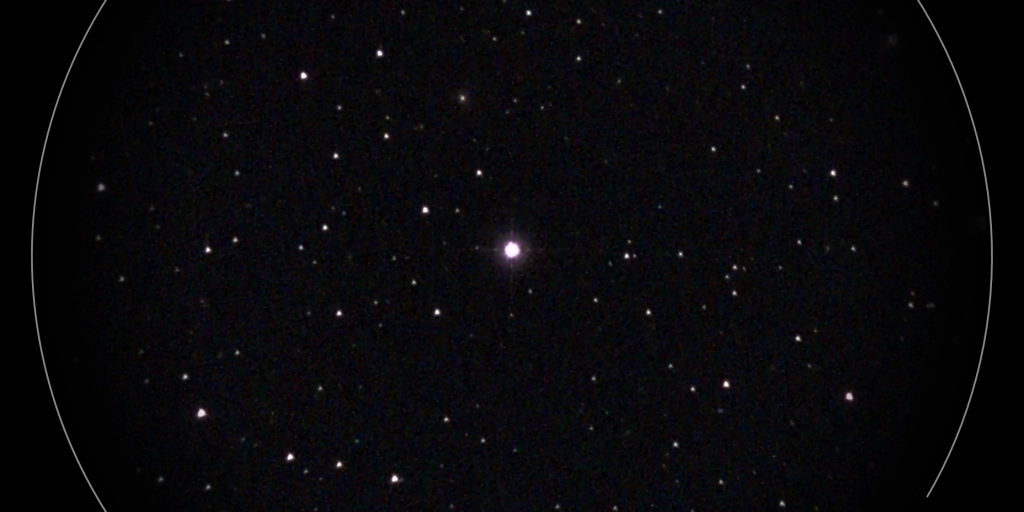
While NASA’s high-powered James Webb Space Telescope peers deeper into the cosmos than ever, even a simple backyard telescope should easily spot the upcoming flash from the “Blaze Star” T. Coronae Borealis, also called T CrB.
Unlike single stars, T CrB is actually a pair made up of a dead, dense white dwarf star and a massive red giant. Over roughly 80 years, the white dwarf pulls gas off its larger neighbor until the buildup hits a tipping point and triggers a nova explosion, a sudden stellar blast that makes the system shine about 1,000 times brighter than normal.
Much like the recent solar eclipse, this rare event has been on stargazers’ calendars for years. Even so, researchers cannot pin down the exact day it will blow, though they stay sure it will “happen soon”, UNILAD noted.
Bradley Schaefer from the Louisiana State University Department of Physics and Astronomy explained the delay to Space.com.
“Everyone is very confident on this. But we cannot make high-accuracy measures of the rate of gas falling onto the surface of the white dwarf, and we do not have a high accuracy measure of the trigger mass for the big hydrogen bomb,” Schaefer said.
Eyes on the sky
Timing the blast comes down to one key factor.
“The exact date of the upcoming T CrB eruption depends primarily on how fast the gas coming from its companion star is accumulating on the surface of the white dwarf,” Schaefer told Space.com.
He noted that “When some specific trigger mass has accumulated, then T CrB will erupt. For the last 80 years, we have been watching the gas pile up on the white dwarf surface, and we know that it must be near the trigger threshold.”
Because the last blast happened 80 years ago in 1946, matching the star pair’s usual cycle, experts expect action any time now.
In fact, Astroparticle Physics Laboratory chief Elizabeth Hays indicated it would surprise her if the explosion held off until 2030, while missing this show means waiting until the 2100s for the next cycle.
Thankfully, nobody will catch the scientific community napping when the flash finally starts.
“The world’s amateur astronomers have been doing an awesome job of keeping T CrB under hair-trigger monitoring roughly every minute or two, so when T CrB has brightened by around one magnitude, then alerts will spread around the world within minutes,” Schaefer added.



