
 Nicolai Haugsted
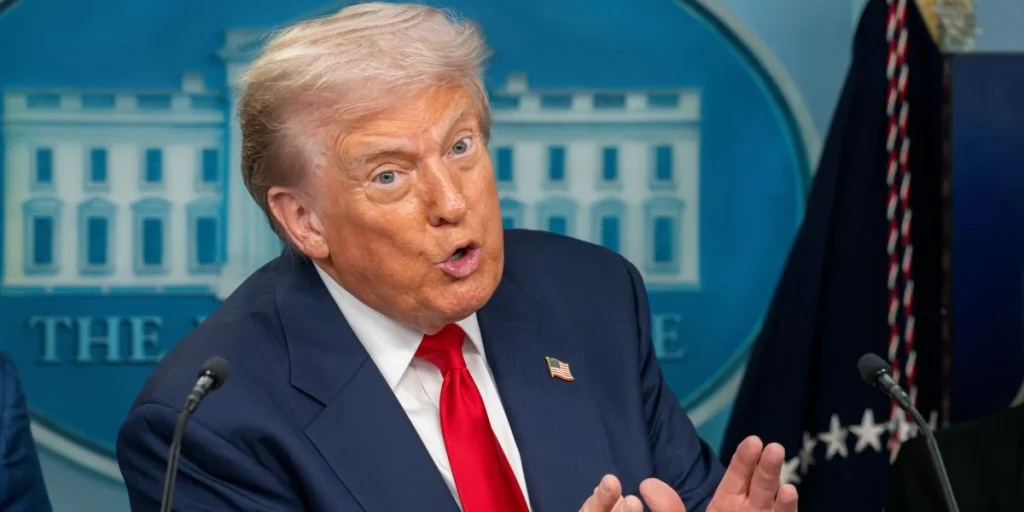
Trump sees his own party quietly turning away as Republican candidates fight to save their seats in Congress.


President Donald Trump has spent the better part of a decade turning the Republican Party into a political movement built around his leadership.
Loyalty to the president has frequently been a defining feature of Republican campaigns, with candidates competing for his endorsement and risking political consequences if they openly challenged him.
But with the November 3 midterm elections approaching, that relationship is becoming increasingly complicated for Republicans fighting to keep their seats in Congress.
A new Reuters investigation suggests that many candidates are reconsidering just how closely they want to be associated with Trump.


And some are going considerably further than simply avoiding the occasional presidential rally.
Two-thirds of candidates are creating distance
Reuters examined voting records, campaign websites and public statements across 62 competitive House and Senate races.
Its findings reveal that Republican candidates in 41 of those contests have either publicly disagreed with Trump on policy or deliberately reduced their visible connections to him.
That represents roughly two-thirds of the competitive races examined.
The investigation does not suggest that these Republicans have abandoned the president or rejected his broader political agenda.
Instead, many appear to be pursuing a more calculated strategy: maintaining enough loyalty to satisfy Republican voters while demonstrating independence to those who remain skeptical of Trump.
The numbers help explain why.
A recent Reuters/Ipsos poll placed Trump’s approval rating at just 32%, matching his lowest level in the survey.
Among registered voters, Democrats led Republicans by 44% to 37% ahead of the midterms.
The gap was even more pronounced among independent voters, who favored Democrats by 37% to 21%.
For Republican candidates facing close elections, those figures present a serious political problem.
Trump’s Iran war becomes a dividing line
Policy disagreements have emerged as the most common way for vulnerable Republicans to distinguish themselves from the president.
Reuters identified differences over specific policies in 23 of the 62 competitive races.
The conflict with Iran proved particularly divisive.
In 12 contests, Republican candidates either supported efforts to restrict Trump’s war powers or publicly called for an end to the fighting.
The war has contributed to higher gasoline prices, adding pressure to household budgets and creating another challenge for Republicans campaigning on economic issues.
Other disagreements have centered on domestic policy.
Three Republican candidates in competitive races have criticized or attempted to slow data center developments, despite Trump’s support for accelerating their construction.
Such positions allow candidates to respond to local concerns without directly challenging the president’s overall leadership.
Republican strategist Ron Bonjean believes the shift reflects what candidates are hearing from voters.
“(Candidates) are reflecting voter attitudes in these races,” he told Reuters.
“If (voters) are not with Trump, then they need to show a break.”
Trump’s name starts disappearing
Some Republicans have chosen a quieter approach.
Rather than publicly criticizing Trump, they have simply made him less visible in their campaign materials.
Reuters identified 12 candidates who removed the president’s name, photograph or endorsement from their campaign websites.
Most made those changes after securing their Republican nominations.
Mike Beltran, a former Florida state representative challenging Democratic Congresswoman Kathy Castor, provides a particularly striking example.
According to archived versions of his campaign website, Beltran’s homepage prominently featured Trump in August, alongside a declaration of support for the president.
The updated version presents a different picture.
Trump’s image has disappeared, replaced by photographs of Beltran and his family.
The homepage no longer mentions the president.
Beltran’s campaign did not immediately respond to Reuters’ request for comment.
Republicans attempt a delicate balancing act
Not every Republican is trying to distance themselves through campaign materials.
Some are attempting to demonstrate independence on selected issues while continuing to publicly support Trump.
Nebraska Senator Pete Ricketts, who faces a difficult challenge from independent candidate Dan Osborn, has criticized the president’s proposal to expand beef imports.
But that disagreement did not prevent Ricketts from appearing alongside Trump at a campaign rally in Nebraska this week.
“President Trump, I have been fighting for you in Washington,” Ricketts told the crowd.
The senator represents one of 11 candidates Reuters identified as having disagreed with Trump on a single policy issue while otherwise maintaining support for his agenda.
Iowa Republican Mariannette Miller-Meeks has gone further.
Facing one of the country’s most competitive House races, she has challenged Trump’s beef-import policy and voted to limit his war powers concerning Iran.
Her position on the conflict represented a departure from her earlier opposition to similar restrictions.
Yet less than two weeks after that vote, Miller-Meeks joined Trump at the White House to announce a major steel plant investment in Iowa.
Republican consultant Jeanette Hoffman described the challenge facing such candidates.
“It is a balancing act,” she said.
According to Hoffman, Republicans are attempting to benefit from the administration’s achievements while creating distance because of “how toxic the Trump brand is at the moment.”
Even loyal Republicans are emphasizing independence
New York Congressman Mike Lawler illustrates another approach.
Lawler, who faces a closely contested reelection campaign, has publicly highlighted disagreements with Trump on several issues.
Among them are temporary legal protections for Haitian immigrants and a proposal supported by Trump to restore Turkey’s access to F-35 fighter jets.
His campaign manager, Ciro Riccardi, maintains that Lawler makes decisions based on the interests of his constituents rather than automatically following the president.
Lawler himself acknowledged the disagreements while addressing Trump supporters at the Republican midterm convention in September.
“The truth is that the president and I don’t always agree. And that’s OK,” he said.
The statement captures the message many vulnerable Republicans appear eager to communicate.
They want voters to see them as independent lawmakers without suggesting they have turned against their own party.
White House insists Trump remains the party’s strongest asset
Despite the findings, the White House rejects the suggestion that Trump’s influence has become a liability for Republicans.
Responding to Reuters, White House spokesman Davis Ingle emphasized the administration’s accomplishments and defended the president’s role in the party.
He described Trump as “the unequivocal leader, best messenger and unmatched motivator” for Republicans.
The administration’s position reflects Trump’s continued influence among committed Republican supporters.
His endorsements remain politically valuable, and the president has repeatedly demonstrated a willingness to punish lawmakers who challenge him through public criticism, political pressure or support for primary opponents.
That history helps explain why outright criticism remains relatively uncommon among the candidates Reuters examined.



