
 Jens Asbjørn Bøgen
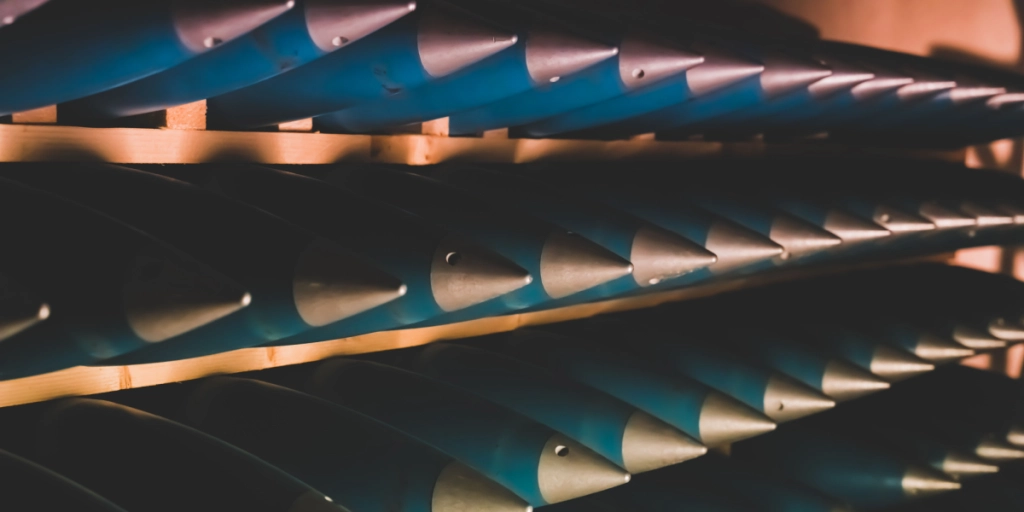
The output has increased 17-fold in four years, the report says.


Russian and Ukrainian delegations are continuing to meet in a new diplomatic push to try to end the soon-to-be four-year-long war in Ukraine.
But if 2025 is to be considered a marker of a possible peace, we will most likely be disappointed with the results of the ongoing talks.
Russia’s arms industry sharply increased ammunition output last year, reaching levels unseen since the start of the war in Ukraine.
A new Estonian intelligence assessment warns that Moscow’s expanding production capacity could allow it to sustain the conflict while rebuilding reserves for possible future confrontations.


55% increase
According to the report, titled International Security and Estonia 2026, Russia produced around seven million shells of various types in 2025.
Total spending on production reached roughly one trillion roubles, or about €10.6 billion (approximately 12.57 billion USD).
The figures mark a significant rise compared with previous years. Russian factories manufactured 3.5 million rounds in 2023 and 4.5 million in 2024, meaning output climbed by about 55% in 2025.
The Estonian analysis breaks down last year’s production into:
- 3.4 million howitzer shells
- 800,000 rounds for tanks and infantry fighting vehicles
- 500,000 multiple-launch rocket system munitions
- 2.3 million mortar rounds.
Looking back four years, the report states that the Russian military-industrial complex has increased ammunition production for artillery more than 17 times.
Iranian and North Korean imports
Between 2023 and 2025, Russia also supplemented domestic production with ammunition imports from Iran and North Korea. The report estimates these deliveries may have totalled between five and seven million units.
“Given this production growth and substantial imports, Russia is highly likely to be able to replenish part of its strategic artillery ammunition reserves even while engaged in the ongoing war against Ukraine. For the Kremlin, maintaining such reserves is almost certainly a critical element of planning for potential future conflicts,” the authors of the Estonian intelligence report emphasize.
The document highlights the comparatively low procurement cost of older 152 mm shells, priced at under 100,000 roubles, or around €1,050, which is several times cheaper than comparable 155 mm ammunition produced in Western countries.
Possible slowdown on the horizon
Explosives production is overseen by Spetskhimiya, a subsidiary of the state-owned Rostec corporation. A crucial ingredient is concentrated nitric acid, or a nitric and sulfuric acid mixture known in Russia as melange.
Melange is produced solely at the Berezniki Chemical Plant, part of the Uralchem group, while concentrated nitric acid is manufactured there and at EuroChem’s facility in Novomoskovsk.
The Estonian report notes that disruptions at these sites could slow the output of shells and mortar rounds.
Sources: Estonian Foreign Intelligence Service report International Security and Estonia 2026, Defense Express



