
 Nicolai Haugsted
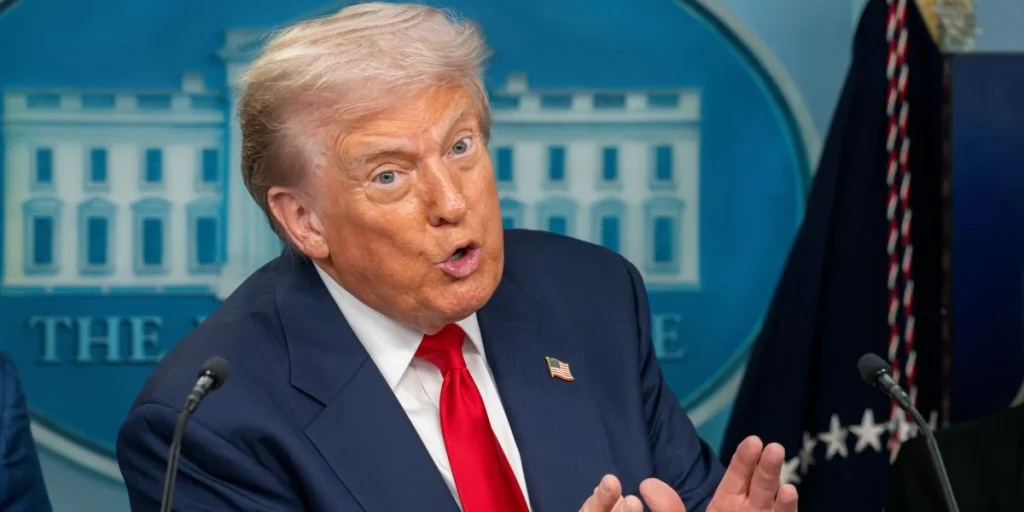
Trump tells The New York Times it is going to hell over a picture he claims was doctored.
Donald Trump has never been shy about attacking unfavorable coverage, but Monday night brought a considerably more specific complaint.
The president was unhappy with how one of his most famous properties looked in the newspaper.
Shortly before 11 p.m., Trump accused The New York Times of manipulating a photograph of Trump National Doral Miami to make the luxury golf resort appear run-down. His frustration quickly escalated beyond an argument over photography, with the president branding the newspaper dishonest and predicting an unpleasant destination for those responsible.
His evidence came in the form of another picture.


There was just one rather important complication: the two images were clearly not the same photograph.
Trump says the picture was doctored
Trump launched his attack on Truth Social after The New York Times published a story examining his business interests while serving as president.
“Think of it, The New York Times DOCTORED the picture of the beautiful exterior facade of Doral, in Miami, trying to make it look as bad as possible,” Trump wrote at 10:52 p.m.
His post did not stop there.
“These people are STONE COLD LOSERS — Totally dishonest. That’s why they’re going TO HELL, and their subscription numbers are way down!”
Trump had already complained about the image in an earlier post, accusing the newspaper of having “blackened and denigrated” the building’s facade so that it appeared “shoddy, filthy, and just plain BAD.”
No evidence presented in the source material establishes that The New York Times digitally altered the photograph.
Trump produces his own picture
Rather than leaving the dispute at an accusation, Trump presented another image that he said better represented the appearance of his resort.
Comparing the pictures, however, does not provide a straightforward before-and-after test.
The Times photograph, taken by staff photographer Scott McIntyre, includes a man wearing a white cap walking up the entrance steps. Mature palm trees appear prominently in the frame, while strong shadows indicate harsh daylight.
Trump’s preferred image is composed very differently.
Palm trees visible in the newspaper photograph are absent from the frame, while the second image features different landscaping, a fountain surrounded by sculpted hedges and much softer, more uniform lighting.
Such differences mean the images cannot by themselves demonstrate that one was digitally altered from the other.
Newsweek reported that it had contacted both The New York Times and McIntyre for comment.
A photo fight with a much bigger story behind it
Trump’s anger was directed at the presentation of his property, but the newspaper article itself dealt with a more consequential issue.
The president plans to host the G20 summit at Trump National Doral Miami, placing his privately owned resort at the heart of a major international gathering.
Trump has tried something similar before.
His administration announced in 2019 that the following year’s G7 summit would be held at Doral. Trump abandoned that plan following criticism, including objections from Republicans, over the prospect of his presidency directing government and international business toward his own property.
The latest proposal has not generated the same level of organized resistance described in the source material.
Billions, taxes and a luxury jet
The New York Times report also examined Trump’s financial position and the intersection between his presidency and business interests.
According to figures cited in the source material, the newspaper reported that Trump made at least $2.2 billion last year.
Its reporting also addressed a luxury Boeing 747 provided by Qatar for US government use, along with the substantial cost of modifying the aircraft for presidential service. Democrats have attacked the arrangement and portrayed the jet as evidence of improper influence.
Trump and his allies have rejected criticism surrounding the aircraft.
The Times additionally reported that the president had secured relief connected to back taxes that could exceed $100 million.
Paul Rosenzweig, who served in the George W. Bush administration, offered a particularly short assessment of the broader situation.
“He has defined deviancy down,” Rosenzweig said.
Trump’s argument remains focused on the facade
Trump’s late-night response largely bypassed those financial questions and concentrated instead on the photograph accompanying the coverage.
His accusation was unequivocal: The New York Times had deliberately made Doral look worse than it really does.
The material supplied for this article does not establish that the newspaper doctored McIntyre’s photograph, and Trump’s comparison image was taken from a noticeably different perspective and under different conditions.
That leaves the president’s claim unproven — but certainly not quietly expressed.
By the end of Monday night, a newspaper photograph of a golf resort had prompted the president of the United States to accuse one of the country’s largest newspapers of deception, call its staff “STONE COLD LOSERS” and inform them that they were “going TO HELL.”



