
 Asger Risom
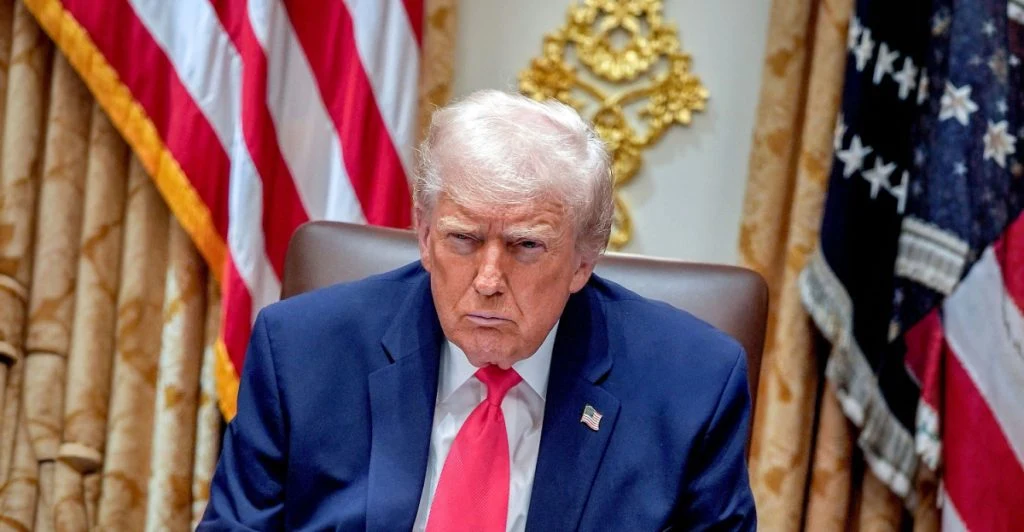
A Supreme Court ruling against tariffs imposed under the International Emergency Economic Powers Act could eliminate $1.7 trillion in projected federal revenue, potentially pushing U.S. national debt to $58 trillion by 2036.


A recent Supreme Court ruling against Donald Trump’s tariffs could have major long-term consequences for U.S. finances, potentially adding trillions to the national debt over the next decade.
According to a new analysis by the Committee for a Responsible Federal Budget (CRFB), the decision eliminates an estimated $1.7 trillion in projected tariff revenue through 2036 — worsening the country’s fiscal outlook.
Debt projected to climb sharply
The nonpartisan fiscal watchdog warned that without the tariff revenue, U.S. national debt could reach about $58 trillion by fiscal year 2036.
That would equal roughly 125% of the country’s GDP.


Earlier projections that assumed the tariffs would remain in place estimated the national debt would reach around $56 trillion, or about 120% of GDP.
Under the revised scenario, annual deficits could rise to about $3.3 trillion — roughly 7.1% of GDP — compared with around $3.1 trillion in the previous forecast.
Supreme Court strikes down tariffs
The shift stems from the Supreme Court’s decision to block tariffs imposed under the International Emergency Economic Powers Act (IEEPA).
Those tariffs had become a significant source of federal revenue after the administration imposed duties on a wide range of imports, including Chinese, European, and Brazilian goods.
Fiscal analysts had already incorporated that revenue into long-term budget projections, meaning the court ruling effectively removed a major expected income stream from federal finances.
Temporary tariff workaround
Following the ruling, the Trump administration moved quickly to introduce a temporary replacement.
Officials invoked Section 122 of the Trade Act of 1974, which allows the president to impose broad import surcharges for up to 150 days.
The administration set the emergency tariff rate at 10%, with Trump publicly signaling plans to raise it to 15%.
However, the CRFB estimates the temporary tariff would generate far less revenue.
At a 10% rate, the surcharge would bring in about $35 billion over the 150-day window — replacing only about 52% of the roughly $65 billion that the earlier tariffs would have generated during the same period.
A 15% rate could raise about $50 billion, covering roughly 77% of the lost short-term revenue.
Long-term gap remains
Even if Congress made the tariff permanent, the revenue shortfall would remain substantial.
According to the CRFB analysis, a permanent 10% tariff could generate about $925 billion through 2036, recovering just over half of the $1.7 trillion loss.
Increasing the rate to 15% could raise about $1.3 trillion.
Closing the remaining gap would require an additional $400 billion to $800 billion in new revenue or spending cuts.
Political clash over projections
The think tank’s findings have already sparked a public dispute with the Trump administration.
CRFB president Maya MacGuineas previously warned that losing the tariffs could significantly increase federal deficits.
Treasury Secretary Scott Bessent sharply criticized the claim during a Fox News appearance, saying the estimates were wrong and arguing that new tariffs would offset the lost revenue.
MacGuineas responded that the organization actually supports the use of tariff income to help stabilize federal finances, noting that the original tariffs had been a rare “bright spot” in an otherwise worsening fiscal outlook.
Uncertainty over refunds
Another complication remains unresolved.
A U.S. trade court has ruled that importers could be entitled to refunds for tariffs already collected under the now-invalid policy.
If those refunds are issued, the full $1.7 trillion revenue loss projected by the CRFB would apply.
If no refunds are required, the total loss could shrink slightly to about $1.6 trillion.
The group ultimately urged lawmakers to act quickly to replace the lost revenue through legislation rather than relying on temporary executive actions that could face further legal challenges.
Source: Fortune



