
 Nicolai Haugsted


Donald Trump threatens a new wave of presidential pardons if Democrats take control of Congress.

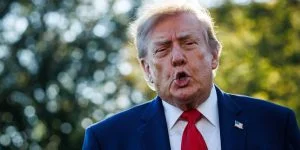
The possibility of a Democratic takeover of Congress has raised uncomfortable questions for Donald Trump about what the final two years of his presidency could look like.
Republicans are fighting to maintain their congressional majorities in the midterm elections, while Democrats are preparing for the possibility of gaining the investigative powers that come with controlling the House or Senate.
For the White House, a change in congressional leadership could mean more than difficult negotiations over legislation. Democratic lawmakers have already discussed examining the administration’s activities, including controversial presidential pardons and the business dealings of Trump’s family.
But the president appears to have a plan for protecting the people around him, as he bring up during an appearance on Miranda Devine’s Pod Force One podcast, produced by the New York Post.


Speaking in an interview released Monday, November 2, Trump indicated that he would be willing to issue preemptive pardons to members of his administration and political allies if he believed they faced the prospect of federal prosecution.
And he pointed to one of the most controversial decisions of his second presidency as evidence that he would have no hesitation about doing so again.
Trump says he would protect his entire team
The 80-year-old president discussed the possibility during the interview.
Devine asked whether Trump would consider using presidential pardons to protect his associates if Democrats gained control of Congress and pursued investigations that could eventually lead to criminal charges.
His response was immediate.
“I would if I needed to. Sure,” Trump said.
The conversation then turned to whether that protection could extend to everyone who currently works for him or has served in his administration.
Trump appeared equally comfortable with that possibility.
“I’d do it,” he replied, before adding, “I did it for J6.”
The reference was to his sweeping clemency decision involving people prosecuted over the January 6, 2021, attack on the US Capitol.
Trump’s remarks suggest that he is prepared to use the presidential pardon power as a protective measure for his political circle, although he did not identify specific crimes or announce any immediate plans to issue new pardons.
The president also made no suggestion that he would wait for convictions before considering clemency.
Preemptive pardons can cover federal offenses committed before the pardon is granted, even when criminal charges have not yet been filed.
However, they cannot protect someone from prosecution for future crimes or from charges brought under state law.
Trump points proudly to his January 6 pardons
Trump has already demonstrated his willingness to use presidential clemency on a remarkable scale.
On January 20, 2025, his first day back in the White House, he granted broad relief to approximately 1,500 people charged or convicted in connection with the Capitol attack.
Most received full pardons, while the sentences of 14 members of the far-right Oath Keepers and Proud Boys organizations were commuted.
The decision covered a wide range of defendants, including people convicted of serious offenses involving law enforcement officers.
More than 600 defendants had been convicted of or pleaded guilty to assaulting or obstructing police officers during the attack.
Another 170 had been convicted of or admitted offenses involving the use of a deadly weapon.
The sweeping decision drew criticism from opponents who argued that it undermined accountability for the violence at the Capitol.
Trump, however, has consistently defended his treatment of January 6 defendants.
His latest comments indicate that he views those pardons as a precedent for protecting other individuals whom he believes could face politically motivated prosecution.
The difference is that his new proposal concerns people working for or associated with his administration rather than participants in a past political demonstration.
Democrats are preparing to investigate the White House
Trump’s comments come as Democrats consider how they would use congressional oversight powers if they regain control after the midterm elections.
Representative Jamie Raskin of Maryland, the leading Democrat on the House Judiciary Committee, has already outlined potential areas of investigation.
Speaking to CNN last month, Raskin indicated that Democrats could examine the business activities of Trump’s family and scrutinize controversial decisions made by the administration.
Among the issues he raised were what he described as “pay-to-play pardons” and allegations of fraud.
Such investigations could involve congressional subpoenas, demands for documents and testimony from administration officials.
However, congressional investigations do not automatically result in criminal prosecutions.
Congress can investigate potential wrongdoing and refer matters to law enforcement, but federal prosecutors are responsible for deciding whether to bring criminal charges.
That distinction matters because Trump presented the possibility of Democratic investigations as a reason to consider protecting his associates through presidential pardons.
The president’s comments therefore anticipate legal consequences that have not necessarily materialized.
Still, the prospect of aggressive congressional scrutiny appears to be enough for Trump to contemplate another extensive use of executive clemency.
Elon Musk could also receive Trump’s protection
The president’s willingness to protect his allies apparently extends beyond current White House employees.
During the podcast interview, Devine raised the possibility that Democrats could pursue former Department of Government Efficiency leader Elon Musk.
She told Trump that members of the Democratic Party “want to arrest Elon Musk, they want to seize his factories, nationalize SpaceX…”
The interviewer did not establish that Democrats had adopted such plans, and the allegations should not be confused with an announced congressional policy.
Nevertheless, Trump responded by suggesting that Musk might also need protection.
“It’s talk, but if it is talk, we’ll have to protect him,” the president said.
Musk previously played a prominent role in Trump’s administration through his involvement with the Department of Government Efficiency, commonly known as DOGE.
The billionaire’s work on government restructuring made him one of the administration’s most recognizable and controversial figures.
Trump’s response suggests that he would be willing to consider shielding Musk from potential federal legal consequences if he believed political opponents were targeting him.
However, the president did not explicitly promise Musk a pardon during the exchange.
Nor did he identify any specific criminal charges that Musk might face.
Trump argues Biden already established the precedent
The president also sought to justify his position by pointing to the actions of his predecessor, Joe Biden.
During his final hours in office in January 2025, Biden issued preemptive pardons to several individuals he believed could become targets of politically motivated investigations.
Those receiving clemency included former White House medical adviser Dr. Anthony Fauci, retired General Mark Milley and members and staff of the congressional committee that investigated the January 6 attack.
Biden also pardoned several members of his family.
His son Hunter Biden had previously received a broad pardon covering federal offenses during a specified period.
Trump invoked those decisions as evidence that protecting political associates through presidential clemency was hardly unprecedented.
“That’s what Biden did, he gave everybody a pardon,” Trump said.
His characterization was broader than the actual scope of Biden’s actions, which covered specified individuals rather than everyone who had worked for the former president.
Nevertheless, the comparison highlights how presidential pardons have become increasingly entangled with accusations of political retaliation.
Biden defended his preemptive pardons as a way to protect people from potentially unjustified investigations and prosecutions.
Trump is now using a similar argument to explain why he might protect members of his own administration.
The political circumstances differ, but both decisions raise questions about how presidents should use a constitutional power that carries few direct restrictions.
Presidential pardons have significant limits
The US Constitution gives presidents broad authority to grant pardons and reprieves for federal offenses.
That power does not require approval from Congress, and presidents generally have considerable discretion over whom they choose to pardon.
Importantly, a pardon can be issued before a person has been charged or convicted.
However, presidential clemency cannot erase state criminal liability or prevent prosecution for offenses committed after the pardon is granted.
It also does not automatically end congressional investigations or prevent lawmakers from examining government conduct.
A Democratic-controlled House could therefore continue investigating administration activities even if Trump granted pardons to individuals involved.
Those pardons could affect the possibility of federal criminal punishment, but they would not eliminate Congress’s oversight authority.
The legal implications would also depend on how any future pardons were written and which past conduct they covered.
Trump has not yet announced the identities of potential recipients or the scope of any proposed clemency.
For now, his remarks amount to a public declaration of willingness rather than a formal legal action.
Trump makes clear he has few reservations
The timing of the president’s comments is significant, coming immediately before elections that could reshape the balance of power in Washington.
Democrats are seeking to regain influence over congressional investigations, while Trump is signaling that his administration will not necessarily leave its officials exposed to potential federal prosecution.
His statements also illustrate the increasingly confrontational relationship between the two parties.
Democrats have discussed investigating alleged misconduct, while Trump has suggested that such efforts could justify preemptive protection for his allies.
Whether the president eventually acts on those remarks will depend on developments after the elections, including the investigations Democrats pursue and whether any federal criminal exposure emerges.
But Trump left little ambiguity about his personal willingness to intervene.
“I would if needed to,” he said.
He then reinforced the point with another emphatic declaration.
“I would not even think about it. I’d do it.”



