
 Kathrine Frich
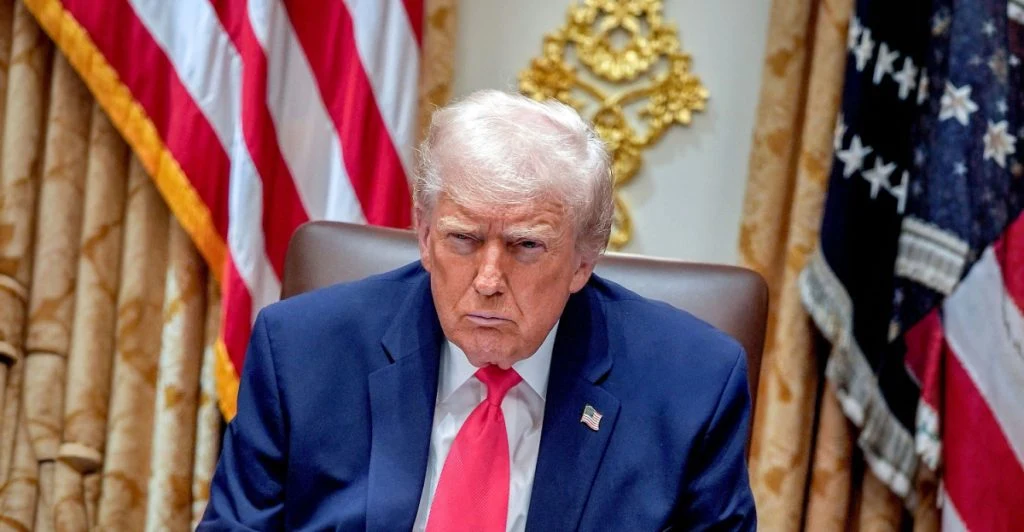
Donald Trump returned to the White House promising to steer America away from foreign entanglements.


On the campaign trail, he repeatedly cast himself as the president who would end wars, not start new ones.
Now, with U.S. forces engaged in a military campaign against Iran, that pledge is being tested. For many voters who backed him on a platform of restraint, the shift could prove deeply unsettling.
On Saturday, Trump announced that the United States had launched military action against Iran. Critics describe it as a war of choice, arguing that alternative strategies were available.
Richard Haass of New York University contends that the president has embraced one of the most ambitious foreign policy objectives possible: regime change. In an analysis of the unfolding crisis, Haass writes that such an aim is political in nature and cannot be secured by military strikes alone.


Limits of power
According to Haass, Iran’s opposition remains divided and is not prepared to function as a replacement government. Without a credible alternative authority, defections are unlikely and internal stability cannot be guaranteed.
Air power can destroy facilities and eliminate commanders, but it does not automatically dismantle entrenched systems of rule.
Regime change, he argues, requires the collapse of governing structures.
Historical precedents suggest that such outcomes typically depend on sustained ground presence.
Germany and Japan after World War II, and later Panama, Iraq and Afghanistan, all involved troops on the ground, with mixed long-term results.
Hard realities
In Iran’s case, a full occupation is widely viewed as implausible because of the country’s size and capacity to resist.
A strategy focused on eliminating top leaders may also fall short, given how institutionalized Iran’s leadership has become over nearly five decades.
Haass notes that Tehran has likely strengthened its succession planning in recent weeks as tensions escalated.
That preparation reduces the chances that targeted strikes would trigger systemic collapse.
All of this suggests that the administration is pursuing a sweeping objective with limited tools.
Mounting risks
Haass also points to the risks at home and abroad.
Trump described deploying an “armada,” a show of force that may have increased pressure to act, since maintaining such readiness indefinitely is difficult.
The American public, he argues, is unprepared for a prolonged conflict that could unsettle markets and push up energy prices.
Allies in the region may also suffer economic damage if Iran retaliates.
While Trump may still achieve his aims, history indicates that regime change is easier to demand than to deliver.
And once war begins, its duration and scale depend not only on Washington, but also on Tehran.
Sources: Analysis by Richard Haass, New York University.



