
 Kenneth Glad
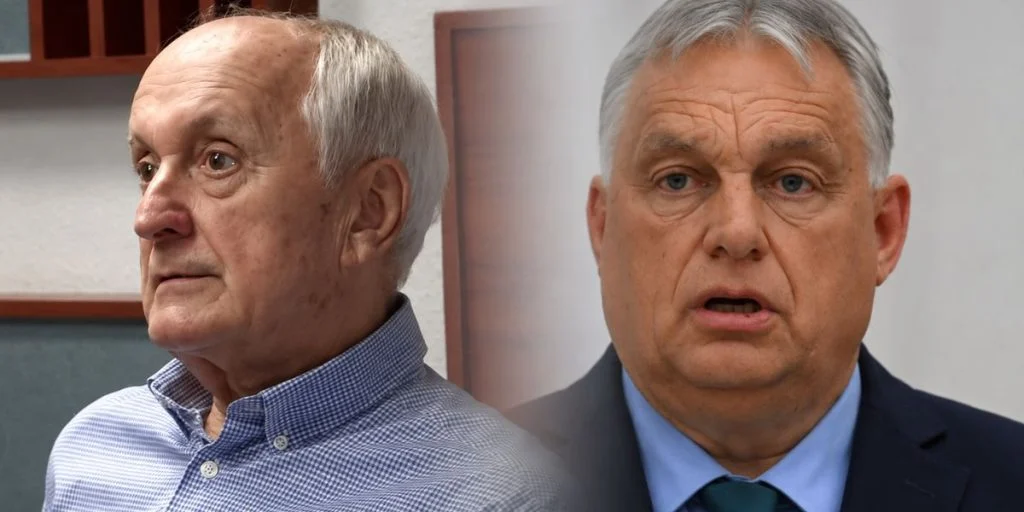
Budapest has chosen a veteran jurist for its largely ceremonial presidency as the country continues through a major political transition. The appointment returns a former senior judge to public office more than a decade after his removal became the subject of a European human-rights case.


The parliament of Hungary elected former Supreme Court chief Andras Baka as president today, approving the 73-year-old by 140 votes to six.
According to Le Monde, Baka was nominated by Prime Minister Peter Magyar’s governing Tisza party, which holds a two-thirds majority in parliament.
Baka previously spent 17 years as a judge at the European Court of Human Rights before taking charge of Hungary’s Supreme Court in 2009. His return to a senior state position is notable because his earlier departure from that court became one of the better-known European legal disputes involving Hungary’s judiciary.
His clash with Orban
Baka’s six-year mandate as Supreme Court president ended on January 1, 2012, when Hungary’s new Fundamental Law and related constitutional changes took effect. The European Court of Human Rights said this brought his term to an end three and a half years before its scheduled expiry.


Before his removal, Baka had publicly criticized several judicial changes introduced during Viktor Orban’s government.
One of those measures sharply reduced the compulsory retirement age for judges, prosecutors and notaries from 70 to 62. In November 2012, the Court of Justice of the European Union ruled that the rapid change amounted to unjustified discrimination on grounds of age.
Baka pursued a separate case before the European Court of Human Rights over the premature ending of his own mandate. In 2016, the court’s Grand Chamber found violations of his freedom of expression and his right of access to a tribunal.
The distinction between the two cases is significant. The EU court judgment dealt with the retirement-age policy affecting members of the judiciary, while Baka’s ECHR case concerned the termination of his leadership position after he had spoken publicly about judicial reforms.
Sulyok’s disputed removal
Baka now succeeds Tamas Sulyok, whose presidential term ended early following a constitutional amendment adopted under Magyar’s government.
Fidesz and its KDNP ally boycotted the presidential vote. According to Le Monde, the parties called Sulyok’s removal “tyrannical” and “illegitimate.”
Baka addressed the controversy in an interview with AFP last month, arguing that Hungary’s political circumstances were exceptional.
“In a country governed by the rule of law, such extraordinary measures cannot be used, but Hungary became a captured state under Orban,” he said.
Magyar has indicated that Baka may not serve a full presidential term. His government plans to replace the existing Basic Law through a process intended to include broad public participation, which Magyar has estimated could take roughly 12 to 18 months.
The presidency in Hungary is largely ceremonial, but the choice of head of state carries symbolic weight. Baka’s election places a former critic of Orban-era judicial changes in the office at a time when the new government is trying to redefine the constitutional order inherited from the previous administration.
Sources: Le Monde, AFP; European Court of Human Rights; Court of Justice of the European Union



