
 Kenneth Glad
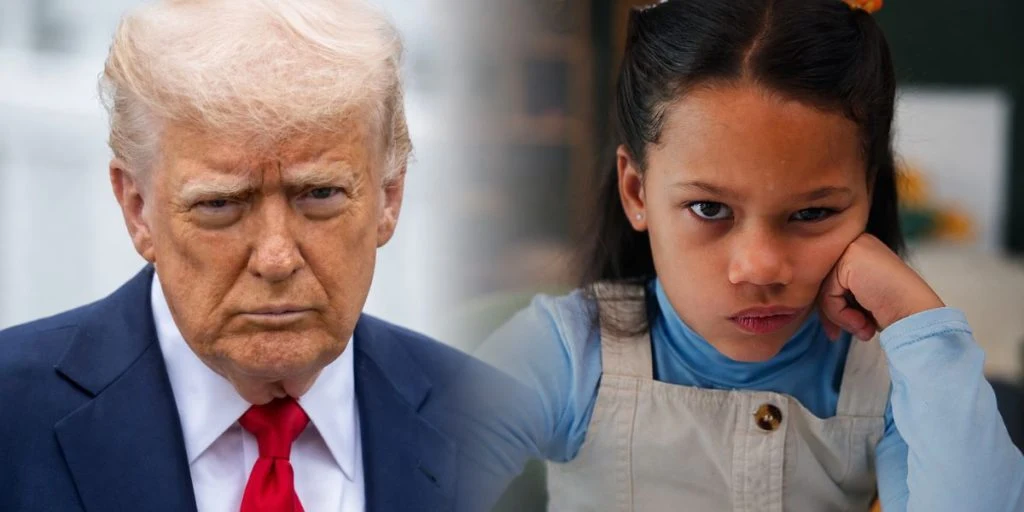
Prominent officials shape more than laws and policies. Their conduct can also influence how people understand authority, responsibility, and acceptable behavior.


Parents teach children to control impulses, tell the truth, respect boundaries, and admit mistakes. Those lessons become harder to explain when powerful adults appear to gain attention and loyalty through behavior that would be punished at home or school.
Gene Beresin, a child and adolescent psychiatrist writing for the Clay Center for Young Healthy Minds, examined Donald Trump’s public behavior from this perspective. He did not diagnose Trump, arguing that assigning a psychiatric condition without a personal examination would be speculative and unethical.
Instead, Beresin focused on development. Young children may exaggerate, seek constant attention, react sharply to criticism, ignore rules, or blame others when something goes wrong. These tendencies are expected to diminish as emotional regulation and social understanding develop.
Beresin’s concern is less about labels than about example. The president is one of the most visible adults in public life, and children inevitably see how he responds to criticism, conflict, and mistakes.


They may not repeat a particular insult, but they can still absorb the broader message. When aggressive or evasive behavior brings attention and political reward, it can make the rules taught at home and school seem less convincing.
An office and its occupant are not the same
Parents do not have to present every president as a personal role model. They can explain that the office deserves attention because of the power attached to it, while the person holding it can still be criticized.
That approach keeps the conversation grounded. Instead of arguing about whether Trump is a good or bad person, families can look at what he actually said or did and ask whether they would accept the same conduct from someone else.
Children are often alert to double standards. They notice when adults excuse behavior from a favored politician that they would condemn in an opponent. Over time, that can teach them that political loyalty matters more than honesty or consistency.
A 2021 study by political scientists Peter K. Hatemi and Christopher Ojeda found that children do not automatically adopt their parents’ partisan identities. They must first recognize their parents’ views, while factors such as family closeness and the strength of those views can affect whether they want to adopt them.
That finding leaves room for discussion rather than instruction. Children are not empty vessels. They interpret the political behavior they see around them, including the way adults explain, excuse, or challenge it.
Mockery leaves the question unanswered
When White House Press Secretary Karoline Leavitt was asked by journalist S. V. Date who had proposed Budapest as the venue for a possible meeting between Donald Trump and Russian President Vladimir Putin, her reply was: “Your mom did.”
Tom Nichols, a political commentator and staff writer at The Atlantic, later cited the exchange as an example of what he argued was a broader decline in the tone of official government communication.
Whatever the intention behind the response, it did not answer a straightforward question about a possible diplomatic meeting.
That is what makes the exchange relevant. The insult became the story, while the original issue faded into the background.
For children and teenagers who see clips like this online, the lesson may have little to do with foreign policy. What stands out is that a senior official faced a question, dismissed the person asking it, and moved on.
Hostility can attract support
Political incivility is not interpreted in the same way by every voter.
A 2026 study in The Journal of Politics by Chiara Vargiu, Alessandro Nai, and Diego Garzia involved 1,884 U.S. respondents evaluating fictional candidates who attacked opponents with uncivil language.
The researchers found that attacks were judged more harshly when the candidate already appeared aggressive and when the wider political environment contained extensive hostility. Reactions also differed according to political attitudes and psychological characteristics.
Separate experiments by Vargiu, Nai, and Chiara Valli, published in Political Psychology, found that uncivil messages were not automatically less persuasive. In the U.S. experiment, they resonated more strongly with participants who expressed higher levels of populist sentiment.
Rudeness is therefore not always an electoral disadvantage. Some audiences may interpret it as evidence that a politician is willing to fight, reject elite conventions, or challenge established institutions.
In New York Magazine, political columnist Ed Kilgore described three broad ways Trump’s supporters can reinterpret conduct that critics call childish.
The first is humor: Offensive remarks are treated as jokes aimed at opponents. The second is authenticity: Impulsiveness and anger are presented as proof that Trump resembles ordinary people. The third is emergency: If the country is considered to be in crisis, ignoring normal customs can be defended as necessary.
Under that reasoning, an insult shows strength, a false claim becomes strategic exaggeration, and refusing to apologize demonstrates determination.
Incivility has consequences
Aggressive communication may energize supporters, but it can also damage political trust.
A 2022 meta-analysis by Jonathan Van’t Riet and Aart Van Stekelenburg examined 35 experimental studies. It found a small but meaningful decline in political trust among people exposed to hostile political exchanges. Effects on political participation were less consistent.
Repeated insults may lead voters to conclude not only that one politician behaved badly, but that politics itself is degrading or beyond repair.
That cynicism can help leaders who portray every institution as corrupt. When citizens expect little from government, unanswered questions and personal attacks begin to feel normal.
Nichols also cited an artificial intelligence generated video posted through Trump’s social media presence. It depicted the president dumping excrement on protesters.
Nichols treated the video as political humiliation presented as entertainment. Such material travels quickly and requires little context. Viewers may encounter the degrading image without learning why the protest occurred.
Satire has a legitimate role in politics, but power matters. Citizens mocking a government are not in the same position as a president distributing degrading imagery about people protesting his administration.
The issue is not whether political language must always be polite. It is whether provocation replaces evidence, explanation, and responsibility.
Families can use one standard
Parents cannot shield children from every hostile political message, nor should they try to remove disagreement from public life. Democracy includes anger, protest, criticism, and arguments over values.
The task is to distinguish forceful disagreement from behavior intended mainly to intimidate or humiliate.
Holding an important office does not make every action admirable. An accusation is not evidence because it is repeated loudly. Confidence does not require pretending never to be wrong.
Older children can be encouraged to ask whether they would excuse the same behavior from a politician they opposed. They can also check the context of viral clips and look for independent confirmation before accepting a claim.
Adults should apply the same rules. Answering every insult with another insult may reproduce the culture they oppose.
A stronger response is usually less dramatic: Ask for the missing information, check the original source, record contradictions, and examine what the policy actually did.
Whether Donald Trump’s behavior is unusual is ultimately less important than how the public responds to it. If voters, parents, and institutions stop expecting restraint and accountability from people in power, those standards become harder to defend everywhere else.
Sources:
- Gene Beresin, Clay Center for Young Healthy Minds
- Peter K. Hatemi and Christopher Ojeda, British Journal of Political Science
- Tom Nichols, The Atlantic
- Chiara Vargiu, Alessandro Nai, Diego Garzia, and Chiara Valli, The Journal of Politics and Political Psychology
- Ed Kilgore, New York Magazine
- Jonathan Van’t Riet and Aart Van Stekelenburg, Human Communication Research.



