
 Kenneth Glad
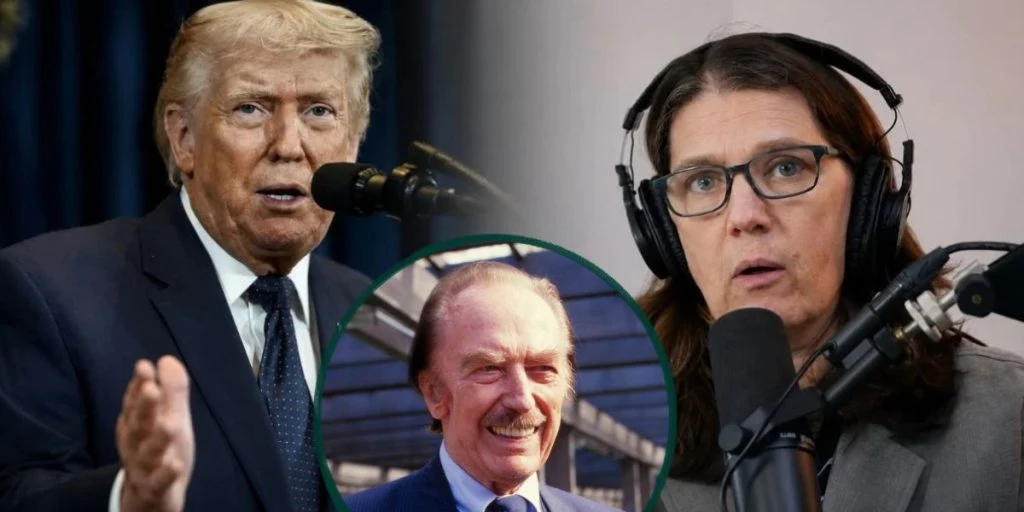
Family dynamics often shape personalities in ways that remain hidden behind closed doors. When public figures face intense scrutiny, understanding their early beginnings can offer a fresh perspective on how their character was forged long before entering the spotlight.


Clinical psychologist Mary Trump has shared some deep insights into her family history in a video on her YouTube channel, Mary Trump Media. Drawing on her professional expertise and personal background, she explains that healthy emotional growth requires at least one attuned parent who consistently satisfies an infant’s core needs through emotional availability, consistent attention, and soothing.
When those early emotional needs go unfulfilled, the developmental consequences can prove long-lasting. “Without this process called mirroring, children are denied crucial information, both about how their minds work and about how to understand the world around them,” Trump says, adding that mirroring serves as “the root of empathy”.
Absent when needed
Her account highlights how household trauma unfolded when Donald Trump was just two and a half years old. Nine months after giving birth to her fifth child, his mother suffered severe health emergencies, requiring emergency surgeries and a prolonged recovery that rendered her both physically and emotionally unavailable for nearly a year.
While older siblings were capable of comprehending the sudden shift, the toddlers were left completely vulnerable without a supportive caregiver to fill the void.


During this critical window, Fred Trump Sr. became the primary parent at home by default. However, Mary Trump describes her grandfather as a “high-functioning sociopath” who lacked empathy, lied with facility, and showed little interest in raising young children, choosing instead to focus almost exclusively on his expanding real estate business, Trump Management.
Fear turned inward
With no emotionally supportive figure present, normal childhood attempts to seek comfort often backfired.
Infants and toddlers naturally smile or cry to draw out warm, comforting responses from their parents. But for young Donald and his brother Robert, these instinctual signals were met with cold indifference or irritation from a father who viewed emotional demands as a nuisance.
Fred Trump Sr. kept to his rigorous 12-hour workday at Trump Management, expecting even his smallest children to fend for themselves. Because the boys were already deeply distressed by their mother’s sudden illness, their heightened neediness only provoked further anger from their father. Seeking help became linked with humiliation, despair, and rejection.
This harsh environment forced the children to learn that showing vulnerability was dangerous. Fred Trump preferred a home where no one disturbed him, and his detached parenting style isolated the young siblings not just from the outside world, but from one another.
Mary Trump notes that being entirely reliant on a parent who was also a primary source of terror created an intolerable, lasting psychological toll.
“Underneath all of it, Donald is still the terrified little boy he’s always been,” she stated, observing that “cruelty is one of the few means he has by which to assuage his fear”.
Source: Mary Trump Media / YouTube



