
 Asger Risom
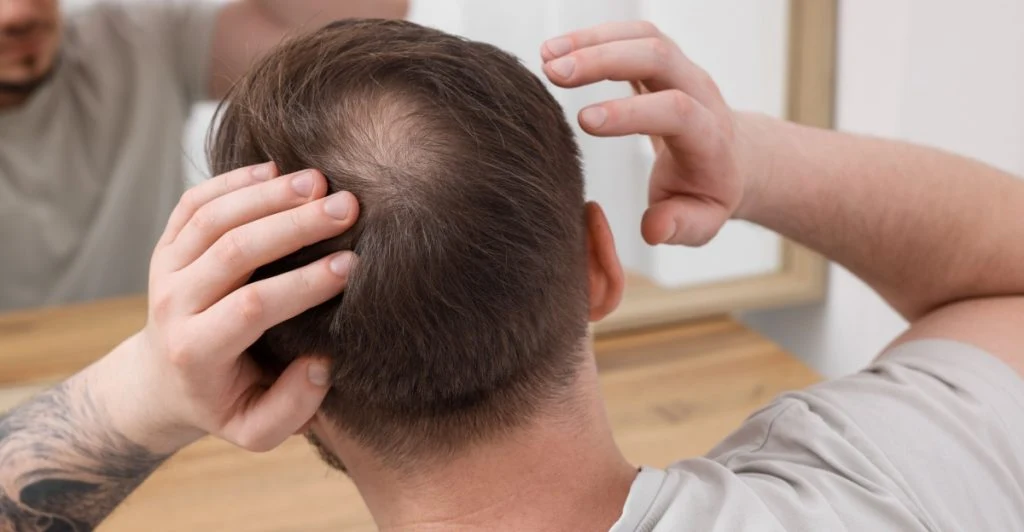
Scientists in South Korea developed a flexible near-infrared light therapy cap that reduced a key hair ageing marker by 92% in lab tests, though human trials have not yet begun.

Researchers in South Korea have developed a flexible near-infrared light therapy system that reduced a key hair ageing marker by nearly 92% in laboratory tests, raising hopes for a new approach to treating hair loss.
The study, conducted by scientists at the Korea Advanced Institute of Science & Technology (KAIST), was published in Nature Communications.
Targeting ageing cells at the root
The treatment focuses on human dermal papilla cells — specialized cells at the base of hair follicles that play a crucial role in hair growth.
As hair follicles age, they produce higher levels of beta-galactosidase, an enzyme widely recognized as a biomarker of cellular ageing and linked to hair thinning and loss.


According to the researchers, hair cells exposed to the team’s customized near-infrared organic light-emitting diode (OLED) system showed a 92% reduction in ageing markers compared to untreated cells.
The light was tuned to a wavelength between 730 and 740 nanometres, a range believed to optimally stimulate hair-regenerating activity.
Flexible OLED cap design
Unlike many existing light therapy helmets that use rigid laser or LED components, the new system relies on thin, flexible OLED technology. This allows it to be embedded into a soft, wearable cap that conforms closely to the scalp.
Researchers say the design distributes light more evenly and could be more comfortable for users.
Human trials not yet underway
Hair loss affects millions worldwide. In the United States, up to 40% of people experience hereditary pattern hair loss. Current treatments such as minoxidil and finasteride can slow progression but come with limitations and potential side effects.
The experimental light therapy has not yet been tested in humans. The research team says further preclinical studies are planned to evaluate safety and effectiveness before moving toward clinical trials.
If confirmed in human studies, the approach could represent a non-invasive alternative for people seeking new options to combat hair loss.
Sources: Nature Communications, KAIST



