
 Jens Asbjørn Bøgen
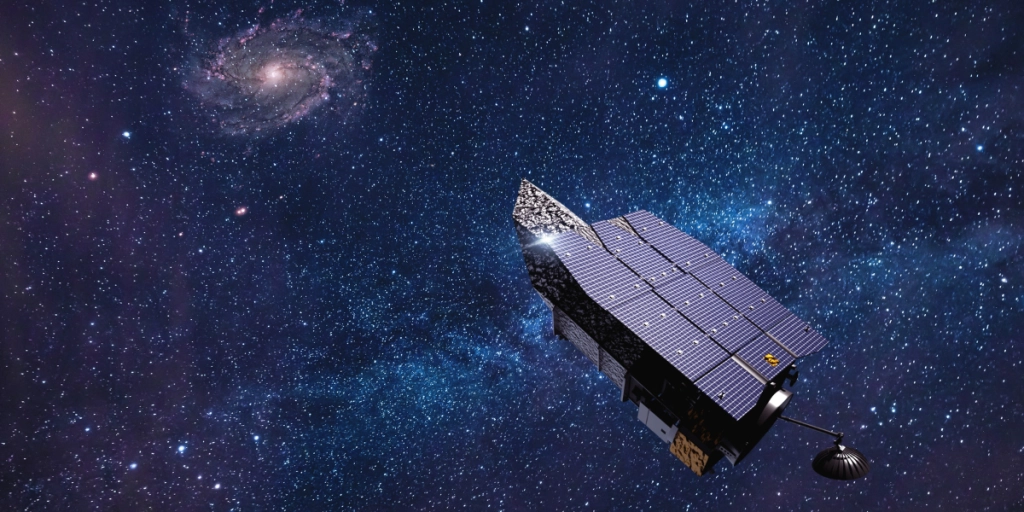
A NASA observatory is coasting toward its parking spot a million miles from Earth.
Every deep-space mission carries a fuel budget built for the worst case, with engineers padding it against uncertainty in mass, launch precision, and mid-flight maneuvers.
On most missions, some of that margin gets used up along the way. On NASA’s Nancy Grace Roman Space Telescope, hardly any of it did.
The observatory’s first mid-course correction burn on August 31 used just 40 pounds of fuel against a budget of 441 pounds, saving more than 90%, and hit its target with better than 99% accuracy, NASA said.
Combined with a lighter-than-expected spacecraft that let engineers top off the propellant tanks before launch, Roman now has enough fuel for at least 22 years of science operations, more than doubling its original 10-year design life.


Two windfalls, one bigger mission
The burn itself was carried out at 12:02 p.m. EDT and lasted about three minutes, pushing Roman toward the second Sun-Earth Lagrange point, or L2, a gravitational parking spot about one million miles from Earth where the James Webb Space Telescope also operates.
It was the first of two planned adjustments before Roman reaches L2, roughly 100 days after launch.
“As a result of exquisite planning by our orbital dynamics team, brilliant execution by the operations team, and a precise launch from SpaceX, Roman has fuel for at least 22 years of potential science operations,” said Jamie Dunn, center director at NASA’s Goddard Space Flight Center in Greenbelt, Maryland.
Some of that margin was locked in before the observatory ever left the ground. “A spacecraft’s mass changes throughout the design and build process, so we base the propellant budget on a set maximum value so we won’t come up short,” said Alison Rao, Roman’s propulsion lead at Goddard before adding:
“Since Roman’s was lower than we budgeted for, we were able to fill the propellant tanks to their capacity rather than only filling them as much as we needed to for the 10-year requirement.”
Roman weighed 17,760 pounds at launch, well below the 21,605-pound maximum engineers had planned for.
What comes next
A second, smaller correction burn is planned for later in September and is expected to save more fuel. After L2 insertion, roughly 100 days after the August 30 Falcon Heavy launch from Kennedy Space Center, the observatory will start a commissioning period before its main science campaign.
Roman is built to survey the sky with a 300-megapixel infrared camera and to investigate dark matter, dark energy, and exoplanets across a field of view at least 100 times larger than Hubble’s.
NASA expects to release Roman’s first images by early 2027.



