
 Asger Risom

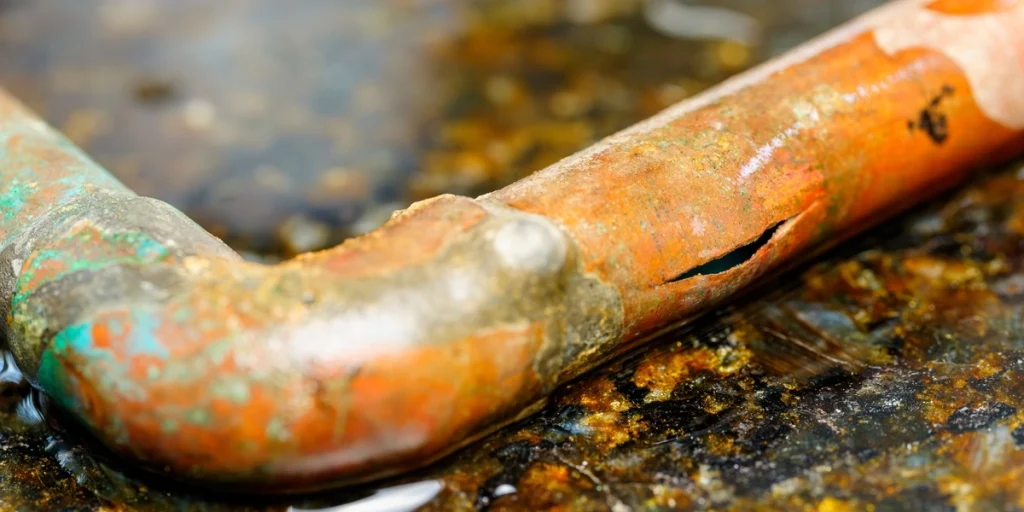
A living tree is more than half water, yet it stands through sub-zero blizzards that easily split metal plumbing. Surviving the deep freeze requires a seasonal overhaul of its own cellular chemistry.


Leave a copper pipe uninsulated during a hard winter freeze, and expanding ice will split the metal right down the seam. Meanwhile, a mature oak or pine tree sitting in the exact same yard—made up of anywhere from fifty to eighty percent water—weathers sub-zero blizzards without an ounce of internal heat. Rather than defying physics, trees survive winter by executing a coordinated cellular retreat months before the first snow falls.
The nine percent expansion problem
Water behaves differently than almost every other liquid on Earth when it turns into a solid. Instead of packing closer together as it cools, freezing water molecules lock into a rigid hexagonal crystal lattice that takes up roughly nine percent more space than liquid water. Inside a rigid metal pipe or a living plant cell, that expansion generates immense outward pressure.
For a tree, ice forming inside a living cell is a death sentence. Jagged ice crystals slice straight through delicate cell membranes, rupturing the tissue from the inside out. You can see that exact cellular destruction whenever an unexpected late-spring frost hits after trees have already sprouted new leaves, turning fresh green foliage black and mushy overnight.
To avoid that fate across winter, trees have to solve a tricky engineering problem. They cannot drain themselves completely dry without dying, yet they cannot allow liquid water inside their living cells to crystallize.


Pumping water out before the freeze
Cold preparation actually starts in late summer, triggered not by temperature drops, but by shortening daylight hours. Broadleaf trees like maples and oaks cut off nutrients to their leaves and shed them, eliminating thousands of fragile surfaces that would otherwise lose precious moisture to dry winter winds. Conifers hold onto their needles by coating them in thick wax and rolling them into tight, narrow shapes that minimize evaporation.
Inside the trunk and branches, living cells undergo an active process called cold acclimation. As temperatures dip toward freezing, cells pump water out through their membranes and into the microscopic gaps between the cells. By intentionally dehydrating their living interiors, trees reduce the amount of internal water that could expand and rupture cell walls.
That expelled water does eventually freeze inside the empty spaces between cells, which sounds dangerous until you look at the physics. Because the ice forms outside the cell walls rather than inside them, the dehydrated cells simply shrink slightly like soft raisins instead of bursting. Better yet, as that extracellular water crystallizes, it actually releases a tiny burst of latent heat that helps insulate the surrounding living tissue.
Turning sap into natural antifreeze
Pumping water out of living cells triggers a second survival mechanism: the fluid left behind becomes thick and syrupy. During autumn, trees convert stored starches into concentrated sugars, amino acids, and specialized proteins that dissolve into the remaining cellular water.
As explained by the Buffalo Bill Center of the West, this concentrated sugary sap acts as biological antifreeze. Just as spreading rock salt on an icy sidewalk lowers the temperature at which water freezes, packing dissolved sugars into cellular fluid depresses its freezing point well below thirty-two degrees Fahrenheit. That sweet winter defense system is the exact same sap maple producers tap in early spring to boil down into syrup.
At the same time, cell membranes remodel their own fatty acids to stay flexible in the cold. Instead of stiffening like cold butter and cracking under pressure, winter-hardened membranes remain pliable enough to bend as neighboring ice crystals press against them.
Supercooling below forty below
In extreme northern forests where winter temperatures routinely plunge far below zero, trees deploy one more physical trick known as deep supercooling. Pure water cannot actually freeze into ice crystals at thirty-two degrees unless it has a microscopic impurity, dust speck, or rough surface—called a nucleation site—for the first crystal to latch onto.
According to tree physiology research highlighted by Purdue University and Northern Woodlands, cold-hardy species isolate tiny droplets of purified water inside compartmentalized wood cells free of nucleating particles. Protected from ice-forming triggers, that trapped water remains completely liquid down to nearly minus forty degrees Fahrenheit.
Trees are not completely invincible; if an arctic cold snap hits too fast after a warm sunny afternoon, outer bark can contract faster than inner wood and split open with a loud crack. Most winters, though, a combination of strategic dehydration, sugary antifreeze, and supercooled water keeps forests standing intact while basement plumbing bursts indoors.



