
 Kenneth Glad

Imagine spending years building a massive puzzle. Suddenly, a stranger flips the table and proves you used the wrong picture entirely. That exact nightmare has just become reality for academics across the globe.


A major cornerstone of computer science is now obsolete. OpenAI and Anthropic recently released data disproving a famous mathematical assumption that stood unchallenged for 27 years. Both companies published their dense proofs directly to GitHub, writes Wired.
Under the exponential time hypothesis, experts long believed that digital problems take vastly more time to solve as they grow. Artificial intelligence just proved that rule wrong.
The fallout is massive. Countless published papers rely on that specific premise, and professors are rushing to assess the damage. To help academics unpack the complicated AI-generated math, OpenAI is now recruiting the theory’s original creators.
Overexcited bunnies
Some experts are thrilled by the shakeup. Thore Husfeldt, head of the algorithms research group at the IT University of Copenhagen, told Wired that the discovery is a “once-in-a-generation result.” He actually formulated a version of the now-dead hypothesis himself.


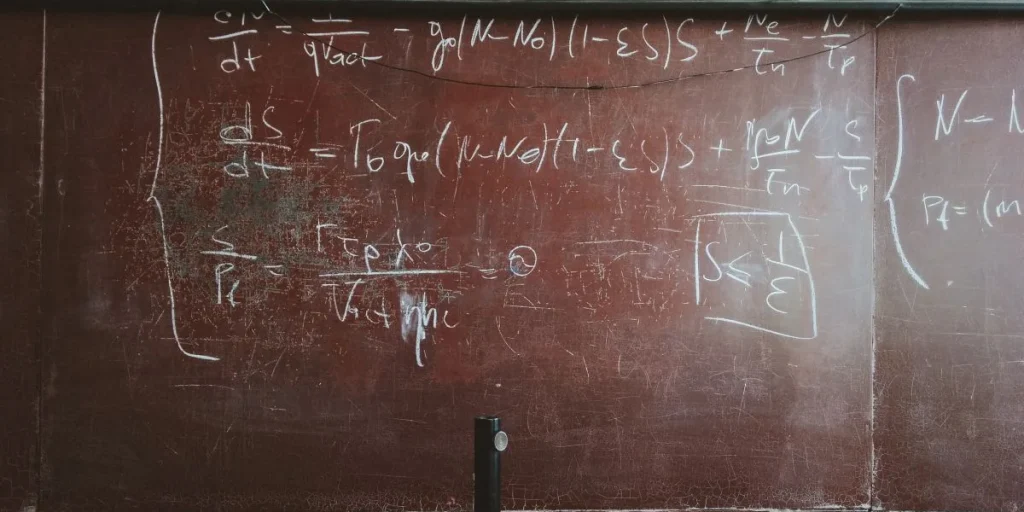
Even though his recent work is now outdated, he loves the clarity. “Being a mathematician is a lot like stumbling about in a completely dark room,” Husfeldt said. He is currently using his blackboard to calculate exactly how much of his past research is obsolete.
He added that the new data feels like sudden floodlights. “It’s like somebody just illuminated an entire subfield in floodlights of knowledge, and now we just run around like overexcited bunnies and look at all the nooks and crannies that we can suddenly explore. So it’s a super exciting time.”
The sheer volume of reactions is already massive. During his interview, Husfeldt received a random 17-page AI-generated paper on the topic. He told Wired he flatly refused to read it to save his cognitive energy.
A heavy toll
Not everyone shares that cheerful outlook. The sheer speed of AI discoveries is leaving many academics completely overwhelmed.
Entire research projects vanish in an instant. Husfeldt mentioned that his department might hire an occupational psychologist because “some people are really depressed and really sad.”
“The last few months have been really tough. It’s a lot of doom and gloom, because every week, or every second week, the results announced by AI just annihilate the ongoing research projects of many people,” he told Wired.
Daniel Lokshtanov, a UC Santa Barbara professor, admitted that the finding makes him “galactically wrong” about past work.
He estimates that roughly 50 of his published papers are now “pointless” or need heavy revisions. “It’s just a giant bomb dropped into the middle of the field,” Lokshtanov told the outlet.
Looking ahead
The consequences reach beyond university walls. Modern web security relies on the idea that complex math takes forever to solve. While the latest AI result does not break current cryptography directly, Lokshtanov noted to Wired that the breakthrough “should definitely scare some cryptosystem designers,” since it shifts our understanding of digital safety.
Peter Jönsson, a professor at Linköping University, will soon have a coauthor present his ruined research at a prestigious conference. He expects many other academics at the upcoming symposium to face the exact same nightmare as they realise their papers no longer work.
He remains optimistic about the future and believes his current paper might still be salvageable through a different method. Getting a final verdict on the hypothesis is something he previously only dreamed of.
“I don’t care if it’s a human-written proof, or it’s written by AI, or if an alien transmitted this proof to us. If it’s true, then we must simply use it in the future,” Jönsson told Wired.



