
 Kenneth Glad

For years, people have worried about computers taking over creative jobs. That anxiety usually focuses on the distant future. Now, one massive experiment has finally hit the big screen to test the theory.


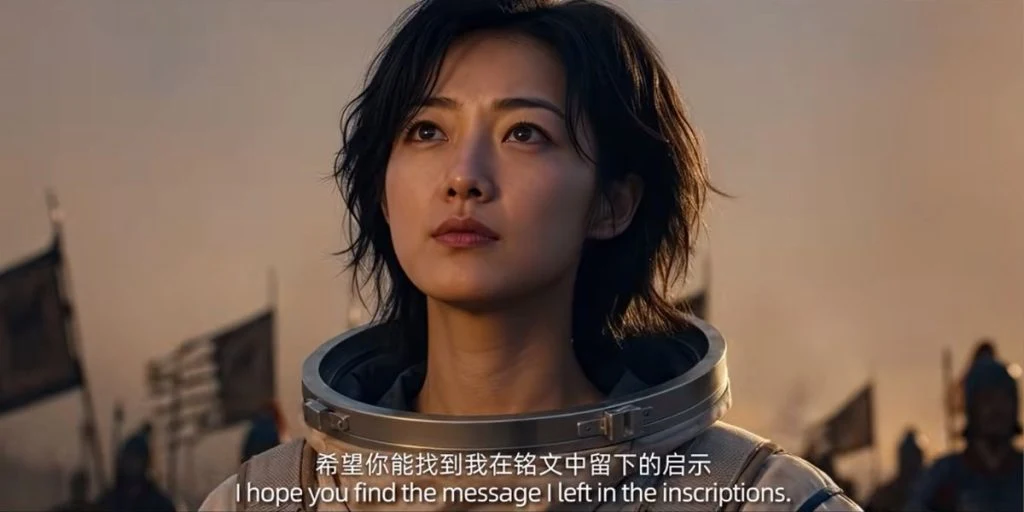
China just released its very first fully AI-generated movie, Sanxingdui: Future Past. The results are not exactly a triumph.
The project had a massive budget. Its producer claimed it cost “tens of millions” to finish, The Guardian reported.
Yet the box office numbers told a different story. The film pulled in just 1.7 million yuan.
The movie follows a society relying heavily on algorithms. A global disaster strikes. To save the world, characters must find a secret code hidden inside ancient bronze sculptures.


Glitches and weird scripts
Things get strange quickly on screen. Audiences are treated to astronauts in ancient Egypt and archaeologists jumping through portals.
A scriptwriting tool called Bowen generated the dialogue. The Guardian noted some awkward lines, including a scene where someone yells to “Avoid that thing!” right before a plane crashes.
Humans handled the editing, but computers generated the visuals. The result pushes characters straight into the uncanny valley.
They look almost real, but something is slightly off. Characters struggle to run naturally, and their movements look exactly like a video game animation.
Following the money
Despite the harsh reception, this is probably just the start. Independent film critic Yu Yaqin told The Guardian that “the movie isn’t entertaining” but noted a bigger trend.
She said that “AI films will continue to be produced in China because investors place a high value on AI.”
The technology threatens traditional film crews. A screenplay development worker told The Guardian that “What used to take 100 people to do, now can be done by five people, and the rest won’t have any jobs” moving forward.
Paying for an experience
Chinese viewers already watch thousands of AI-generated microdramas on their phones every month. That industry is worth an estimated three billion dollars.
A state media commentary admitted the new feature film was “riddled with flaws and imperfections” overall. Still, it suggested the movie might “yet go down in cinematic history as the starting point of what came next” anyway.
One film blogger offered a simple reason for the empty cinema seats. They wrote that “AI-generated microdramas are selling a way to kill time, while films in cinemas are selling an experience worth spending time on” today.
Ultimately, viewers want more. Yu Yaqin said that “Perhaps audiences are still more willing to spend money on films that offer a more unique experience” instead of glitchy robots.



