
 Asger Risom
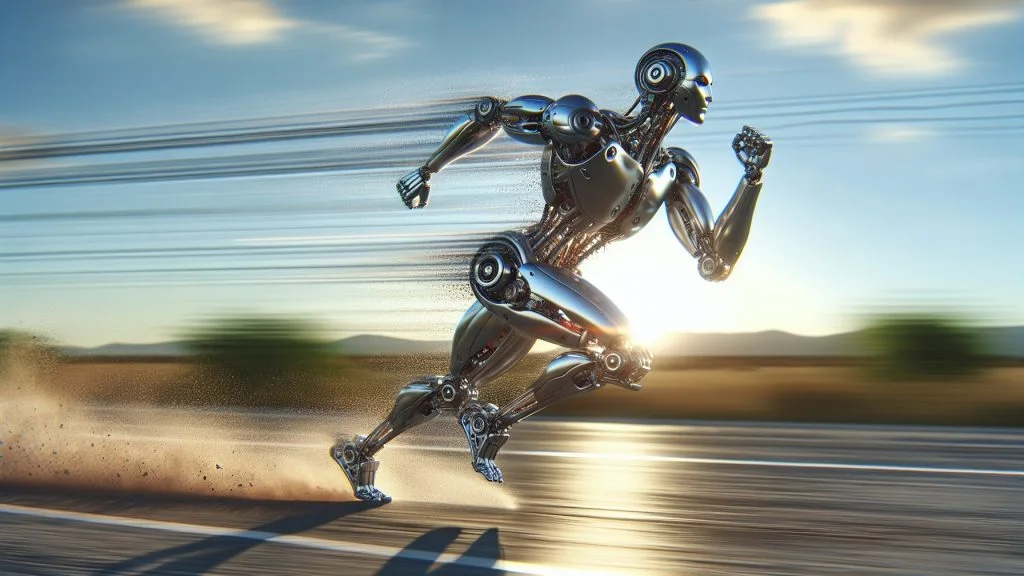
Chinese humanoid robots shattered the human 100-meter sprint record at a Beijing showcase, but spectacular post-race crashes highlight the technology’s ongoing safety flaws.


Chinese humanoid robots just broke Usain Bolt’s 100-meter sprint record at a major technology showcase in Beijing. The five-day World Humanoid Robot Games featured more than 2,000 machines competing in Olympics-style events to demonstrate rapid advancements in automation. A robot named Tiangong Ultra crossed the finish line in just 8.64 seconds, easily beating the human world record of 9.58 seconds, according to AP News.
Despite the record-breaking speed, the event highlighted the significant physical limitations these machines still face in the real world. Several sprinting robots, including the champion, lost control after crossing the finish line and crashed violently into padded barriers. Event staff had to rush over with fire extinguishers to spray down the sparking machines before carrying them away on stretchers.
Robotics experts acknowledge the impressive track times but caution that navigating controlled environments is vastly different from operating autonomously. As Jonathan Hurst of Oregon State University told AP News, real progress will be measured when humanoids can work safely for hours in factories. Until these machines can safely decelerate and navigate complex spaces, they remain highly specialized prototypes rather than viable commercial products.
The escalating US-China tech race
This robotics competition takes place against the backdrop of an intensifying technological conflict between Washington and Beijing. The United States has aggressively stepped up its scrutiny of Chinese robotics, viewing the rapid advancements as a potential national security threat. Last month, the Federal Communications Commission announced an outright ban on imports of new foreign-made humanoid robots.


The American defense sector is also moving to isolate Chinese manufacturers from global supply chains. The Pentagon recently added Unitree, a leading Chinese humanoid robot maker, to its official list of companies with suspected ties to the Chinese military. Beijing has firmly rejected these accusations, arguing that the American restrictions are simply protectionist measures designed to stifle Chinese innovation.
China currently manufactures the vast majority of the world’s humanoid robots and continues to heavily subsidize domestic development. Events like the World Humanoid Robot Games are deliberately designed to showcase this dominance on a global stage. As the technology gap narrows, the battle for supremacy in advanced robotics will likely become a central issue in international trade negotiations.
The future of automated labor
Beyond the political posturing, the Beijing showcase offered a glimpse into how robots might soon handle everyday tasks. In addition to the track events, the competition featured robots executing housework, providing hotel services, and simulating emergency response scenarios. Developers are clearly pushing to move these machines out of the laboratory and into the global labor market.
However, the spectacular crashes on the running track emphasize the massive liability risks associated with deploying uncrewed hardware. A machine that cannot safely stop itself poses a severe physical danger to any human workers sharing the same environment. Companies looking to integrate humanoid robots will face massive insurance premiums and strict regulatory hurdles before they can operate at scale.
The robotics industry must solve these fundamental mechanical failures before autonomous workers can become a mainstream reality. While a sub-nine-second sprint makes for great headlines, industrial buyers care more about reliability and workplace safety. Until developers can guarantee that their robots will not spontaneously catch fire, human workers remain entirely essential.



