
 Kenneth Glad
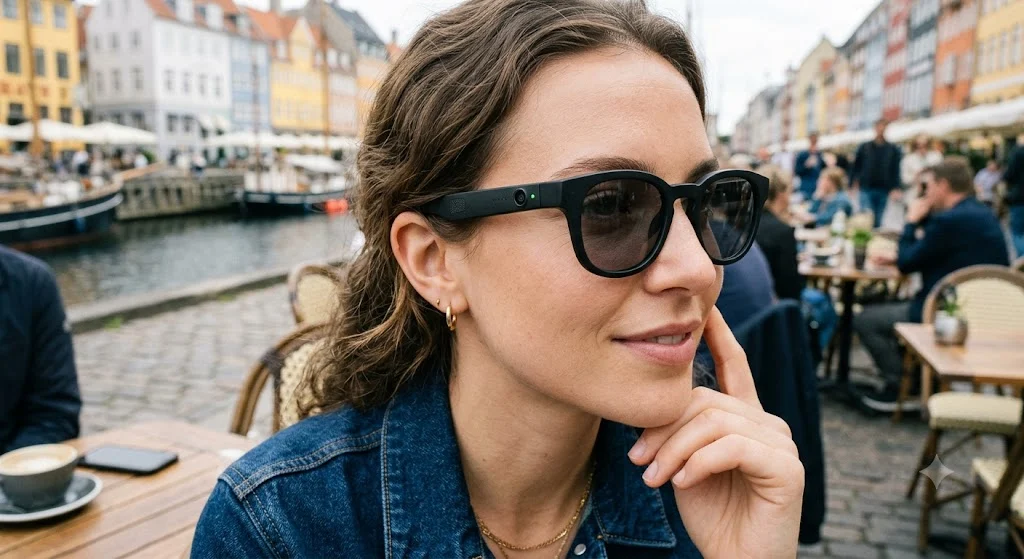
Camera-equipped eyewear is becoming part of a wider debate over how emerging technology should be used in public. For some people, the same features causing concern can also provide practical assistance in everyday life.


Smart glasses powered by artificial intelligence are creating an increasingly difficult tension between privacy and accessibility.
Devices equipped with cameras can capture people without their knowledge, prompting calls for tighter restrictions. At the same time, those cameras can provide visual information to AI systems that help blind and visually impaired users understand their surroundings.
According to TV 2, Denmark’s Red-Green Alliance has called for a ban on Meta smart glasses over concerns about recording without consent. Eva Flyvholm, the party’s technology spokesperson, said restrictions should include exemptions for people who need the device because of a disability.
The controversy is also affecting how some visually impaired users feel about wearing the glasses in public. The Danish Association of the Blind told TV 2 that members have expressed concern about negative reactions from people who associate the devices primarily with covert filming. That creates a second problem beyond regulation: Users who rely on the technology for assistance may also face suspicion simply because of the glasses they wear.


Accessibility offers practical benefits
Meta’s glasses combine cameras, microphones, speakers and artificial intelligence. The system can process visual input to describe surroundings, identify objects and read text aloud.
Diana Stentoft, national chair of the Danish Association of the Blind, told TV 2 that those functions can reduce reliance on sighted assistance for ordinary tasks. Users can ask the glasses to read signs, check the color of clothing or provide information that would otherwise require help from another person.
The broadcaster interviewed 64-year-old Holger Roeijen, who has been blind for more than 40 years. He uses the glasses for reading, locating objects and obtaining information while navigating streets.
Roeijen also uses the device to get descriptions of people and scenes around him. In one example, he photographed his wife and received a description indicating that she was smiling and appeared happy. For someone unable to see facial expressions, that kind of immediate feedback can make everyday interactions more accessible.
Another user, 75-year-old Kai Østergaard, told TV 2 that the technology has helped him complete more daily tasks without assistance. He also uses the glasses to distinguish between household products that can otherwise be difficult to identify by touch alone.
Recording concerns persist
Privacy remains the central objection to camera-equipped eyewear.
In May, the BBC reported that several women said a man secretly recorded them using smart glasses and later demanded money to remove videos posted online. The case drew attention to how easily wearable cameras can be used without the people nearby realizing they are being filmed.
TV 2 has also cited concerns from a consumer-policy adviser at the Danish Consumer Council, an independent nonprofit organization that represents consumer interests in Denmark, who warned that bystanders may struggle to recognize when recording is taking place.
Unlike a phone or conventional camera, smart glasses can remain on a person’s face during ordinary conversations and movement through public spaces, making their use less conspicuous.
Several organizations have also warned that smart glasses can make it harder for people to know when they are being recorded. The concern is not limited to individual cases of misuse, but also to whether the glasses make recording sufficiently obvious to people nearby.
Rules must serve both
The Danish Association of the Blind has spoken out against misuse of the technology, while also acknowledging that camera-equipped glasses may not be appropriate in every setting, writes TV 2.
The organization has pointed to places such as swimming pools as examples where wearing camera-equipped eyewear may be inappropriate, even for someone using the glasses as an accessibility aid. Its position is that restrictions should take account of where and how the technology is being used rather than treating every use in the same way.
For some users, a complete ban would have a direct effect on daily life. Kai Østergaard told TV 2 that he would find it difficult to return to life without the glasses because they now help him access information he could not otherwise obtain on his own.
The broader challenge for regulators is deciding how to deter covert filming without blocking assistive uses that can give visually impaired people greater independence.
Sources: TV 2; BBC



