
 Kenneth Glad
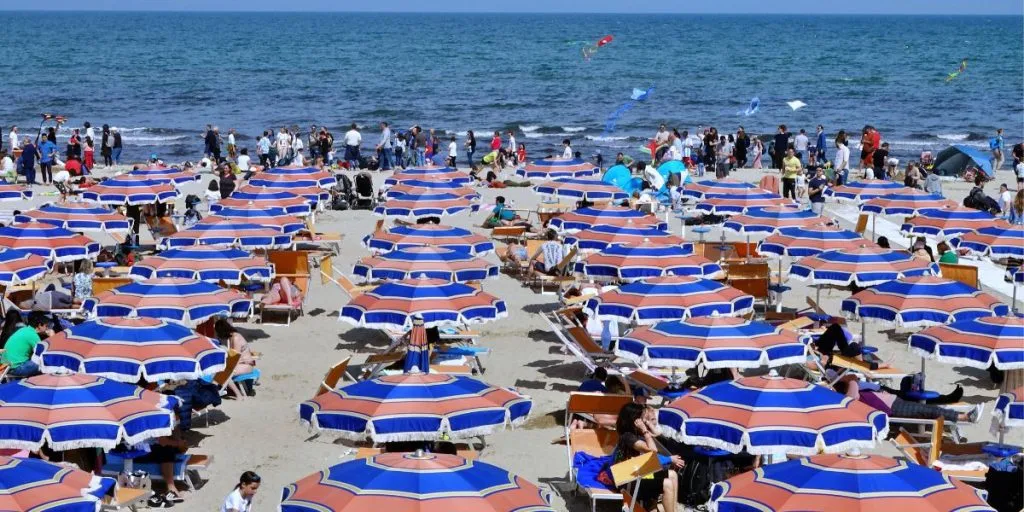
An established seasonal custom is proving harder for ordinary households to maintain. Changing working patterns and household finances are reshaping how much time people can spend away.


The idea that Italy simply stops working for August has always been an exaggeration. There is no national rule giving employees the entire month off. Instead, the familiar summer slowdown grew from a combination of paid annual leave, workplace agreements and a long-established tendency for businesses and workers to concentrate holidays around August.
Italian employees are legally entitled to at least four weeks of paid annual leave each year. Under rules outlined by Italy’s Labour Ministry, two weeks must be taken consecutively during the year in which they are earned, while the remaining two can generally be used within the following 18 months unless a collective agreement provides different terms. The system therefore guarantees substantial time away from work, but it does not require that all of it be taken during summer.
That model is becoming harder to sustain. The typical Italian holiday, already down to about 13 days by the 1990s, has since fallen to roughly six.
Cost is another reason the traditional long break is becoming less common. According to Eurostat, 35.7 percent of Italians aged 16 and over could not afford a week away from home in 2025, well above the EU average of 27.5 percent. Paid leave may still be protected by law, but for many families, the money needed for a lengthy holiday is no longer there.


Long breaks are slipping away
Italy may still be associated with a long August shutdown, but working life does not always match that image. OECD figures show that Italian workers averaged 1,715 hours of work in 2024, although the organization says the data are better used to follow trends over time than to rank countries against one another.
Even when workers have enough paid leave, taking several weeks away can be expensive. Accommodation, travel and food quickly add up, leaving some families to cut their holidays short, choose cheaper destinations or divide their time off into smaller breaks during the year.
That looks very different from the postwar period, when long summer stays became common among a much wider section of society. By the height of the August holiday tradition, spending weeks away was no longer something associated mainly with wealthier Italians. It had become a familiar part of summer for many working families.
Workers made the pause possible
According to The Guardian, organized labor played an important part in expanding access during Italy’s postwar economic boom. Employers adjusted to longer periods of leave, while some large companies operated holiday facilities for workers and their children. Public support also helped lower travel costs.
The arrangement turned extended leisure from an elite habit into something much broader. It also developed during years of rapid industrial expansion, complicating the assumption that weeks away from work were automatically incompatible with economic performance.
Paid leave is still protected, but taking several weeks away is much less realistic for many workers than it once was. The days off may be there, but the cost of using them for a long holiday is often the bigger obstacle.
Sources: The Guardian, Eurostat, OECD



