
 Kenneth Glad
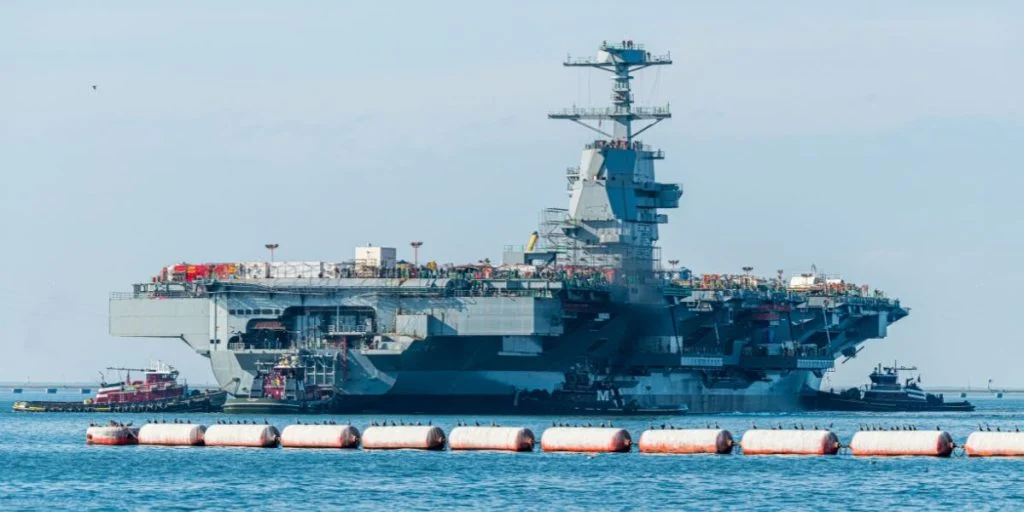
Two powerful vessels reflect contrasting approaches to modern naval aviation. Their differences reveal how design choices shape operations at sea.


Aircraft carriers remain among the clearest symbols of a navy’s ability to project power far beyond its own coastline. They serve as mobile airbases, command centres and logistical hubs, but the way different countries build and operate them can vary dramatically.
That contrast is becoming particularly visible as John F. Kennedy moves closer to joining the US Navy. The second Gerald R. Ford-class carrier completed acceptance sea trials on August 15, 2026, another important step before the ship formally enters service. HII, the shipbuilder, said preliminary acceptance is next, while US Navy budget documents place delivery in March 2027.
The approaching handover has also revived comparisons with HMS Prince of Wales, the Royal Navy’s flagship and one of Britain’s two Queen Elizabeth-class carriers. Forces News was among the outlets to examine how the two ships measure up, but treating the question simply as a contest of size risks overlooking the very different ideas behind their designs.
John F. Kennedy belongs to a class built around the scale and global reach of US carrier operations. US Navy figures put Gerald R. Ford-class ships at roughly 100,000 long tons, with space for more than 75 aircraft and around 4,660 personnel across the ship’s company, embarked air wing and staff.


Prince of Wales is smaller and operates with a different aviation model, crew structure and propulsion system. Those differences make the comparison less about deciding which carrier is simply “better” and more about understanding how two close allies have chosen different ways to generate air power at sea.
Flight decks work differently
NAVAIR says Ford-class carriers employ the Electromagnetic Aircraft Launch System, or EMALS, alongside Advanced Arresting Gear. Together, the systems support catapult-assisted launches and arrested landings, replacing the steam catapults and older recovery equipment used aboard previous generations of US carriers.
EMALS is designed to handle aircraft ranging from lightweight unmanned platforms to heavy strike fighters, with more precise control of launch speed and smoother acceleration. NAVAIR says the technology is also intended to reduce maintenance demands and support higher sortie rates, while AAG can recover a similarly broad range of aircraft.
HMS Prince of Wales follows another model. The Royal Navy lists a minimum crew of about 700, rising to around 1,600 with aircraft embarked, and capacity for 36 F-35Bs alongside Merlin helicopters.
Those fighters use their short take-off and vertical landing capability rather than catapults and arresting wires. The Queen Elizabeth-class flight deck ends in a six-metre-high ski jump, which helps aircraft become airborne at lower speeds and with heavier loads. The Royal Navy says the class is designed to generate 72 fast-jet sorties per day, with two aircraft lifts able to move four F-35s from the hangar to the deck in about a minute.
Maximum capacity should not be confused with a routine deployment. In November 2025, the Royal Navy reported 24 British F-35Bs aboard Prince of Wales, then the largest group assembled on either Queen Elizabeth-class carrier.
Endurance shapes each design
Ford-class carriers use two nuclear reactors driving four shafts, with the US Navy listing speeds above 30 knots. Nuclear propulsion eliminates the need to carry fuel for the ship’s engines, giving the carrier considerable freedom to remain at sea. Aviation fuel, ammunition, food and maintenance requirements still make regular replenishment necessary.
The reactor plant also serves another purpose. According to Naval Sea Systems Command, the Gerald R. Ford class can generate roughly three times as much electricity as earlier US carrier classes. That additional capacity supports power-hungry systems such as EMALS while leaving greater scope for new sensors and other technologies during the ships’ planned 50-year service lives.
Prince of Wales takes a conventional route. The Royal Navy says its four diesel generators and two gas turbines can collectively produce 109 megawatts, driving the carrier beyond 25 knots while also supplying its weapons, sensors and onboard services.
Costs are harder to compare directly. US congressional testimony put John F. Kennedy’s fiscal 2026 program cost at about 13.2 billion dollars, while the UK government has placed construction of both Queen Elizabeth-class carriers at 6.3 billion pounds. Different procurement systems, currencies and accounting methods mean those figures should be treated as context rather than a direct measure of value.
Sources: Forces News, Royal Navy, NAVAIR,



