
 Jens Asbjørn Bøgen
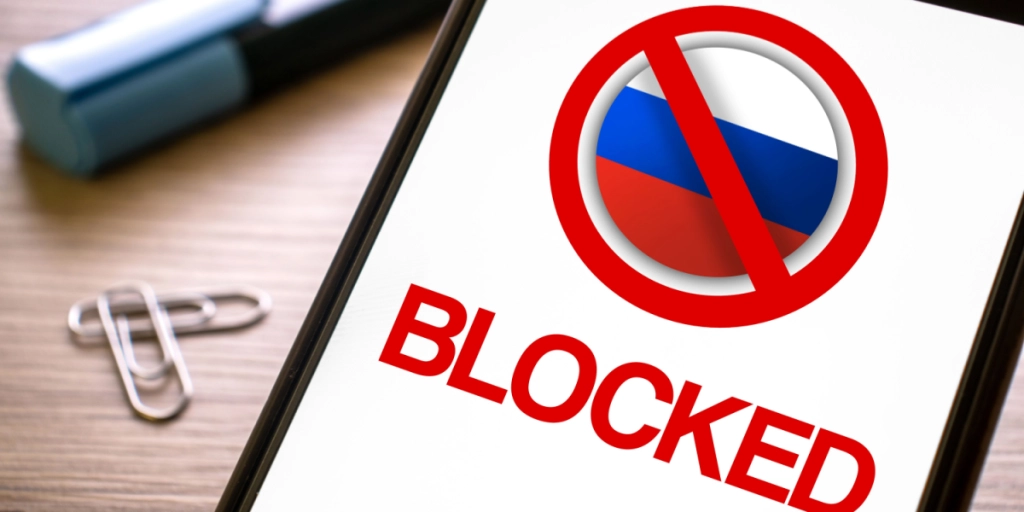
It’s allegedly part of the preparations for the Victory Day celebrations on May 9.


Russia has significantly increased its crackdown on freedom of information in 2026.
First of all, Russia has banned Western messaging apps like WhatsApp, as well as highly popular platforms such as Telegram and Signal.
The Kremlin has promoted the domestically produced MAX app as an alternative, but critics say the app is most likely a way for Russian authorities to keep closer tabs on what the average citizen is discussing.
Even citizens of the Russian capital, Moscow, are experiencing mobile internet outages, as access is being throttled due to the risk of “terrorist attacks” (what the Kremlin refers to as Ukrainian drone attacks).


The crackdown also appears to be intensifying just days before the traditional Russian Victory Day celebrations.
Signal fading out
According to BBC News Russia, residents in Moscow and St. Petersburg are finding themselves suddenly disconnected, as mobile internet services began dropping out across both cities on May 5.
Major telecom providers sent advance notices to their customers about these looming blackouts. The service disruptions are certainly not accidental technical glitches.
They are deliberate, planned measures linked to the upcoming Victory Day celebrations.
Widespread network issues
Users across several major networks are feeling the immediate impact. Customers of MTS, T2, Beeline, and Yota have all experienced significant connection failures.
The local news outlet Fontanka reported widespread service disruptions across St. Petersburg. The digital blackout is heavily affecting daily routines in these densely populated areas.
These mobile issues follow a wave of earlier connectivity problems. Just days prior, on May 2, disruptions affected fixed home internet connections throughout the wider Moscow region.
Safety protocols cited
The official explanation provided to the public points to safety protocols. Telecom companies informed users that the temporary restrictions on mobile data and text messaging were implemented for “security reasons.”
Residents in the affected areas will have to wait out the digital silence. Until the celebrations conclude, navigating these large cities will require a return to analog methods.
Smartphones will offer very little assistance for basic communication. For the time being, physical security is taking priority over digital convenience.
Creating a “Russian internet”
The internet in China is known as a “sovereign internet,” meaning a massive firewall prevents users from accessing content not approved by the authorities.
Analysts suggest that Russia is attempting to create its own version of a sovereign internet, with a state-controlled “whitelist” system of approved providers and sources.
In February Radio Free Europe/Radio Liberty reported that the Russian Federal Security Service (FSB) had been given increased powers, including the option to unilaterally order shutdowns of internet and mobile communications.
The same month, the Institute for the Study of War assessed that increasing restrictions on the free internet in Russia are a sign of weakness from the Kremlin.
Sources: BBC News Russia, Ukrainska Pravda, The Institute for the Study of War, Australian Broadcasting Corporation, Radio Free Europe/radio Liberty



