
 Jens Asbjørn Bøgen
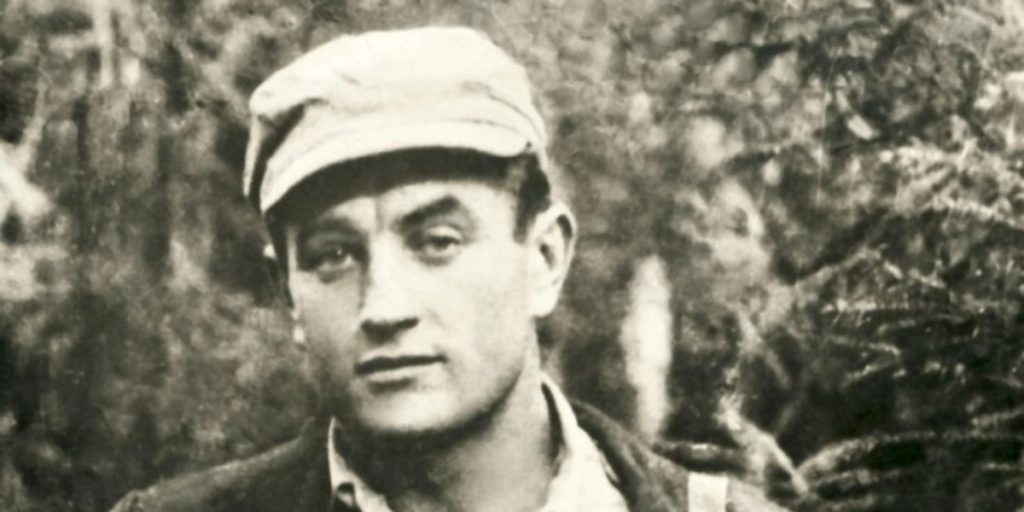
13 individuals and five organisations have been labeled “accomplices of Nazi Germany” in war crimes against the Soviet Union.


Across the Baltic states, the men who fought the Soviet occupation after World War II are national heroes with statues, streets, and films in their name.
A Moscow courtroom has now assigned them a very different label.
On Monday, Russia’s Tversky District Court in Moscow ruled that 13 individuals from Lithuania, Latvia, and Estonia, along with five organizations, were “accomplices of Nazi Germany” in war crimes against the Soviet Union, satisfying a claim brought by the Russian General Prosecutor’s Office.
Among those named is Juozas Lukša, the partisan commander whose fight against Soviet rule is one of the founding stories of modern Lithuanian independence.


Also on the list are Juozas Ambrazevičius-Brazaitis, the head of Lithuania’s short-lived 1941 provisional government, and the writer Bronius Krivickas, who was killed in the postwar resistance.
Lithuania’s Foreign Ministry condemned the ruling as a deliberate rewriting of the past, calling it an attempt to smear Baltic freedom fighters by relying on biased Soviet-era archives while ignoring crimes committed by Soviet repressive institutions.
“This is not the first time Russia has falsified history to smear the Baltic states and our freedom fighters, thus trying to divert attention from its war crimes and other atrocities in Ukraine,” the ministry said in its statement.
Why Lukša matters in Vilnius
Codenamed Daumantas, Lukša became one of the leaders of the armed resistance after the Soviet reoccupation of Lithuania in 1944 and broke through the Iron Curtain to the West several times to rally support for Lithuania’s cause.
He married in Paris in 1950 while receiving intelligence training in France, returned to occupied Lithuania months later, and was killed in an ambush near Kaunas in September 1951. In 2019, President Gitanas Nausėda announced an initiative to search for his remains.
The five organizations named in the ruling are Estonia’s Omakaitse, Latvia’s Aizsargi and Pērkonkrusts, and Lithuania’s Activist Front and Lithuanian Nationalist Union, according to Kommersant, which reported the prosecutor general’s filing in September.
A wider campaign against Baltic memory
The ruling fits a pattern that has accelerated since Russia’s full-scale invasion of Ukraine.
In Yakutsk, authorities moved to replace a memorial that had stood since 2002 to Polish and Lithuanian deportees sent to Siberian labor camps with a statue of Dmitry Yegorov, a local soldier killed in the war on Ukraine in September 2023 and posthumously named a Hero of Russia by Vladimir Putin.
The plaques carrying the deportees’ names were removed in June 2023, and the memorial stones vanished three months later.
The removals extend well beyond Yakutsk. Since 2022, memorials to Polish, Lithuanian, and Finnish victims of Soviet terror have been dismantled across Russian regions from the Sverdlovsk region to St. Petersburg and the Irkutsk region, often with officials claiming ignorance or citing “restoration” work.
Lithuania’s Foreign Ministry framed the Moscow ruling as part of the same effort, saying the Kremlin’s goal is “to indirectly justify Russia’s aggression against Ukraine” by delegitimizing the independence movements of its western neighbors.



