
 Jens Asbjørn Bøgen

Residents of a small island in the East Sea opened their phones Tuesday morning to a warning they had never seen before.

Ulleungdo, a volcanic outcrop in North Gyeongsang Province off South Korea’s east coast, lit up at 7:52 a.m. with a civil-defense message ordering residents to seek shelter underground.
For three tense minutes, families across the island treated the alert as a potential strike, before authorities called it off.
The trigger was not North Korea. It was Russia.
About five Russian military aircraft had entered the Korea Air Defense Identification Zone (KADIZ) over the East Sea and approached the edge of South Korean territorial airspace near the island, the South Korean Joint Chiefs of Staff said.


The KADIZ is not sovereign airspace, but a buffer zone in which foreign aircraft are expected to identify themselves to prevent accidental clashes.
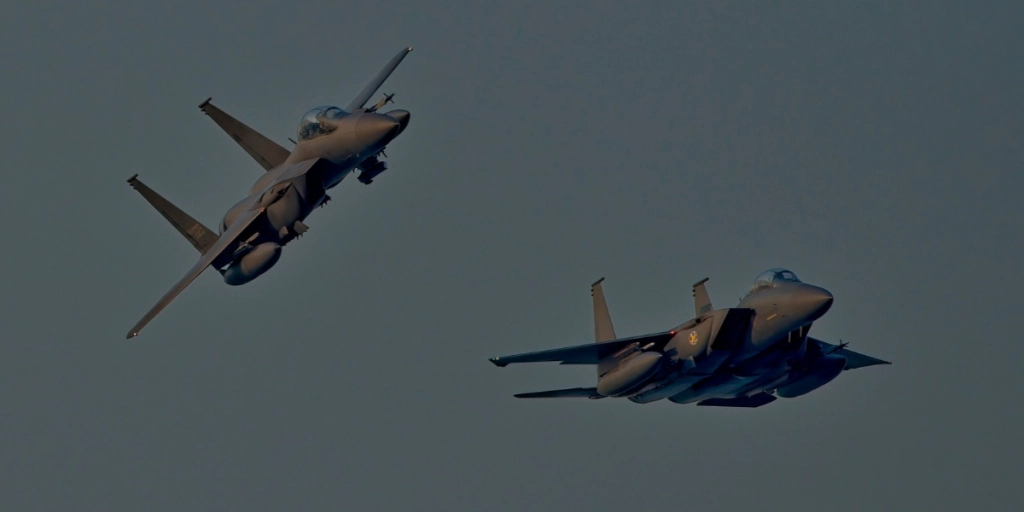
It was the first time Seoul had used an air raid-style evacuation warning in response to Russian warplanes. South Korea’s Air Force scrambled F-15K fighter jets while the aircraft held inside the zone for roughly 20 minutes before turning away toward Japan and heading north.
A confused initial alert
The alert itself caused confusion. When North Gyeongsang Province pushed out the cancellation notice, the text described the aircraft as one “presumed to be from North Korea,” a wording authorities later corrected.
The Joint Chiefs of Staff said they had detected the Russian flights before they crossed into the KADIZ and dispatched fighters “to take tactical measures against potential contingencies.”
A military official told the Korea Herald that “the Russian aircraft flew very close to our airspace, but moved away toward the East Sea following our military measures.”
Military sources cited in South Korean media suggested the jets could have crossed into sovereign airspace had the F-15Ks not been launched in time.
Part of a pattern this month
The Ministry of National Defense summoned Russian military attaché Colonel Nikolai Marchenko to its headquarters in Seoul at about 15:00 the same day.
The ministry said it lodged a “stern protest” and urged measures to prevent a recurrence, according to the Kyunghyang Shinmun. The foreign ministry separately conveyed its regret to the Russian embassy through diplomatic channels.
Russian aircraft had already entered the East Sea KADIZ earlier in November, prompting fighter scrambles. Analysts cited in the Korean press read the repeated incursions as a push to counter the tightening security cooperation between South Korea, the United States and Japan.



