
 Jens Asbjørn Bøgen

A case can be made for both explanations.
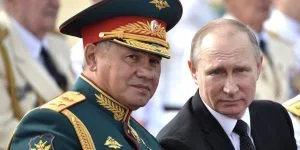
On May 14, the Russian state-owned news agency TASS cited Russian Security Council Secretary Sergei Shoigu as saying that Russian forces are “confidently advancing along the entire line of combat contact” in Ukraine.
That assessment is in stark contrast to reality on the battlefield, as the Institute for the Study of War reported in early May that Russian territorial gains in Ukraine have been in steep decline in 2026.
In January, Putin’s forces reportedly advanced and took control of 318 km², but in February those advances had plummeted to just under 123 km².
March produced Russian advances of only 23 km², and April really turned the tables as Ukraine managed to retake approximately 116 km² from Russian forces.


Add to that Russian casualties of reportedly more than 35,000 a month, and you cannot help but wonder:
Do the Russian military commanders know they are not telling the truth? Or are they simply oblivious to what is actually going on?
The case for lying
“Truth is the first casualty of war,” as the old saying goes, and in Russia’s case, truth was killed in action even before the Russian full-scale invasion in 2022.
Leading up to the invasion, the Kremlin claimed that Russian forces did not pose a threat to Ukraine. It also claimed that Ukraine was committing genocide against ethnic Russians, and during the war, Russia has claimed that NATO and Ukraine actually had a secret plan to invade Russia.
All of these claims have either been debunked or denied, and the Kremlin has produced no evidence to support them.
This shows that the Kremlin’s relationship with reality is, at best, conditional, as Russian officials appear to tell the truth only when it suits the Russian narrative.
In the case of Shoigu’s claims about advances, this supports the Russian narrative that a Russian victory in Ukraine is inevitable, while also projecting strength and control to the Russian public, which is increasingly feeling the strain of more than four years of war.
The case for being oblivious
On March 30, 2022, about a month after the Russian invasion of Ukraine, Reuters cited officials from the White House and the European Union as saying that Putin was actually being misled by “yes-men” who were afraid to tell the Russian leader the truth.
According to the officials, intelligence showed that Putin was not being told the truth about how poorly the Russian army was performing in Ukraine, as well as how much the economy was already suffering.
But try following this train of thought:
-
Putin’s commanders lie to him out of fear.
-
This forces Russian military commanders to provide the Russian leader with positive news from the battlefield.
-
The Russian military is known for harsh punishments for a wide range of offenses.
-
Could Russian commanders on the battlefield be afraid to tell the military leadership the truth out of fear of punishment?
It is important to note that there is no concrete evidence to support this. It remains pure speculation.
But if this turns out to be true, the Russian military command could actually be completely oblivious to the reality on the battlefield because it is receiving false information from commanders in the field.
So which is it?
Given the substantial evidence of the Kremlin and Russian officials in general blatantly lying, the Russian military command is probably doing exactly that.
There may be an element of Russian field commanders not telling the truth to military leadership, but the most likely explanation for officials like Shoigu making claims so evidently disconnected from reality is that it is part of Russia’s broader effort to maintain the narrative that a Russian victory is inevitable.
But what do you think?
Sources: TASS, Reuters, Carnegie Endowment, Institute for the Study of War, General Staff of the Armed Forces of Ukraine, Global Rights Compliance, CNN



