
 Jens Asbjørn Bøgen
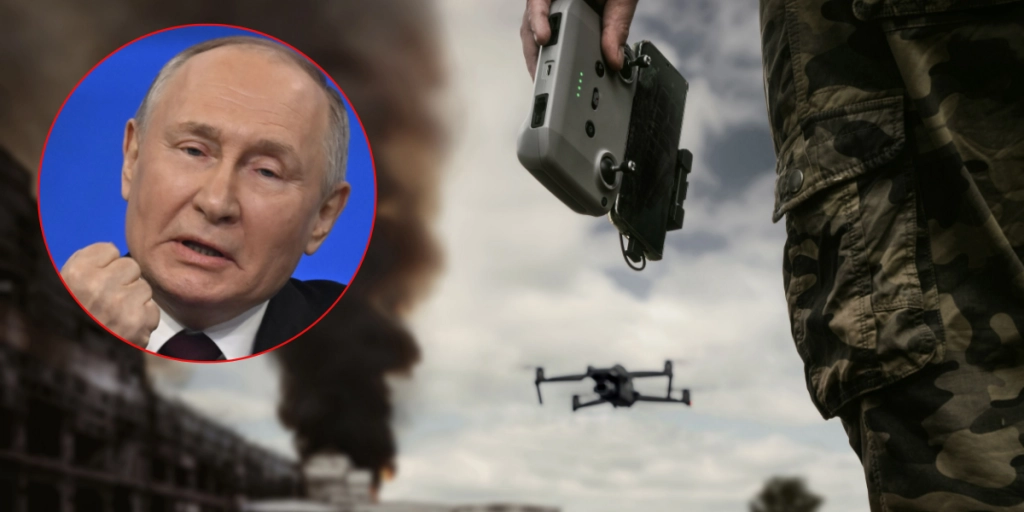
Not the best look for Putin, that the drones managed to bypass the air defense around Moscow.

It’s been just a couple of days since Ukraine launched the biggest attack on Moscow in 2026.
Actually, according to Russian state media, the Ukrainian overnight barrage between May 16 and May 17 was the largest attack on Moscow in over a year, and according to the Armed Forces of Ukraine, more than 500 Ukrainian drones targeted the Russian capital during the attack.
This morning, however, the drones flew past the Russian capital and hit a target 230 km northeast of Moscow instead.
Morning under fire
According to The Kyiv Independent, loud explosions shook the air in the historic Russian city of Yaroslavl early on Tuesday morning. It was a sudden strike, and local media and government officials quickly confirmed that a swarm of drones had targeted the region.


Shortly after the smoke cleared, Yaroslavl Oblast Governor Mikhail Yevrayev addressed the public. He confirmed a direct Ukrainian drone strike.
To ensure public safety, authorities instantly blocked a major highway leading toward Moscow. It caused immediate chaos. Morning travel out of the city completely froze as police shut down the route.
It is unclear what route the Ukrainian drones used, including if they flew within the range of the air defense systems of Moscow.
To the capital – and beyond
The long-range aerial assault was not limited to one single region. Farther south, Moscow Mayor Sergei Sobyanin reported that the capital city had also successfully repelled a similar incoming aerial threat.
Russian air defense systems reportedly shot down four military drones right over the capital. Debris fell from the sky. Even so, emergency crews rushed to the scene to secure the area.
No one was hurt, according to the reports. Still, official teams are analyzing the impact sites to clarify the full extent of the physical damage.
Striking deep inside
These latest strikes highlight a major geographic shift. Yaroslavl sits roughly 700 kilometers away from the official Ukrainian border. It is deep inside Russian territory.
The city also lies about 230 kilometers northeast of Moscow. Meanwhile, another targeted area in southern Russia, Rostov-on-Don, is situated roughly 230 kilometers from the active front lines.
Ukraine frequently launches these deep aerial attacks against critical Russian oil infrastructure. The goal is simple. By cutting off lucrative energy revenues, Kyiv actively chips away at Moscow’s capacity to wage war.
Sources: Russian local media, Telegram channels, Reuters, CNN, The Kyiv Independent, The Moscow Times, TASS



