
 Asger Risom

Russian President Vladimir Putin has admitted that Ukraine’s escalating drone campaign against domestic infrastructure is causing problems. The rare acknowledgment follows a weekend of devastating Ukrainian strikes on massive oil refineries deep inside Russia, which have triggered fuel shortages and forced a state of emergency in occupied Crimea.
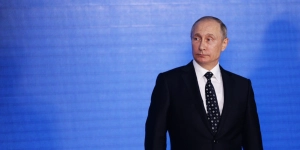

The Kremlin’s messaging is beginning to shift. After months of projecting an image of absolute stability, Russian President Vladimir Putin has publicly acknowledged that Ukraine’s escalating drone campaign against domestic energy infrastructure is creating tangible issues for the state.
A rare admission at the United Russia Congress
Speaking at the United Russia party congress on Sunday, Putin addressed the mounting domestic fallout from Ukraine’s retaliatory long-range strikes. While insisting that the West cannot inflict a strategic defeat on Russia, the Russian leader vaguely admitted to the logistical friction caused by the attacks.
According to a report by HotNews.ro, Putin stated that the Kremlin sees the problems, is aware of them, and is responding to them, while promising that the state will certainly ensure both the security of the country and its citizens, as well as the inviolability of Russia’s borders.
He framed the Ukrainian operations as terrorist attacks and promised delegates that the state would overcome all challenges directed at its territory and infrastructure facilities.


A systematic campaign to choke Russian logistics
Putin’s speech came just hours after another wave of Ukrainian drone strikes wreaked havoc on Russian energy infrastructure. Over the weekend, Ukrainian forces confirmed precision strikes on several major oil refineries deep inside Russian territory.
Among the targeted facilities was the Slavyansk Oil Refinery in the southern Krasnodar region, located approximately 300 kilometers from the front line, where a strike sparked a massive fire and killed one person. Simultaneously, Ukrainian drones successfully struck a refinery in the Yaroslavl region, sitting roughly 700 kilometers from the border.
Ukrainian President Volodymyr Zelenskyy openly claimed responsibility for the weekend operations, framing them as a critical part of a strategy to systematically weaken Russia’s ability to wage the war. The repeated strikes have dealt a massive logistical blow to the Kremlin, choking off fuel lines that supply the military while causing severe domestic gasoline shortages across western Russia.
Reaching a breaking point in Crimea
The systemic targeting of refineries is having profound ripple effects across the Russian home front, with the energy grid buckling under the pressure. On Friday, local authorities in the occupied Crimean Peninsula were forced to declare a state of emergency in a desperate attempt to mitigate the consequences of the relentless air campaign.
The situation has completely shattered the region’s summer tourist season, which was once a popular destination for Russian holidaymakers. The new reality for residents and visitors on the peninsula now consists of frequent nighttime explosions, long lines at gas stations, and oil slicks appearing along the coast.
By systematically degrading these critical nodes, Ukraine continues to prove that despite Putin’s promises of security, the economic and logistical costs of the war are bleeding deep into Russian territory.



