
 Asger Risom
A Finnish court has sentenced a local CEO to nearly four years in prison for smuggling 164 heavy trucks into Russia, marking the country’s first major criminal conviction for sanctions evasion amid growing Baltic security threats.


A court in Finland has officially handed down a landmark prison sentence to a local businessman for violating international trade restrictions against Russia.
The unprecedented ruling marks the very first criminal conviction of its kind within the Nordic nation. According to a report by United24 Media, the executive received a strict unconditional sentence of three years and eight months behind bars.
In addition to the prison term, the presiding judges ordered the complete state confiscation of the businessman’s logistics company.
The enterprise, officially known as Idän Liikenteenvälitys and operating under the name Rent ja Kalusto, will forfeit all its assets. This severe financial penalty demonstrates Helsinki’s growing intolerance for domestic enterprises facilitating Moscow’s war economy.


Law enforcement and prosecutors established that the confiscated firm systematically bypassed international trade restrictions throughout 2022 and 2023.
The company actively organized the illegal export of 164 heavy trucks and commercial trailers directly to Russian buyers. This deliberate circumvention of European Union sanctions provided vital logistical equipment to the heavily restricted Russian market.
Exploiting transit loopholes to supply the Russian market
The convicted executive utilized a common smuggling tactic by claiming the heavy vehicles were destined for legitimate customers in Turkey and Kazakhstan. The official export documentation falsely indicated that the valuable cargo was merely transiting through Russian territory to reach Central Asia. However, investigators successfully proved that the trucks and trailers never left Russia and were actively absorbed into the local economy.
During the extensive trial, the chief executive officer vehemently denied all criminal allegations brought against him by state prosecutors. He repeatedly claimed that he was maliciously set up by external actors who manipulated the final delivery destinations without his knowledge. The entrepreneur insisted that his enterprise operated completely within legal boundaries and genuinely intended to supply the vehicles to Kazakhstan.
The businessman formally stated in court that he never considered it probable that his exported vehicles would end up serving Russian interests. Despite his elaborate defense, the judicial system found the evidence of deliberate sanctions evasion to be overwhelming and conclusive. The convicted CEO still retains the legal right to appeal the court’s strict verdict to a higher judicial authority.
Armed Russian civilian vessels escalate Baltic maritime tensions
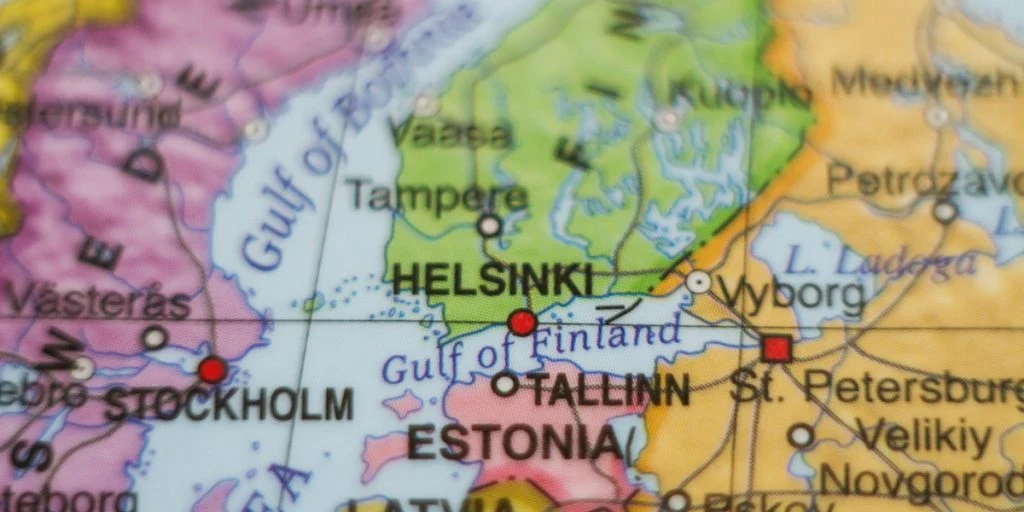
In a related regional security development, Estonian border guards recently documented a highly unusual escalation regarding Russian shipping operations in European waters. Authorities recorded what appears to be the first known instance of an explicitly armed Russian civilian tanker moving through the Gulf of Finland. This unprecedented militarization of a commercial vessel has sparked significant concerns among neighboring Baltic and Nordic states.
Aerial surveillance images captured by an Estonian patrol aircraft revealed a Kord heavy machine gun actively mounted on the Marshal Vasilevsky. This specific ship is a Gazprom-operated liquefied natural gas tanker utilized to transport strategic cargo to the isolated Kaliningrad region. The presence of heavy military weaponry on a civilian energy vessel represents a clear deviation from standard maritime protocols.
Investigative journalists suggest that the weapon was likely installed to defend the lucrative cargo against potential Ukrainian drone attacks near St. Petersburg. Alternatively, the heavy machine gun might serve as a brazen deterrent against routine maritime inspections by European law enforcement agencies. This alarming development further complicates the intense scrutiny surrounding Russia’s shadow fleet and its broader wartime economy.



