
 Kenneth Glad
Few international agreements reveal their full significance at the moment they are signed. Their consequences often emerge gradually through changing economies, shifting borders and new strategic priorities.


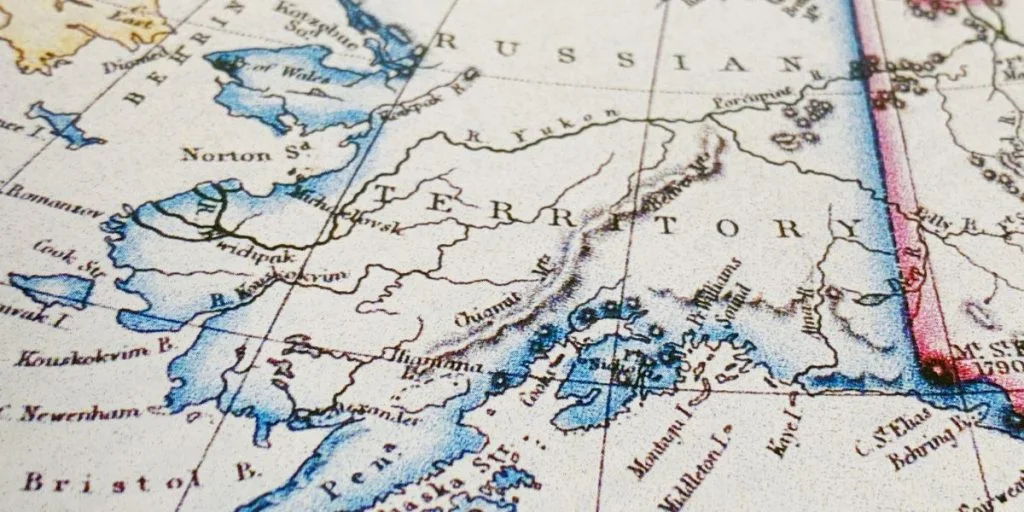
A remote northern territory became the subject of one of America’s most persistent historical myths. The political reasoning behind its sale was more calculated, and more complicated, than the familiar story suggests.
Some US newspapers, according to Latvijas Avīze, mocked the purchase, but opposition was not universal. The treaty met little resistance in the Senate, which approved it by 37 votes to two on April 9, 1867.
Russia’s calculation
US Secretary of State William H. Seward and Russian diplomat Eduard de Stoeckl agreed on a price of $7.2 million on March 30, 1867. The sum worked out at roughly two cents an acre.
According to the US Department of State’s Office of the Historian, Russia had considered selling Alaska for years. The colony was distant, costly to defend and commercially dependent on a declining fur trade.


The sale also reflected wider rivalry with Britain. Russian officials feared they might lose the territory during a future conflict, while stronger American influence in the region could limit British power.
Control formally changed hands in Sitka on October 18, 1867. The National Park Service records that the Russian flag was lowered and the US flag raised during the transfer ceremony.
A human cost
The agreement transferred authority between two governments without consulting Alaska Native peoples, whose communities had lived across the region for thousands of years.
American rule brought new institutions and economic activity, but also disruption, discrimination and pressure on Indigenous cultures. This history complicates portrayals of the purchase as a simple financial triumph.
Congress did not approve the money needed for the purchase until July 1868, more than a year after the Senate ratified the treaty.
Changing importance
Alaska’s profile rose after the 1896 discovery of gold in Canada’s Klondike region. Routes through Alaska became important gateways for prospectors travelling toward the goldfields.
Mining, fishing, oil and natural gas later became major parts of the territory’s economy. Their scale made the original price appear modest, although direct comparisons across different eras are necessarily imprecise.
Alaska also gained military importance because of its position between North America and Asia. It became the 49th US state on January 3, 1959.
Sources: US Department of State Office of the Historian; Library of Congress; National Park Service; Latvijas Avīze



