
 Kenneth Glad
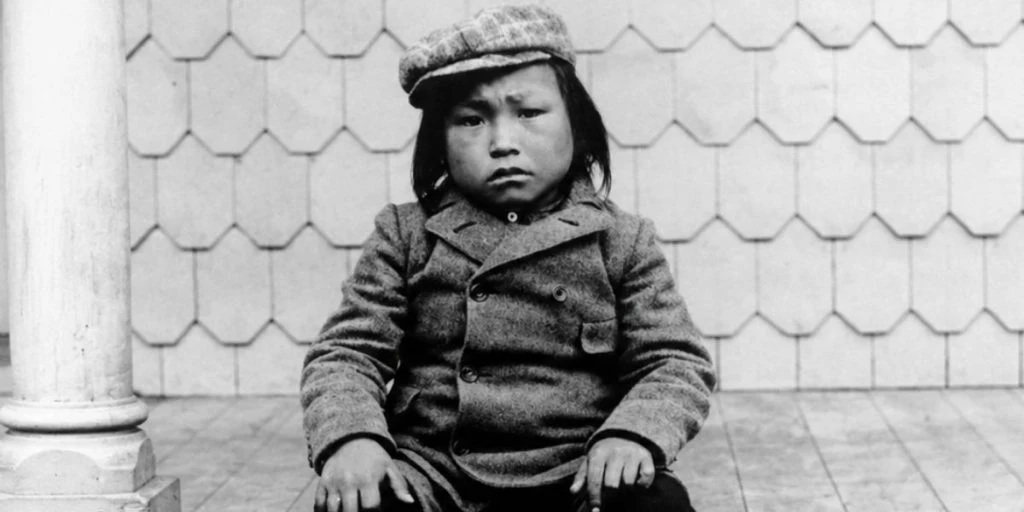
A journey across continents became the starting point for a story that would raise lasting questions about science, ethics and cultural respect. Decades later, its legacy continues to shape discussions about museums, Indigenous communities and the return of human remains.

At the end of the 19th century, New York museums presented distant peoples and cultures as objects of scientific study and public fascination. Among those drawn into that world was a seven-year-old Inuit boy from northern Greenland, brought to the city with his father and four other members of their community.
Minik believed his father, Qisuk, had been buried according to Inuit custom. Years later, while attending school in New York, he learned from classmates that the funeral had been staged and that the American Museum of Natural History had retained and displayed Qisuk’s skeleton.
The revelation destroyed his trust in the institution tied to his upbringing and led to a prolonged, unsuccessful effort to have Qisuk’s remains returned home.
A false funeral
Polar explorer Robert Peary brought Minik, Qisuk and four other Inuit from northern Greenland to New York in 1897. Historienet writes that they had been promised a return journey after about one year.


Instead, the group was housed in a large basement area at the museum, observed by researchers and shown to paying visitors and reporters. Their arrival reflected an era when Indigenous people were frequently treated as subjects of public curiosity and scientific collection.
Within weeks, all six were seriously ill and receiving treatment for tuberculosis. Qisuk died in February 1898.
Minik later recalled his father telling him: “Father’s spirit will remain with Minik always.”
According to Historienet, museum employees then arranged a ceremony resembling an Inuit burial. The figure beneath the covering was a wooden log, while Qisuk’s body was dissected. His skeleton was cleaned, preserved and added to the museum’s collection.
Three other members of the group later died. Of the five adults who travelled with Minik, Uisaakassak was the only one to return to Greenland alive.
Between two homes
Museum superintendent William Wallace and his family raised the orphaned boy. Minik attended school and adapted to life in New York, but the revelation about Qisuk destroyed his trust in the museum.
Kenn Harper’s biography, Give Me My Father’s Body, records that Minik repeatedly sought the return of the remains. His requests were rejected.
He returned to Greenland in 1909 after forgetting much of his first language. Although he worked with explorers Knud Rasmussen and Peter Freuchen, he struggled to feel fully at home and sailed back to the United States in 1916.
Minik later worked as a lumberjack near Pittsburgh and lived with the Hall family. He died during the 1918 influenza pandemic and was buried in a small cemetery near a river.
The museum released Qisuk’s remains in 1993. Their return came amid growing pressure on museums to repatriate human remains collected under practices now widely condemned as unethical.
Sources: Historienet; Kenn Harper – Give Me My Father’s Body.



