Jens Asbjørn Bøgen

For years, a mossy slab of bedrock in the Ontario bush carried a message nobody could read.


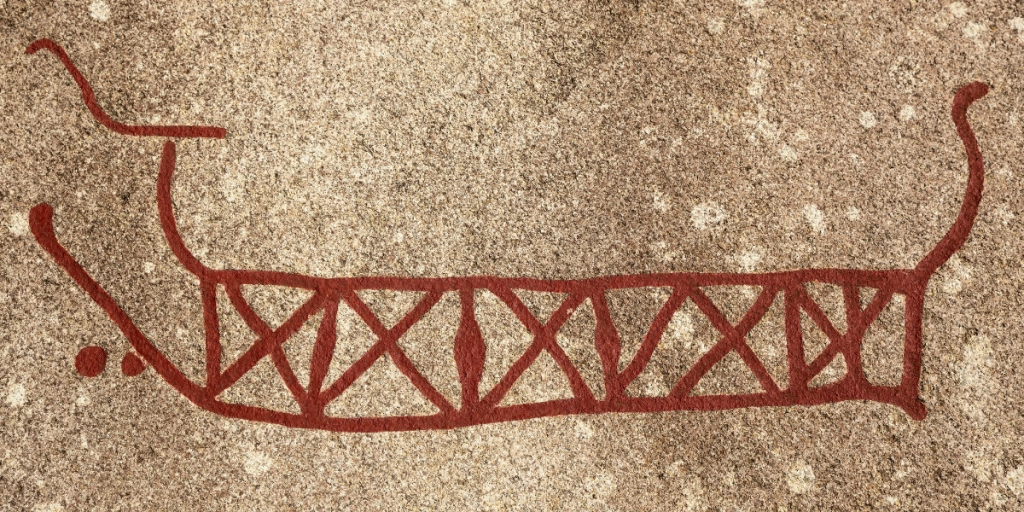
In 2018, a windthrown tree lifted the soil off a flat outcrop near the former Michipicoten fur-trading post in northern Ontario, revealing 255 deeply cut Nordic runes, a longboat carrying 16 figures, and 14 X-shaped markings. The obvious first guess was Vikings.
After seven years of study, researchers at the Ontario Centre for Archaeological Research and Education (OCARE) say the Vikings had nothing to do with it. The carving, now known as the Wawa Runestone, holds the complete Lord’s Prayer in Swedish, in a runic text form first printed by the Swedish scholar Johannes Bureus in 1611.
The identification came from Henrik Williams, emeritus professor at Uppsala University in Sweden and a specialist in runology, who worked through the symbols on-site under a tarpaulin against the northern Ontario cold. Williams dates the carving to the early-to-mid 1800s and attributes it to a Swedish laborer employed at the Hudson’s Bay Company’s nearby Michipicoten post.
Weeks of work by a single hand
The craftsmanship points to one person. “It must have taken days and days of work. They are really deeply carved into the rock,” Williams said, estimating the carver spent close to two weeks on the slab.


Company journals place Scandinavian workers at Michipicoten through the mid-1800s. Ryan Primrose, the OCARE archaeologist who brought the site forward in 2018, thinks the inscription may mark a private place of worship for the small Swedish contingent at the remote post, though he does not rule out an individual act of devotion.
“It’s certainly among the least expected discoveries of my career. It’s absolutely fascinating,” Primrose said.
The puzzle the prayer leaves behind
Identifying the text answers part of the mystery and sharpens the rest. The carved longboat with its 16 passengers and the row of 14 X-shaped marks have no obvious tie to the words of the prayer, to the daily business of a fur-trading post, or to any known Swedish folk motif.
“Why was it carved here? Why this text? There are no answers. And mysteries always draw people in,” Williams said. OCARE now considers the site one of national, and even international, significance.
Primrose has applied for a leasehold on the land and is seeking funding to build a protective shelter over the bedrock, with the longer-term aim of opening it to visitors.