
 Kenneth Glad
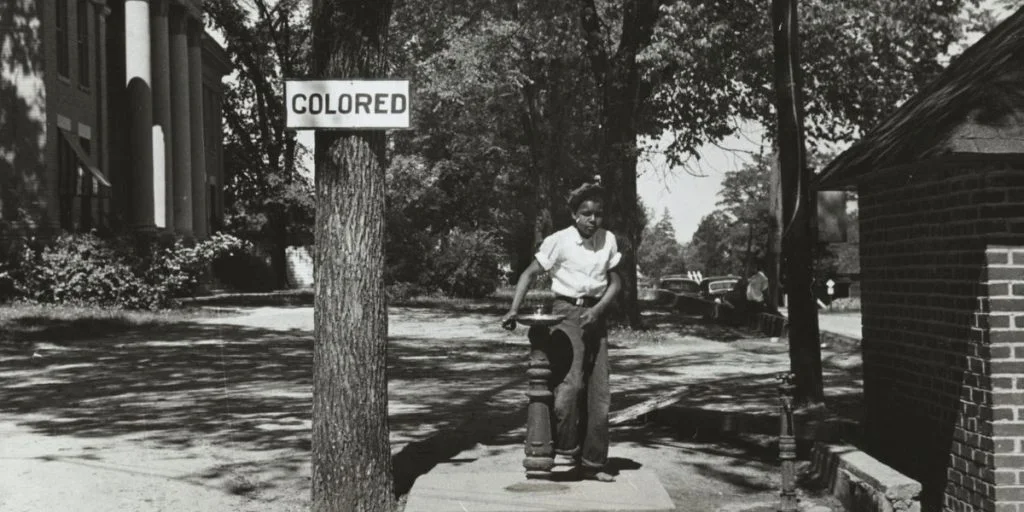
Racial inequality may have cost the United States $16 trillion in only two decades. That estimate reveals how decisions about rights, land and credit can shape an entire economy.


A 2020 Citigroup report calculated that the United States could have gained an additional $16 trillion if four gaps affecting Black Americans had been closed 20 years earlier. The estimate covered wages, education, housing and investment.
The calculation was a counterfactual model, not a record of money that physically disappeared. It measured economic activity that might have occurred through higher earnings, additional home purchases, improved education and greater investment in Black-owned businesses.
Heather McGhee, an American author who served as president of the policy organization Demos from 2014 to 2018, has examined how racial divisions can lead voters and officials to reject measures that would create wider benefits. Her 2021 book, The Sum of Us, describes this as a zero-sum belief: The assumption that progress for one racial group must come at another group’s expense.
A stark example emerged in Montgomery, Alabama, more than six decades ago.


Oak Park contained a municipal swimming pool, a zoo and other recreational facilities used by white residents. According to history site Historienet, city authorities closed the park in 1959, filled in the pool and sold the animals when maintaining segregation became legally untenable.
The pool had been a summer gathering place, but black families were barred from entering it. Rather than operate an integrated facility, the city removed the attraction altogether.
Freedom brought new restraints
Legal slavery ended nationwide after the Civil War and the ratification of the 13th Amendment in December 1865. Nearly four million people emerged from bondage, although the amendment retained an exception permitting involuntary servitude as punishment after a criminal conviction.
That exception later acquired particular importance as discriminatory laws and enforcement practices pushed black Americans into coerced labor systems. Southern legislatures adopted Black Codes that varied from state to state but commonly restricted movement, work and economic independence.
Vagrancy laws allowed authorities in some jurisdictions to arrest Black people who lacked employment recognized by white officials. Those unable to pay resulting fines could be imprisoned, hired out or compelled into labor arrangements. Employment rules also punished some workers for leaving contracts before their designated end.
The measures helped former slaveholders retain access to a controlled workforce without formally restoring slavery. Their implementation depended not only on written laws but also on policing, courts and local officials.
The 15th Amendment, ratified in 1870, prohibited the denial of voting rights on racial grounds. In the decades that followed, southern states used poll taxes, literacy tests and administrative obstacles to suppress Black voting while avoiding openly racial language.
Property offered little protection
Owning land did not always protect black communities from removal.
Seneca Village grew on Manhattan during the nineteenth century and became home to a predominantly black population that included property owners. Residents built houses, churches and a school on land that later became part of Central Park.
In 1857, New York acquired the site through eminent domain, the American form of compulsory purchase. Residents who resisted were removed as the settlement was demolished for the park.
This was different from the racial violence that later devastated black communities elsewhere. Seneca Village disappeared through government acquisition rather than a mob attack, but its residents still lost homes, land and an established neighborhood.
Greenwood in Tulsa, Oklahoma, faced a far more violent destruction. The prosperous black district contained homes, churches and businesses before a white mob attacked it beginning on May 31, 1921. The violence continued for two days, leaving residents dead or imprisoned and much of the district burned. The U.S. Department of the Interior describes Greenwood at the time as one of the wealthiest Black communities in the country.
Rosewood, Florida, was destroyed during another episode of racial violence in January 1923. Its inclusion alongside Seneca Village and Greenwood does not make the cases equivalent. They represent different ways in which black property and community life could be made insecure: Compulsory acquisition in one case and organized violence in the others.
Housing embedded the inequality
During the twentieth century, discrimination became firmly established in housing and credit markets.
From the 1930s, federal agencies, local assessors and private organizations classified neighborhoods according to perceived mortgage risk. Areas receiving the lowest grades were often outlined in red, contributing to the term redlining.
Race influenced many of these judgments. Neighborhoods with Black residents were frequently treated as dangerous investments, while federal underwriting policies, restrictive covenants and discrimination by private lenders reinforced residential segregation.
The maps did not operate alone, and historians continue to examine their precise role in lending decisions. They formed part of a larger system that restricted access to affordable mortgages and government-supported credit.
That exclusion mattered because home ownership became one of the main ways American families accumulated wealth. A property could rise in value, be inherited by children or provide collateral for education and business investment. Families kept outside the mortgage market missed decades of potential appreciation.
Housing inequality also affected public education. Local property taxes provide an important share of school funding in many parts of the United States, although state and federal contributions differ considerably. Communities with lower property values often had weaker local tax bases, leaving schools more dependent on outside funding and vulnerable to resource gaps.
Those differences could influence class sizes, facilities, staff recruitment and the opportunities available to students. Educational inequality then shaped employment and income, making it more difficult for another generation to enter the housing market.
The losses spread outward
Citigroup’s estimate attempted to measure the accumulated economic consequences of such barriers. Its report concluded that reducing racial gaps would generate wider benefits through greater earnings, investment, consumption and property ownership.
The argument does not suggest that every historical injustice can be reduced to a financial figure. It shows that excluding millions of people from productive opportunities imposes costs beyond the households directly affected.
Montgomery’s pool offers a visible example of that choice. A public facility disappeared because officials would not operate it on equal terms. Housing and credit discrimination worked less dramatically, but their effects lasted longer, influencing who could buy property, finance an education or pass wealth to the next generation.
The economic divide was therefore not produced by one law, institution or outbreak of violence. It developed through decisions made by legislators, courts, lenders, planners and local authorities over many decades.
Sources: Historienet; Citigroup; Heather McGhee – The Sum of Us; US National Archives; U.S. Department of the Interior



