
 Jens Asbjørn Bøgen
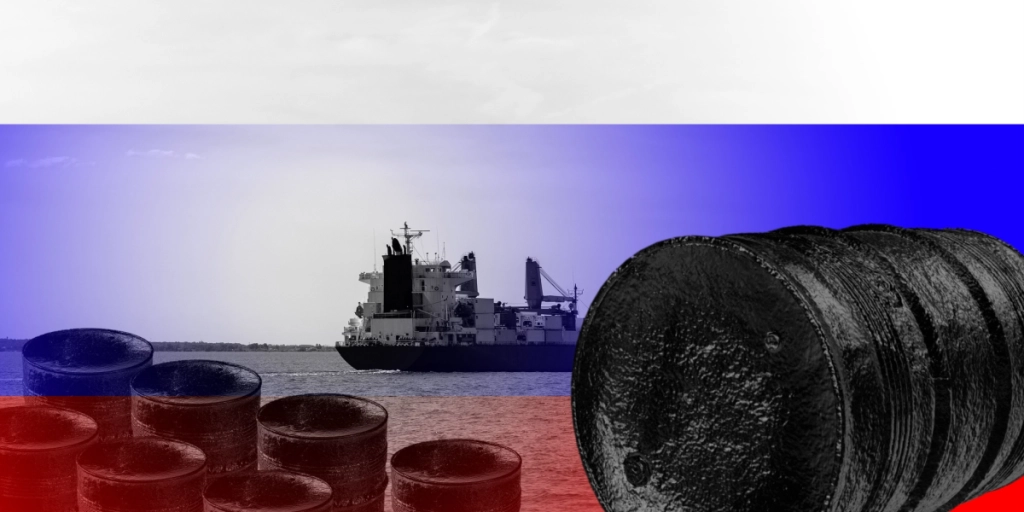
A single Arctic tanker left a new Russian port for China this week, and the Kremlin wants the world to notice.


Vladimir Putin joined by video link on September 6, ordering the first crude cargo loaded at the Bukhta Sever terminal on the Taimyr Peninsula as Rosneft chief Igor Sechin stood at the berth and called Vostok Oil “a new Russian oil and gas province of global scale.”
State media broadcast the moment as proof that the largest energy project ever undertaken by Rosneft is finally producing revenue.
Rosneft said the launch opens a 790-kilometer pipeline from the Vankor and Payakha fields to a port with 14 storage tanks of 30,000 tonnes each, backed by an investment the company puts at 4 trillion rubles (about $45 billion).
Sechin told Putin the project would ship 30 million tonnes in the second half of 2027, rise to 50 million tonnes by 2030 and eventually reach 100 million tonnes a year.


An oil analyst who has tracked Rosneft’s Arctic ambitions for two decades says almost none of that is credible.
A promise Sechin already made once
In an opinion piece published by The Moscow Times on September 9, Mikhail Krutikhin points out that Sechin made an essentially identical pledge in November 2020: 30 million tonnes a year by 2024.
That volume never appeared.
The timeline has now slid to 2027 while the eventual promise has been doubled.
Krutikhin argues the fleet needed to move that oil is largely fictional. Rosneft would require at least 40 ice-class tankers and more than 10 support vessels to handle 30 million tonnes annually, he writes, but “most of this fleet exists only on paper.” The shuttle tanker Valentin Pikul, the vessel Putin sent off with such fanfare, had sat at Bukhta Sever’s single loading berth for 84 days before departure.
The 7 billion tonne claim
Rosneft describes Vostok Oil as a world-class province with more than 7 billion tonnes of oil. Krutikhin says the wording matters: in Russian petroleum classification, “resources” refers to volumes not yet confirmed as commercially recoverable, and is not equivalent to proven reserves under international standards.
He puts the potentially recoverable base at the Payakha cluster at roughly 1.5 billion tonnes, sitting more than four kilometers deep in geologically difficult formations that require hydraulic fracturing. Such preliminary estimates, he notes, tend to shrink by 30 to 50 percent once serious drilling begins.
The older Vankor cluster, which anchors current output, has around 500 million tonnes of recoverable reserves, with water making up as much as 84 percent of the fluid being extracted. Its five fields are producing 7 to 8 million tonnes of oil a year, well short of what the new pipeline was built to carry.
Sanctions and the missing partners
The U.S. Treasury sanctioned Vostok Oil in January 2025, explicitly targeting the operator to slow construction and cap export capacity, High North News reported. European buyers are already barred from the crude.
Western trading houses that had once taken minority stakes are gone. Trafigura sold its 10 percent share in July 2022, and Vitol completed its exit later that year, gCaptain reported, leaving Rosneft to build the logistics chain almost entirely with Russian yards and Russian financing.
For now, five years and 4 trillion rubles into a project the Kremlin has staked its post-sanctions oil strategy on, Rosneft has loaded one tanker.



