
 Kenneth Glad
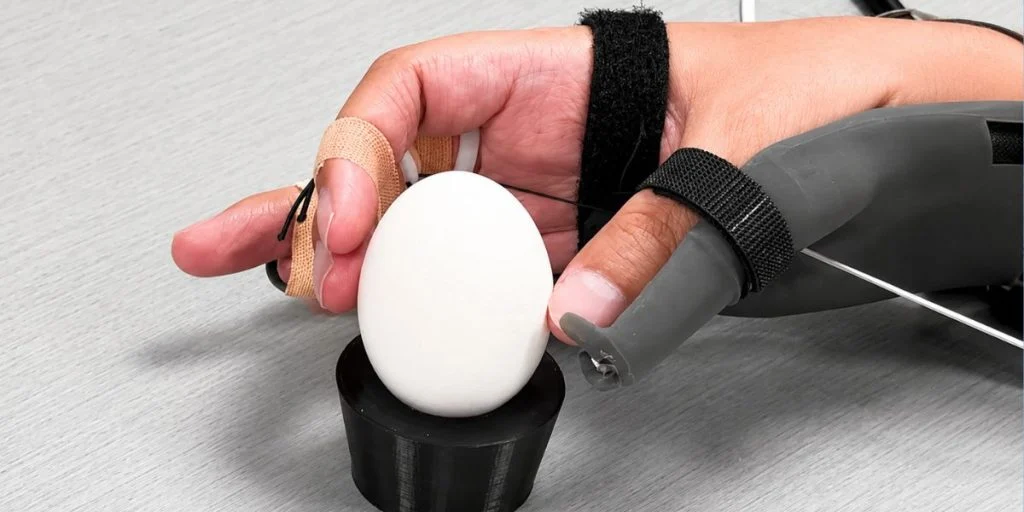
An experimental system has helped one patient recover limited control and sensation after a severe injury. The work offers an early view of how damaged neural pathways might be bypassed.


Keith Thomas can now feed himself and raise a cup to drink after years of being unable to lift his arms from his wheelchair, according to The Guardian.
The New York resident was paralysed from the chest down after breaking his neck in a swimming accident in July 2020. The injury also severely restricted the use of his arms and hands.
Thomas later enrolled in a clinical trial at the Feinstein Institutes for Medical Research. Scientists implanted electrodes in parts of his brain associated with movement and touch, forming what the team called a double neural bypass.
When Thomas thinks about moving, the implanted equipment identifies the corresponding brain activity. Those signals are sent around the injured section of his spinal cord, and electrical stimulation prompts muscles in his arms and hands to respond.


The return journey is equally important. Sensors positioned on his hand, fingers and thumb detect pressure when he touches an object, then trigger stimulation in sensory regions of the brain.
Receiving that information gives Thomas a better sense of whether he has made contact and how firmly he is holding something. Grip is harder to regulate without feedback, particularly when an object is light or fragile.
Training brought practical changes
The Nature Medicine paper reported that Thomas trained with the system for 35 weeks. Strength in his right arm increased by 86%, while his left arm improved by 62%.
With the implant and prolonged rehabilitation, he learned to bring his hands towards his face, eat without assistance and lift a cup. The Guardian reported that he also handled delicate items in controlled testing.
Scientists later turned their attention to an area of his right wrist that had remained numb since the accident. They recorded his brain activity while he imagined being touched and used those patterns during coordinated stimulation of his brain, skin and spinal cord.
That method, known as cortical mirroring, was used for 25 weeks. The study reported that sensation returned in part of the previously unresponsive area.
“In a recent follow up, it was found these gains were still present after more than two years,” said Prof Chad Bouton, who led the research. “This is incredibly encouraging.”
“For me this is an incredible moment,” Bouton said.
The persistence of some improvements while the equipment was switched off raised the possibility that repeated therapy had altered how parts of Thomas’s nervous system communicated. The study does not establish how extensive that change was, or whether the same response would occur in other patients.
The experiment involved one person. Future trials must show whether the findings can be reproduced across different spinal injuries. Researchers will also need to determine whether patients can use the technology safely and consistently beyond a closely monitored clinical setting.
Sources: The Guardian; Nature Medicine



