
 Kenneth Glad
Improvements in healthcare have helped several cities achieve higher rankings in the latest international comparison. At the same time, war and instability further weakened results in other regions.


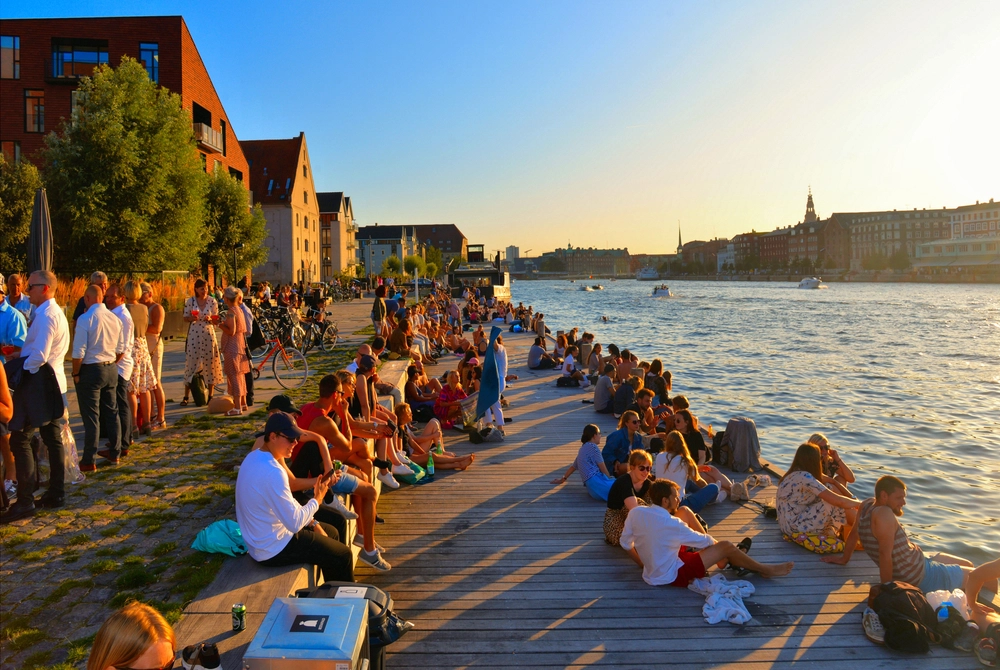
Asian cities improved their performance in the Economist Intelligence Unit’s Global Liveability Index 2026, while Copenhagen retained its position at the top.
Improvements in healthcare boosted the scores of several Chinese cities, while conflicts lowered the regional average across the Middle East and North Africa.
The index assessed 173 cities across five categories: stability, healthcare, culture and environment, education, and infrastructure. Asia accounted for nine of the top 20 cities, while Europe had seven.
Investment in Healthcare Improves Scores
Chinese cities were among the biggest movers in the index. Fuzhou recorded the largest improvement, climbing to 93rd place, while Nanjing advanced to 98th and Wuxi to 106th after both cities improved their overall scores.


According to the Economist Intelligence Unit (EIU), years of public investment have strengthened healthcare ratings in Chinese cities. At the same time, the organisation said that restrictions on political freedoms continued to weigh on scores in the culture and environment category, limiting further progress.
The findings suggest that investment in healthcare can improve a city’s overall liveability, even when other factors prevent it from reaching the highest positions in the ranking.
Tokyo climbed three places to enter the top 10 in 10th position, while Osaka ranked seventh.
New York rose three places to 66th, driven by several years of declining crime and a lower assessment of the risk of a major terrorist attack. Nevertheless, it remained the third-lowest-ranked US city.
Europe Remains the Overall Leader
Copenhagen ranked ahead of Vienna and Melbourne, receiving the highest possible scores for stability, education, and infrastructure. The Danish capital therefore retained the top position in the global ranking for another year.
Australia placed three cities in the top 10: Melbourne ranked third, Sydney fourth, and Adelaide eighth. Switzerland also performed strongly, with Zurich in fifth place and Geneva in sixth. Vancouver ranked ninth for Canada.
Western Europe remained the highest-rated region overall, although its average score did not improve compared with the previous index. According to the Economist Intelligence Unit, the region continues to benefit from strong public services and well-developed infrastructure, while several Asian cities are catching up more rapidly.
Manchester was the United Kingdom’s highest-ranked city, placing 52nd.
Quality of Life Remains Highly Competitive
Although Western Europe continues to record the highest regional average, the latest results show that several Asian cities are steadily closing the gap. According to the Economist Intelligence Unit, continued investment in healthcare was among the main drivers of regional improvements this year, particularly in China.
The report also highlights that quality of life is determined by the interaction of multiple factors rather than by a single strength. Cities with excellent healthcare or infrastructure can still rank lower if they receive weaker scores for stability or in the combined culture and environment category. Likewise, deteriorating security conditions can quickly undermine progress in other areas.
Published annually, the index is widely used by businesses, governments, and international organisations to compare living conditions in major cities. Beyond measuring everyday quality of life, the rankings are often regarded as an indicator of a city’s ability to attract skilled workers, investment, and long-term economic growth.
War Pushes Cities Down the Rankings
Damascus remained at the bottom of the ranking, while Tripoli placed one position above it. Both cities continue to be affected by instability, weak infrastructure, and broader political challenges.
According to the Economist Intelligence Unit, Damascus’s healthcare rating has improved significantly since December 2024, when the government of Bashar al-Assad was overthrown. Although this did not change the city’s overall ranking, it represented one of the few positive developments among the lowest-rated cities.
Tripoli also recorded improvements in healthcare. However, broader problems related to security and governance continued to keep the Libyan capital near the bottom of the ranking.
The Economist Intelligence Unit attributed the one-point decline in the average score for the Middle East and North Africa to the conflict it described as the “Iran War”. Tehran fell back into the 10 lowest-ranked cities after its stability score deteriorated.
Overall, the findings demonstrate how quickly progress in healthcare or public services can be overshadowed by conflict and uncertainty. While investment helped several cities achieve better positions in the 2026 index, the lowest-ranked cities remain constrained by conditions that extend far beyond urban planning.
Source: Economist Intelligence Unit



