
 Kenneth Glad
Digital tools can reveal more about our bodies, habits and attention than previous generations could measure. But constant evaluation may create anxiety alongside understanding.


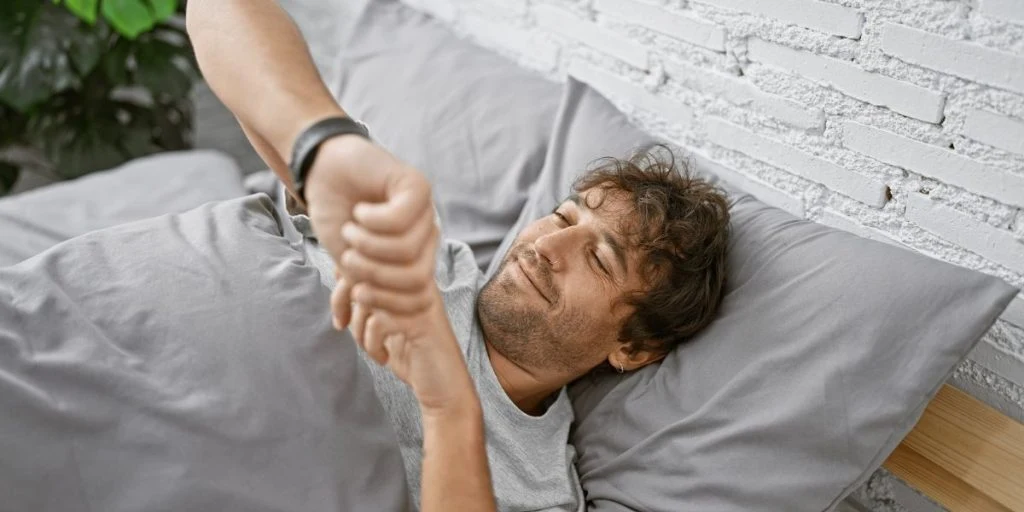
A watch records sleep, heart rate and physical activity before its wearer has left bed. A food app grades breakfast. A phone reports how much of the previous day disappeared into other applications.
Each measurement can be informative. Medical devices help patients manage chronic illness, while activity trackers may encourage movement. Trouble begins when the numbers stop supporting decisions and start determining whether a day was successful.
In an essay published by The Guardian, literary scholars Michèle Mendelssohn and Charlie Tyson describes the present period as “decadence without pleasure.” Drawing on their study of literary decadence, they argue that affluent societies retain abundance and artificiality while subordinating enjoyment to control and self-optimisation.
Their argument provides a starting point for looking at the way tracking and self-improvement have entered everyday life. Health apps, wellness content and social-media platforms all encourage people to pay closer attention to their habits, although not always in ways that make them feel better.


For many people, even downtime now comes with a purpose. Sleep is discussed in terms of next-day performance, exercise is recorded and compared, and hobbies are often expected to lead to progress, recognition or income.
Activities once valued simply because they were enjoyable can start to feel like tasks that need to produce a result.
The body becomes a data source
Consumer technology has made everyday physiology easier to observe. Watches and rings estimate sleep, stress, cardiovascular fitness and recovery. Their readings may reveal patterns that would otherwise go unnoticed.
A low sleep score can influence how someone understands tiredness before they have considered how they feel. Missing an activity target can make a restorative day appear unproductive.
Similar tensions surround GLP-1 medicines. These drugs have important clinical uses, including treating diabetes and obesity, and their medical value should not be confused with broader criticism of self-optimisation culture.
A KFF Health Tracking Poll conducted from October 27 to November 2, 2025, found that 12 per cent of US adults were currently taking a GLP-1 drug for weight loss or a chronic condition. The nationally representative poll included 1,350 adults and was conducted in English and Spanish by telephone and online.
The figure illustrates how appetite, weight and metabolic health have become major areas of medical and commercial intervention. The cultural question is not whether patients should use effective treatments. It concerns how far the expectation of bodily control extends beyond illness and into ordinary changes in hunger, energy and appearance.
Wellness content thrives on uncertainty
Health monitoring now extends beyond doctors and devices. Social-media personalities and podcast hosts offer guidance on nutrition, hormones, exercise, skin, sleep and mental health, sometimes combining personal testimony with product promotion.
Pew Research Center published a study in May 2026 examining Americans who received health and wellness information from social-media influencers or podcasts. Only 10 per cent trusted all or most of that information. Among the same audience, 26 per cent said the material had made them more worried about their health, rising to 36 per cent among those aged 18 to 29.
Consumers did not regard the material as entirely harmful. Fifty-four per cent said it had helped them understand how to be healthy. Pew’s research combined two nationally representative surveys with an analysis of 12,800 accounts associated with 6,828 prominent health and wellness influencers.
The same advice may therefore be reassuring in one context and unsettling in another. Someone may find a useful explanation while leaving with a longer list of symptoms, deficiencies and risks to investigate.
For businesses built around repeat attention, uncertainty has commercial value. It provides a reason to watch another episode, purchase another test or begin a different routine.
Wanting is not the same as liking
In January 2025, Scientific Reports published a study applying the psychological distinction between “wanting” and “liking” to different Facebook functions.
Dorottya Lakatos and her colleagues analysed completed survey responses from 1,436 adult Facebook users. Participants were recruited through Facebook advertisements, and almost 90 per cent were women, which limits how confidently the results can be applied to a wider population.
Wanting was positively associated with usage frequency, time spent on Facebook and problematic use. Associations involving liking were weaker and varied according to the platform function being examined.
The researchers did not establish that people universally want social media more than they enjoy it. Their findings demonstrate that the motivation to check a platform feature can be separated from the pleasure a user reports receiving from it.
Screen use depends on context
The OECD policy brief Screen Time and Subjective Well-being: Insights from a Few Countries Worldwide was published on December 4, 2025. It examined cross-country polling conducted in 14 nations as part of the OECD Digital Well-being Hub.
Its regression analysis used one to three hours of personal daily screen use as a reference group. People reporting more than five hours had significantly higher odds of poor mental well-being, low life satisfaction and a weak sense of purpose.
The analysis did not establish that screen use caused those outcomes. Financial hardship, inadequate sleep and low physical activity were stronger predictors of poor well-being. Loneliness and unemployment also increased vulnerability when combined with prolonged screen use.
These results do not produce a universal safe limit. A screen may provide social contact, entertainment or access to services, particularly for someone whose offline options are restricted. Its effects depend on what the person is doing, why they are doing it and which activities are being displaced.
Counting hours alone cannot capture those differences.
Not everything needs a score
Psychologists and psychiatrists use the term anhedonia to describe a reduced ability to feel interest or pleasure in activities that were previously enjoyable. It is not simply boredom or dissatisfaction with everyday life, but a recognised symptom associated with conditions including major depression.
Researchers have also examined how it relates to the brain’s systems for anticipating and experiencing rewards.
The term should not be used casually to describe boredom with a phone or irritation with a fitness score. The cultural problem discussed here is not a clinical diagnosis. It is the pressure to justify enjoyment through some additional benefit.
A walk becomes exercise data. Reading becomes professional development. Rest is defended because it might improve tomorrow’s work.
These activities may provide such benefits. The difficulty arises when usefulness becomes the only language available for explaining why they matter.
Walter Pater, the nineteenth-century English critic, offered a different approach in the conclusion to The Renaissance. He asked readers to attend closely to the impressions created by art, music, personalities and physical sensations. His argument centred on the intensity and character of lived experience rather than its measurable output.
Mendelssohn and Tyson use Pater as a counterpoint to contemporary optimisation culture. Their application of his writing belongs to the present debate, not to Pater’s own historical circumstances.
The same distinction can be applied directly to tracking technology. A sleep score can identify a pattern, but it cannot determine whether a quiet morning was wasted. A screen-time report can count minutes, but it cannot distinguish a difficult family conversation from an hour of automatic scrolling.
Measurements can describe parts of a life. They cannot determine what makes that life worth experiencing.
Sources: The Guardian; KFF; Pew Research Center; Scientific Reports; OECD; National Institute of Mental Health; Walter Pater – The Renaissance



