
 Kenneth Glad
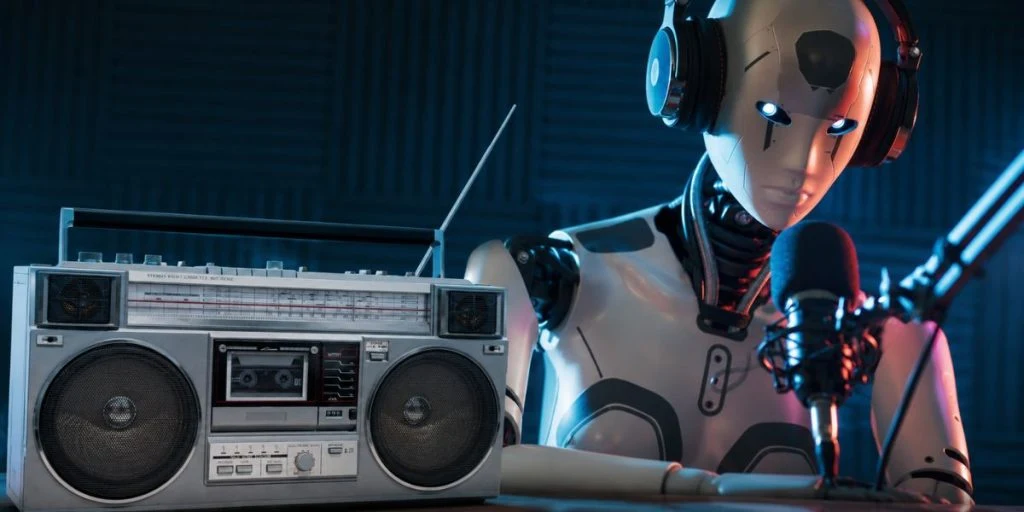
New production tools are reshaping how media companies use their existing work. The emerging model may favor narrowly focused services as much as large-scale programming.


Artificial intelligence could create its greatest value in audio not by replacing people, but by making overlooked or narrowly focused ideas practical to produce, Jeanine Wright argues to the media outlet Radionytt.
In her view, the technology can lower the barriers that have traditionally prevented smaller concepts from moving beyond the planning stage.
Wright, chief executive and co-founder of Los Angeles-based Inception Point AI, said conventional audio production often demands substantial staffing, studio time, editing and coordination.
Those requirements can make projects aimed at small, local or highly specific audiences too costly to justify, even when the underlying idea has clear editorial or audience value.


Local services gain ground
In Wright’s assessment, lower production costs could support local updates, niche shows and programming for smaller language communities that broadcasters once considered financially unsustainable.
She also pointed to linear radio, where AI hosts could assist with traffic bulletins, local news, overnight output and round-the-clock programming. Wright suggested such systems could also react to listener messages, although editorial responsibility would remain with human teams.
Journalists, producers and hosts would still conduct interviews, research stories and make publishing decisions, she told Radionytt. AI’s role, in her view, is to extend the reach of completed work rather than remove those who created it.
Archives find new uses
Large media libraries offer another testing ground. Wright said older articles and broadcasts could be converted into audio, video or versions for other language markets instead of remaining unused after their original release.
That approach could also reshape on-demand publishing. A written report might become a narrated feature, while a podcast could be adapted for video or redistributed in several languages.
Wright further argued that established hosts and media brands could appear across more formats without requiring the same increase in recording time. Any synthetic host, she said, would still need a recognizable personality, natural delivery and a style consistent with the outlet using it.
Before co-founding Inception Point AI, Wright served in executive roles at Wondery and AdsWizz and co-founded the podcast platform Simplecast.
Sources: Radionytt; Inception Point AI



