
 Kenneth Glad
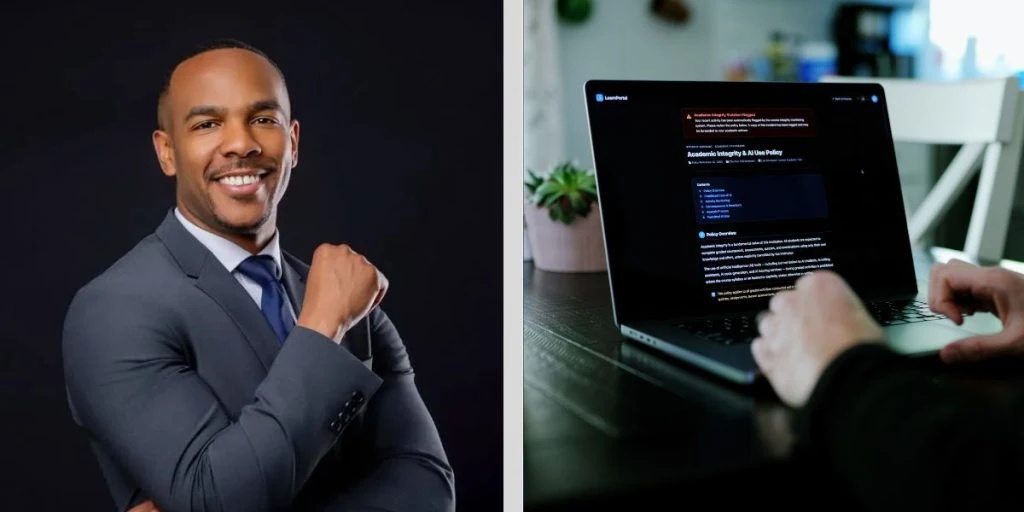
A simple classroom exercise produced an unexpected pattern across dozens of submissions. The outcome highlights the growing challenge of assessing original work in an era of widely available AI tools.


A reference to Madagascar appeared in 32 of 35 submissions after an Alcorn State University professor concealed an instruction inside an exam prompt.
Jason Gibson, who teaches history at the Mississippi university, placed white text against a white background in a question about the Industrial Revolution. The instruction could be transferred when students copied the prompt into a chatbot, even though it was not visible during ordinary reading.
When Gibson reviewed the work, he found that nearly every response followed the concealed command by placing Madagascar into an unrelated passage. He told local outlet WAPT that the 32 students received no credit for that portion of the assessment.
The clue has limits
The repeated word strongly indicates that the hidden instruction was copied, processed and reproduced. It does not establish which chatbot was used, whether every answer was generated in full or whether all students followed an identical method.


Gibson adopted the tactic after noticing that several students’ written work sounded alike and differed from how they communicated in class, according to the New York Post. He also said conventional detection programs could be circumvented through rewriting and automated typing tools.
Independent research supports caution over detector results. A 2024 study by Mike Perkins and six co-authors tested six systems on 805 samples. Average accuracy fell from 39.5 percent to 17.4 percent after generated writing was modified with evasion techniques.
A separate study led by Debora Weber-Wulff evaluated 12 public detectors and two commercial products. Published in the International Journal for Educational Integrity, it concluded that the systems were not sufficiently accurate or dependable to determine authorship by themselves.
Gibson’s hidden instruction gave him a clearer sign than an AI-detection score alone. Still, the account has not been independently verified through a review of the students’ original files.
Sources: WAPT, New York Post, Perkins et al., Weber-Wulff et al.



