
 Kenneth Glad
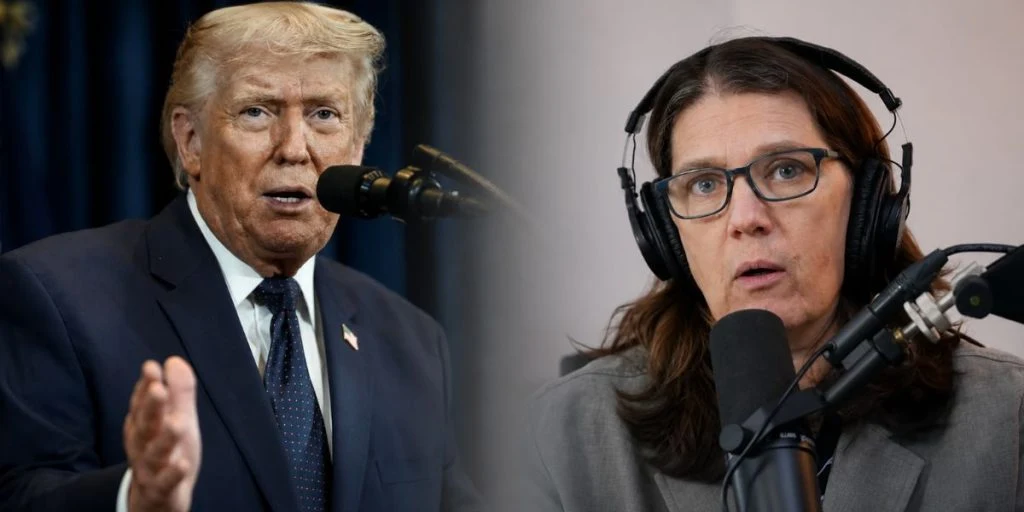
Recent appearances have renewed scrutiny of how public figures react when their remarks fail to connect. The discussion focused on changing habits rather than any single event.


Mary Trump says that President Donald Trump is becoming less effective at recognizing when an audience is turning against his message.
Speaking on the July 30 episode of Fast Politics, the psychologist, author and president’s niece contrasted his recent appearances with what she described as a former ability to change direction immediately.
She recalled that, after supporters booed his positive comments about the COVID vaccine, he did not repeat the message publicly.
A reflex appears weaker
“Donald did have the ability to read the room better,” she said. “He was good at pushing the envelope in ways and then recalibrate in real time.”


Mary Trump argued that the instinct has weakened. She linked the change to what she believes is reduced impulse control and cognitive decline, though her comments are personal observations rather than an independent medical assessment.
Host Molly Jong-Fast pointed to Trump’s speech at the rescheduled White House Correspondents’ Association dinner. She said he continued after his remarks received a poor response.
Mary Trump said the episode suggested he was less able to recognize and answer the room’s reaction.
Other appearances drew scrutiny
The conversation also covered Lindsey Graham’s funeral. Jong-Fast asked about footage showing Trump knocking on the senator’s coffin, while Mary Trump said she could not explain the gesture.
Click to display external content from iFrames except google ads,
- You can always enable and disable third-party content.

You agree to display external third-party content. Personal data may be sent to the provider of the content and other third-party services.
The funeral led to a broader discussion of Trump’s relationship with Graham. Both speakers portrayed his political alliances as transactional and questioned what Graham’s years of loyalty ultimately achieved.
Mary Trump also claimed Trump’s emphasis on the SAVE Act, proposed legislation concerning voter-registration requirements, reflected concern about Republican prospects in the approaching midterm elections.
Negative attention feels different
Jong-Fast suggested that gasoline prices had caused more immediate political damage than Trump’s legal controversies. Mary Trump agreed, saying voters respond strongly to food costs, fuel prices and how far their paychecks go because those pressures are felt directly in everyday life.
She argued that such economic concerns are harder to dismiss than scandals that may seem distant or complicated to many voters. Rising household expenses, in her view, can cut through partisan messaging because people can compare political claims with what they are paying at the grocery store or the gas pump.
Her wider argument was that Trump is losing control of the political narrative. Mary Trump said the negative attention now centers more on perceived weakness, poor performance and diminishing effectiveness than on the kind of controversy-driven publicity she believes he has previously used to remain politically dominant.
Sources: Fast Politics podcast



