
 Lauge Risom Koch
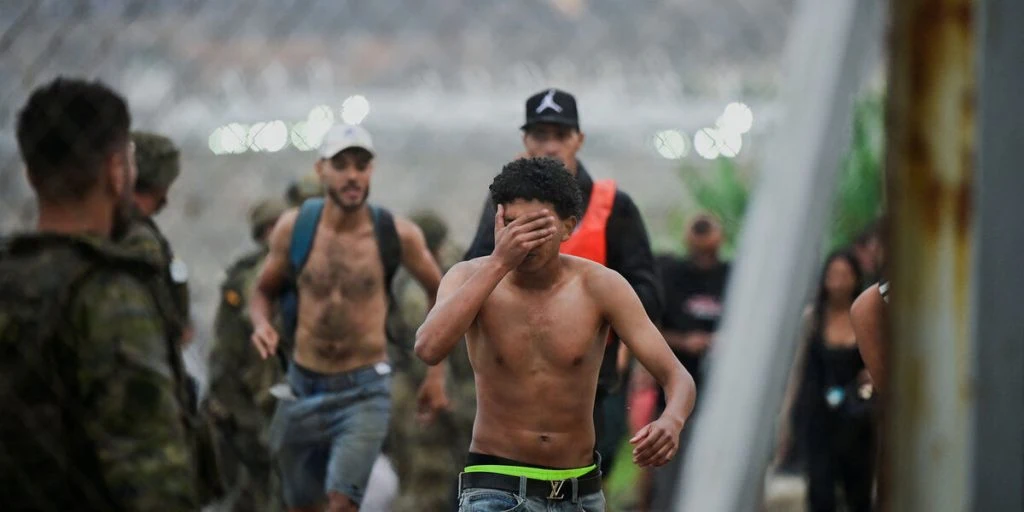
Spain deploys military forces to Ceuta as thousands of migrants breach the border, triggering a severe humanitarian emergency and a bitter diplomatic dispute with Italy.


The Spanish government is scrambling to regain control of its North African enclave after a complete collapse of civilian border security allowed a massive influx of unauthorized migrants. Local residents awoke to chaotic scenes as exhausted families and teenagers flooded the beaches, overwhelming municipal resources and triggering an immediate humanitarian emergency. The sudden breach has exposed deep vulnerabilities in European frontier defenses while igniting a fierce diplomatic firestorm across the continent.
The Border Breach
The Spanish government has ordered an emergency military deployment to Ceuta after civilian border controls completely failed. Thousands of desperate individuals circumvented the concrete breakwaters by swimming directly into Spanish waters during the early hours of Thursday morning. Local authorities remain utterly overwhelmed as the chaotic influx continues to breach the heavily fortified frontier without significant resistance from Moroccan forces.
Spanish news outlets estimate that tens of thousands of migrants successfully reached the beaches before military reinforcements arrived. Tragically, at least forty-three individuals drowned in the Mediterranean Sea while attempting the perilous swim around the coastal fences. The national defense ministry confirmed that the armed forces will now actively assist the Civil Guard in securing the compromised perimeter and maintaining basic order.
The sudden surge closely follows a controversial legal precedent that fundamentally altered how authorities handle maritime interceptions. Earlier this month, the Spanish Supreme Court officially ruled that border guards can no longer summarily return undocumented migrants to Morocco if they are caught at sea. The interior ministry believes human trafficking networks are actively weaponizing this legal mandate to encourage a massive wave of unauthorized crossings.


The Diplomatic Fallout
The localized border failure has instantly ignited a fierce diplomatic confrontation across the broader European Union. Italian Prime Minister Giorgia Meloni publicly suggested that her government might push to temporarily suspend the Schengen agreement with Spain in response to the crisis. She described the televised images from the enclave as shocking evidence that uncontrolled migration directly threatens the foundational security of European borders.
Spanish officials reacted furiously to the Italian threats, accusing their Mediterranean neighbors of exploiting a humanitarian disaster for cheap political leverage. Foreign Minister José Luis Albares condemned the remarks as highly inappropriate for a partner nation that should ideally offer systemic solidarity rather than partisan demagoguery. The bitter exchange highlights the deep fractures within the bloc regarding how member states manage their external frontier security.
Meanwhile, Spanish Prime Minister Pedro Sánchez is scrambling to project control ahead of an emergency visit to the besieged enclave on Friday. The national government faces mounting pressure from local administrators who argue that Madrid moved far too slowly when the initial warning signs appeared. With tensions boiling over, unconfirmed reports point to violent clashes erupting in the neighboring Moroccan city of Fnideq as security forces deployed water cannons.
The Humanitarian Toll
Beyond the fierce political rhetoric, the reality on the ground in Ceuta is one of absolute humanitarian exhaustion. Exhausted families and shivering teenagers crowd onto the sandy beaches, leaving behind a massive trail of discarded inflatable swimming rings and flippers. Temporary reception centers meant for a few hundred people are now buckling under the weight of thousands of immediate asylum claims.
The regional president of Ceuta, Juan Jesús Vivas, issued a desperate plea for mainland intervention, warning that the city cannot sustain the sudden population spike. Local medical workers are running critically low on thermal blankets, dry clothing, and basic first aid supplies required to treat hypothermia and severe physical exhaustion. Volunteers from various non-governmental organizations are working around the clock, yet they simply cannot process the sheer volume of arriving individuals.
The current catastrophe directly mirrors the infamous crisis of May 2021, when roughly eight thousand people breached the exact same coastline in a matter of days. Since then, Spain spent millions of euros upgrading surveillance technology and reinforcing physical barriers to prevent a massive recurrence. However, the chaotic scenes unfolding this week prove that fortified walls offer little deterrence to desperate people fleeing deep economic instability.



