
 Daniel Wolfram
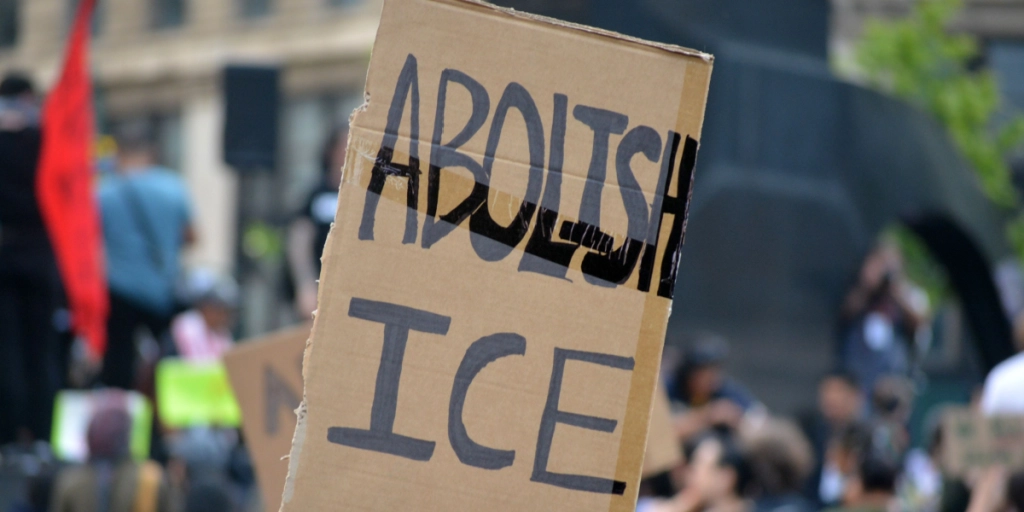
Trump’s Department of Justice is using Civil War-era law to strike down hard on people protesting ICE and other types of law enforcement.
Early one morning, a Minneapolis special education teacher opened her door to find armed federal agents. They informed her she faced serious conspiracy charges linked to an anti-deportation demonstration outside an immigration building.
That arrest was far from an isolated incident. According to court records analyzed by NPR, federal prosecutors have increasingly deployed a heavy-handed charge against activists protesting immigration enforcement.
Old law, new targets
The statute dates back to the Civil War and can bring up to six years in prison. Historically, officials rarely used it against ordinary demonstrators.
Before recent shifts, the government mainly aimed this law at far-right groups involved in the Capitol attack. Now, more than three dozen activists face these exact charges across multiple states.


Casting a wide net
Legal experts worry the Justice Department is overreaching to intimidate political opponents. Civil disobedience typically yields minor citations like trespassing or disorderly conduct, not federal felonies.
In a statement to NPR, the Justice Department defended its strategy. “People should not mistake violence against law enforcement or impeding officers performing their duties with peaceful protest,” officials stated.
Internal documents cited by Reuters show top leadership urged prosecutors to hit demonstrators with the highest provable offenses. That aggressive directive triggered immediate pushback within federal law enforcement circles.
One federal prosecutor in Washington state resigned rather than sign a conspiracy indictment against local demonstrators. His successor quickly approved the charges, leading to convictions at trial.
Fighting for justice
“At the end of the day, I fundamentally couldn’t stomach admitting to doing something I know I didn’t do,” convicted organizer Jac Archer told NPR after rejecting a plea deal.
Former prosecutor Richard Barker criticized the strategy. He told The Guardian the case used “a Civil War-era law dusted off to punish members of our community who stood up for two young men who were unlawfully detained by ICE.”
Some cases have collapsed under scrutiny. In Illinois, a judge dismissed similar conspiracy charges against two activists after allegations of prosecutorial misconduct surfaced. But other cases have ended in large prison sentences.
Escalation of anti-terrorism laws
One of these cases revolves around the prosecution of ICE protesters in the Texas Prairieland case. The eight charged in this case have all received unusually harsh sentences from 30 to 100 years in prison.
The Texas protesters were charged with plotting an assassination of ICE agents during the protest. To prove this conspiracy, the Department of Justice successfully argued that the protesters being in a book club was a larger part of a terrorist plot.
This case has shocked legal and civil liberties experts, who claim the Trump administration is making an example of these protesters.
“It is not only an attempt at chilling speech, but an indication that [the Trump administration is] going to continue going after protests extremely hard,” says Chip Gibbons, policy director at the advocacy group Defending Rights and Dissent, to The Guardian.



