
 Nicolai Haugsted

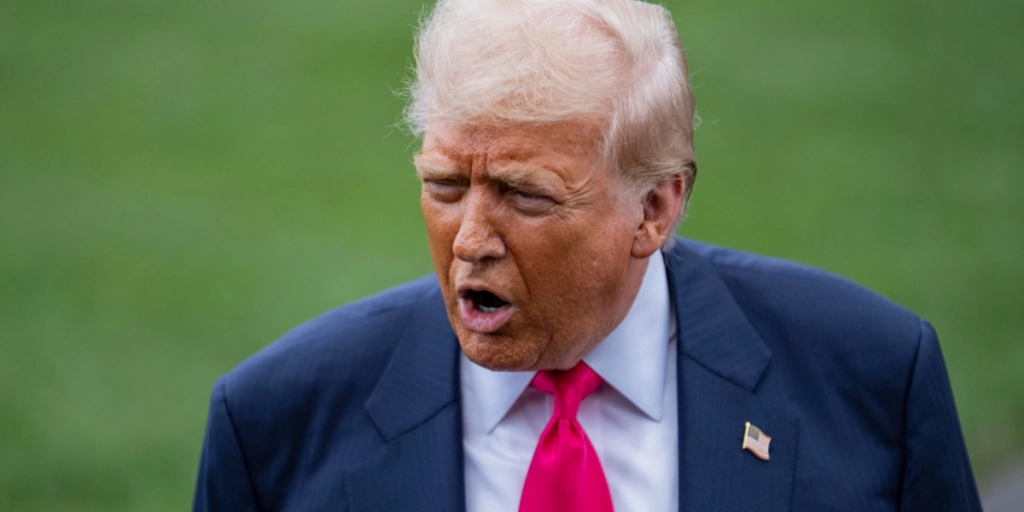
Trump’s latest remarks leave critics questioning whether he understands the challenges facing American farmers.

American farmers have spent much of the year navigating a difficult economic landscape, with rising production costs and uncertainty over trade policies putting additional pressure on agricultural businesses.
For cattle ranchers, the situation has become particularly complicated. Beef prices at grocery stores have reached record levels, while producers have faced declining cattle prices and concerns about competition from cheaper imports.
The tension has been especially noticeable in Kansas, where livestock production plays an important role in the state’s agricultural economy.
President Donald Trump has repeatedly promised to protect American farmers and strengthen domestic production. However, some of his administration’s recent trade decisions have drawn fierce criticism from the very industry he has pledged to support.


And during a campaign appearance in Kansas on Sunday, the president offered a rather straightforward suggestion for dealing with the country’s beef shortage.
Speaking directly to a crowd that included cattle producers, Trump suggested that ranchers should simply increase their output.
The remarks quickly attracted attention, particularly given the industry’s ongoing complaints about the administration’s economic policies.
Trump tells ranchers to speed things up
Trump made the comments during a rally for Republican Senator Roger Marshall at Hangar 509 at Salina Regional Airport.
The appearance marked the president’s second visit to Kansas in two weeks and what he described as the final stop of a 30-rally tour ahead of the congressional midterm elections.
With food prices continuing to trouble American households, Trump turned his attention to beef production.
“We could use a little more beef if you don’t mind,” the president told the crowd.
He then added a direct request.
“Could you speed it up a bit?”
The remarks were brief, but they highlighted a much larger dispute between the administration and American cattle producers.
Journalist Aaron Rupar shared a clip of the exchange on X, drawing attention to the contrast between Trump’s suggestion and the financial challenges facing ranchers.
Increasing beef production is not simply a matter of working longer hours or moving animals through farms more quickly.
Cattle breeding and raising require substantial time, and rebuilding a depleted national herd can take years.
That makes the president’s suggestion considerably more complicated than it may have sounded from the rally stage.
Click to display external content from x,
- You can always enable and disable third-party content.

You agree to display external third-party content. Personal data may be sent to the provider of the content and other third-party services.
America’s cattle population has fallen to historic lows
The United States is experiencing a significant shortage of cattle, helping explain why beef prices have remained stubbornly high.
The country’s beef cow herd has fallen to its lowest level since 1951.
Years of drought, high operating costs and changes in herd management have contributed to the decline.
The consequences are increasingly visible in American supermarkets.
Earlier this year, the average price of ground beef reached a record $6.89 per pound.
The US Department of Agriculture has projected that beef prices could rise by another 10 percent before the end of 2026.
For consumers, the situation means paying more for an everyday grocery item.
For ranchers, however, high retail prices do not automatically translate into higher profits.
Their earnings depend on the prices they receive for live cattle, while expenses such as feed, fertilizer, transportation and equipment continue to affect their businesses.
Expanding herds also requires ranchers to retain breeding animals rather than sell them immediately, reducing the number of cattle available for slaughter in the short term.
Consequently, increasing production is a lengthy and expensive process rather than an immediate solution to rising supermarket prices.
Trump’s import policy angered American ranchers
The president’s remarks came after months of criticism surrounding his administration’s approach to beef imports.
In August, Trump suspended tariffs on up to 300,000 metric tons of imported beef, much of it expected to come from Argentina.
The administration’s objective was to increase supply and help bring down prices for American consumers.
But the decision caused considerable frustration among domestic cattle producers.
Ranchers argued that allowing larger quantities of cheaper foreign beef into the market could weaken the prices they receive for their own animals.
Kansas Farm Bureau president Glenn Brunkow was particularly critical.
He described the administration’s plan as “bad for consumers, destructive for ranchers and anti-American in principle.”
The criticism reflected a concern that American producers were being asked to compete against cheaper imports while continuing to deal with high domestic operating costs.
For ranchers who had already endured years of difficult conditions, the prospect of additional foreign competition was hardly welcome news.
And market movements following Trump’s announcement appeared to reinforce some of those concerns.
Cattle prices dropped after the Argentina proposal
According to reporting by the Associated Press, cattle prices declined shortly after Trump raised the possibility of increasing beef imports from Argentina.
Animals that had been selling for approximately $3,000 each experienced price reductions of more than $100.
Another industry analysis estimated that American ranchers lost between $300 and $400 per animal between June and August.
Those figures reflect the financial pressures facing producers, although changes in cattle prices can result from multiple market factors.
The timing of the administration’s import proposal nevertheless became a major source of frustration within the industry.
Ranchers found themselves confronting a difficult combination of circumstances.
Consumers were paying historically high prices for beef, while the market value of live cattle had weakened from earlier levels.
At the same time, production expenses remained a concern.
Against that background, Trump’s request for producers to accelerate their output attracted criticism from observers who argued that his own trade policies had contributed to the industry’s difficulties.
Journalist points to an awkward contradiction
Aaron Rupar, who shared the president’s remarks on social media, criticized the administration’s approach to cattle producers.
In his accompanying post, Rupar accused Trump of making life harder for ranchers through his import and tariff policies before asking them to increase production.
He wrote that Trump “imports the cheap beef that tanks your cattle check, tariffs the stuff that raises your feed and fertilizer… then stands in Kansas and tells the people he just hit to produce faster.”
The criticism highlighted a potential contradiction between the administration’s efforts to reduce consumer prices and its promises to support American agriculture.
Importing additional beef can increase market supply and potentially reduce pressure on retail prices.
However, additional competition can also place downward pressure on the prices domestic producers receive.
Tariffs affecting agricultural inputs may further increase production expenses, depending on which goods are covered and how costs are passed through the supply chain.
Balancing those competing interests is a difficult task for any administration.
Trump’s comments in Kansas brought that tension into unusually sharp focus.
Kansas farmers are growing frustrated with trade disruptions
The controversy comes at a politically sensitive moment for Republicans.
Kansas has a substantial agricultural industry, and concerns about farming income and rising household expenses have become important issues ahead of the midterm elections.
According to the Kansas Reflector, voters in the state have expressed anxiety about the rising cost of living and frustration with trade disruptions associated with Trump’s policies.
The publication described voters as “anxious about the surging cost of living and angry about trade disruptions created by Trump that undercut farmers and ranchers.”
Those concerns present a challenge for Republican candidates seeking to maintain support among agricultural communities.
Trump’s visit to Salina was intended to support Senator Roger Marshall’s reelection campaign and encourage Republican turnout.
However, the president’s comments about beef production also brought attention to the economic pressures facing an industry with considerable influence in the state.
For ranchers, the debate extends beyond a single remark at a political rally.
Their livelihoods depend on a combination of market prices, trade rules, production expenses and the time required to raise livestock.
A simple request meets a complicated reality
Trump’s suggestion that ranchers should produce more beef was consistent with his administration’s stated desire to increase supply and reduce prices for consumers.
But the industry’s challenges cannot be resolved simply by asking producers to work faster.
The historically small cattle herd limits how quickly domestic production can expand.
Meanwhile, the administration’s decision to encourage additional imports has raised concerns about the prices ranchers receive for their animals.
The president’s comments therefore arrived at an uncomfortable moment for an industry already questioning whether Washington’s policies are helping or hurting its businesses.
Although the remarks themselves were brief, they offered a revealing glimpse of the competing pressures surrounding American agriculture.
Consumers want affordable beef, ranchers want sustainable prices for their livestock, and the White House is attempting to address both concerns.
For cattle producers in Kansas, however, Trump’s request to speed up production may have sounded considerably easier than the economic reality they face every day.
Rebuilding America’s cattle herd will take time, investment and favorable market conditions, regardless of how quickly the president would prefer to see more beef reach supermarket shelves.



