
 Kenneth Glad
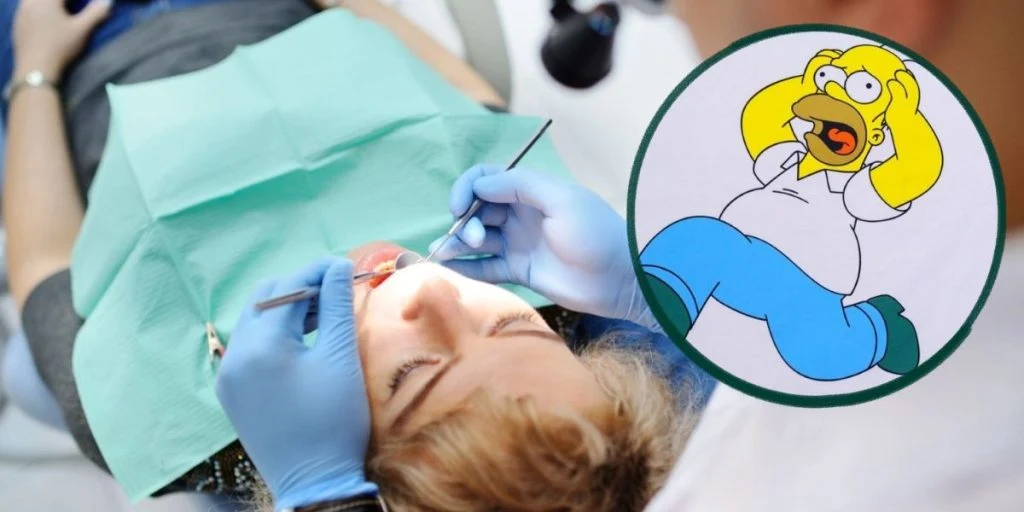
Homer Simpson’s rise as a union leader begins with a problem at home, not a political awakening. That modest motive gives one celebrated episode its lasting emotional force.

“Dental plan.”
“Lisa needs braces!”
The repeated exchange captures the entire premise of “Last Exit to Springfield.” Homer barely notices that the Springfield Nuclear Power Plant workers are about to lose their dental coverage until he remembers that Lisa needs orthodontic treatment.
The proposed contract disguises the cut as a trade: The workers will receive a free keg of beer at union meetings if they surrender their dental coverage. They eagerly accept until Homer realizes what losing the plan will mean for Lisa’s braces.


The joke is sharper than it first appears. Beer offers an obvious reward in the present, while dental coverage seems easy to give up when nobody expects to need it. Lisa’s braces suddenly reveal the cost of that decision.
First broadcast on March 11, 1993, the episode was written by Jay Kogen and Wallace Wolodarsky and directed by Mark Kirkland. In a retrospective, Collider describes it as a creative high point for The Simpsons. Entertainment Weekly also ranked it first in its 2003 list of the show’s 25 best episodes.
Homer changes his mind
Homer objects to the deal for one simple reason: His family can no longer afford to lose the benefit.
That makes his reaction surprisingly believable. He is no more interested in union politics than the workers celebrating the promise of free beer. The difference is that he already knows his family will need the coverage everyone else is prepared to trade away.
Once Homer speaks up, his co-workers elect him union president. Mr. Burns, meanwhile, convinces himself that he is dealing with an experienced negotiator instead of an employee who is simply worried about paying for his daughter’s braces.
That misunderstanding drives the labor dispute. Burns reads strategy into Homer’s pauses and confusion, while Homer keeps returning to the same practical concern.
The joke never outstays its welcome because the episode refuses to reinvent Homer. He does not become an inspirational leader or a skilled organizer. He remains stubborn, distracted, and often confused, which makes Burns’ increasingly elaborate responses even funnier.
The strike has real stakes
The workers are not presented as model union members. They are easily distracted, quick to cheer the promise of free beer, and slow to consider what losing the dental plan might mean for themselves or their families.
Once the talks fail, however, the strike changes the balance. Burns owns the plant and controls the contracts, but without the workers, much of that authority becomes useless.
The walkout exposes how dependent the entire operation is on the people he has dismissed so casually.
Lisa’s protest song briefly gives the strike a more serious tone before the episode swings back into comedy. Burns keeps trying to break the protest, while Homer continues to look far more calculating than he really is. The contrast keeps the story funny without weakening the workers’ position.
Why the episode still works
More than three decades later, “Last Exit to Springfield” still resonates because its central conflict feels remarkably ordinary.
The story does not depend on viewers understanding labor law or American politics. It begins with a family discovering that a workplace benefit they barely considered has suddenly become essential.
Everything else grows naturally from that moment. Homer becomes the union’s reluctant leader, Burns mistakes him for a master strategist, and a dispute over a dental plan turns into one of the funniest stories The Simpsons has ever told.
According to Collider, the episode represents the series at its creative peak. Whether viewers ultimately agree with that assessment or not, its lasting popularity is easy to understand.
Behind the jokes is a story about an ordinary family confronting an unexpected expense, and that simple idea remains just as recognizable today as it was in 1993.
Sources: Collider, Entertainment Weekly



