
 Kenneth Glad
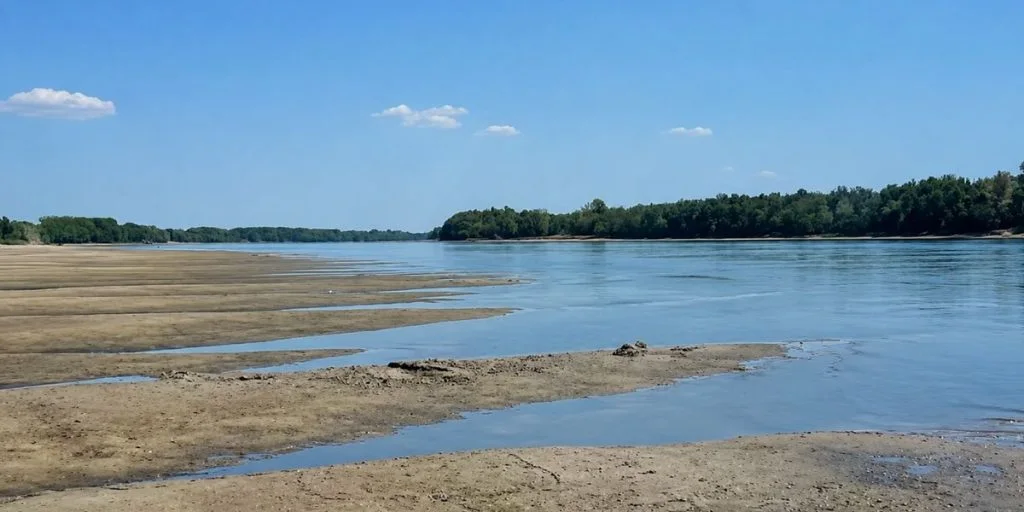
Nuclear plants, cargo shipping and passenger services are being disrupted as depleted sections of major waterways place critical infrastructure under pressure. Governments have introduced emergency measures to protect electricity supplies and keep freight moving.


Low water levels have created problems far beyond commercial shipping. Across south-eastern Europe, power stations that depend on the Danube for cooling or electricity generation have been forced to reduce output, adjust operations and prepare for further disruption.
Romania moved to shut both reactors at the Cernavoda nuclear plant after decades-low water levels reduced the Danube flow needed for cooling. Reuters reported that the second 706-megawatt reactor was scheduled to go offline three days after the first, marking the first time both units had been disconnected from the grid simultaneously because of low water.
The shutdowns increased Romania’s reliance on imported electricity at a time when heatwave conditions had already pushed demand higher. According to Reuters, the Danube was flowing into Romania at 1,650 cubic metres per second, compared with a typical July range of about 4,750 cubic metres per second.
In Hungary, low river levels forced the Paks nuclear plant to shut one of its four reactors. Serbia was also facing pressure on hydroelectric generation, while exceptionally low water near Prahovo exposed German military vessels sunk in the Danube during the Second World War.


Shipping routes lose capacity
Low water also affected passenger transport. The Guardian wrote that 186 people were evacuated on July 28 after the Viking Ullur cruise ship grounded on a sandbank near Vidin, Bulgaria. Ferry crossings and grain-barge operations were suspended farther downstream during the same period.
On the Rhine, the Kaub gauge fell to about 25 centimetres, matching the record registered in 2018, according to the Financial Times. The measurement does not represent the river’s full navigable depth, but operators use it to determine how much cargo vessels can carry.
Lower readings force barges to reduce their loads, increasing the number of journeys required to transport chemicals, fuel, coal and metals. Manufacturers along the river consequently face higher costs, delivery delays and possible production cuts.
Research by the Kiel Institute for the World Economy found that a month of low water on the Rhine can reduce German industrial production by about one percent.
The Guardian also highlighted ecological and cultural consequences, including fish deaths, lower oxygen levels and the decline of traditional fishing activity as part of the argument that prolonged drought is changing communities built around major European rivers.
Without sustained rainfall, low water levels are expected to continue disrupting electricity generation, river transport and industrial supply chains across parts of Europe.
Sources: The Guardian; Reuters; Financial Times; Kiel Institute for the World Economy.



