
 Kenneth Glad
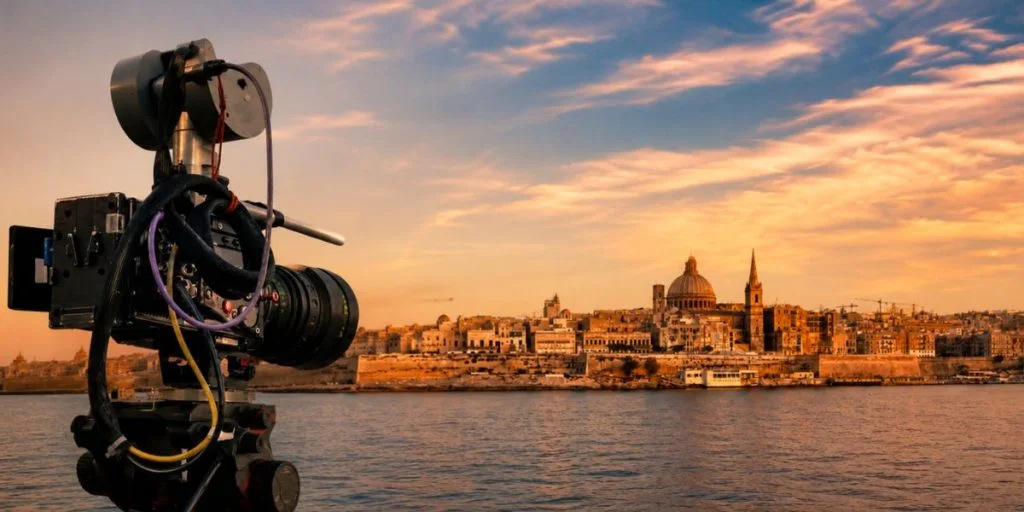
An expanding production business has brought international investment and year-round work to the Mediterranean country. Its success is also raising harder questions about public incentives, local talent and the pressures created by constant filming.


A rebate worth as much as 40 percent has become one of Malta’s most powerful tools for drawing major film and television productions to its shores.
Official Malta Film Commission guidelines set a standard rebate of 30 percent on eligible expenditure for qualifying live-action projects, with up to another 10 percentage points available for meeting criteria involving Maltese cultural elements and greater use of local resources.
Against that backdrop, The Guardian reports that Malta hosted 36 major productions in 2025 and that all qualified for rebates of 40 percent. More than 30 film and television projects have been made there annually in each of the past three years.
The policy places Malta inside a broader European competition for productions whose budgets can be moved across borders. Financial incentives have become increasingly important in determining where films are financed and shot.


A 2026 European Audiovisual Observatory study found that production incentives accounted for 21 percent of the financing of European theatrical fiction films released or scheduled for release in 2023. Combined with direct public funding, public support represented 47 percent of financing in the study’s sample.
The incentives reshape production
The European Audiovisual Observatory says tax credits, rebates and similar schemes have become central to audiovisual policy, influencing investment, employment, infrastructure and competition between production territories.
Malta has pursued that competition with both financial incentives and established production facilities. Its relationship with international filmmaking stretches back to the silent era, while specialised water tanks have since helped make the islands particularly useful for maritime productions.
Malta’s history as an international filming destination dates back to 1925, when the British silent film Sons of the Sea became the first known feature production to shoot on the islands, decades before a domestic Maltese film industry began to emerge.
Film commissioner Johann Grech says the industry has changed considerably from the days when production work was largely seasonal. “Now, we have an industry that is working every day, all year round.”
Malta’s geography gives location managers another reason to consider the islands. Historic streets, Mediterranean architecture and coastal scenery can be used to recreate very different parts of the world, allowing productions to shift between settings without moving between countries.
The Guardian reported that Malta has recently doubled for locations including Greece, Sicily, southern France and the Caribbean. Large productions such as Gladiator II and Jurassic World Rebirth have also filmed there, illustrating the scale of international projects the country can now attract.
Malta is increasingly appearing on screen as itself, too. The third Enola Holmes film uses the island as part of its setting, while Stephen Poliakoff’s planned television production The Order is set around events leading up to the 1565 Ottoman siege of Malta.
But attracting international productions and developing a strong domestic film industry are not necessarily the same thing.
Local filmmakers face another reality
International productions create steady demand for Maltese crews, technicians and facilities, but their larger budgets can also drive wages beyond what smaller domestic projects can afford.
Malta-based screenwriter and former film critic Teodor Reljic described that divide to The Guardian: “There’s a bit of a parallel universe: People in servicing are thriving, but local film-makers can’t pay a DOP [director of photography] because they are expecting Jurassic World fees.”
The contrast is especially striking given Malta’s limited domestic output. In recent years, the country has typically produced only a handful of feature films annually, even as dozens of international film and television projects have used Malta as a production base.
That imbalance highlights a broader challenge for smaller European film industries. Foreign productions can create jobs, strengthen technical expertise and support local businesses, but a successful service sector does not necessarily translate into more opportunities for homegrown filmmakers.
The effects of the boom are also being felt outside the industry. The Guardian says there are complaints about road closures and parking restrictions when Maltese neighbourhoods are transformed into film sets. Equipment linked to a production in Valletta recently damaged a century-old statue and a historic pedestal in St George’s Square, prompting further criticism.
Malta has gained jobs, spending and international exposure from its production boom. But the pressure on local budgets and crews raises a harder question: whether the country can remain a major filming hub while still giving Maltese filmmakers room to make their own work.
Sources: The Guardian, European Audiovisual Observatory, Malta Film Commission



