
 Lauge Risom Koch

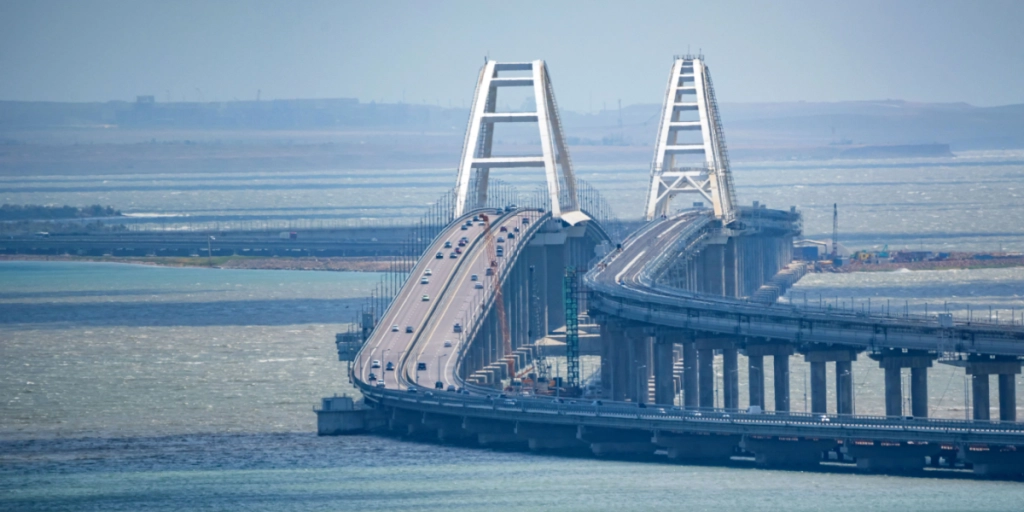
Russia is releasing up to 20 billion rubles ahead of schedule to upgrade its land highway to occupied Crimea after Ukrainian strikes damaged the Crimean Bridge and storms halted ferry crossings.

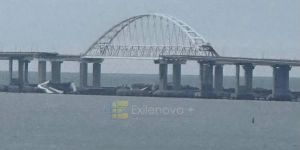
The Russian government announced on Friday, November 20, that it will release up to 20 billion rubles, or approximately $244 million, ahead of schedule to upgrade its land highway to occupied Crimea. According to the Kyiv Post, the emergency funds will be drawn from Moscow’s reserve fund before the end of 2026 as motorists are diverted away from the damaged Crimean Bridge. The overland route connects Rostov-on-Don with occupied Mariupol, Melitopol, and Simferopol, carrying both civilian traffic and military supplies.
Up to 10 billion rubles will finance two construction stages of a bypass around occupied Mariupol, with up to 5 billion rubles designated for each phase. The remaining 10 billion rubles will pay for major repairs and road widening along three sections of the R-280 highway in the occupied Zaporizhzhia region. By accelerating the funding, Russian authorities aim to ease severe logistical bottlenecks along the Sea of Azov coast.
According to a government statement carried by state news agency TASS, the first stage of the Mariupol bypass is projected to reach 30% completion by the end of 2026, while the second stage should reach 50%. The overall bypass project carries an estimated total cost of 24.46 billion rubles and is scheduled for full completion in 2028 to keep transit traffic out of Mariupol’s city streets. In a separate decision, Moscow also allocated more than 5.3 billion rubles for regional and urban road repairs in the occupied part of the Donetsk region.
Crimean Bridge strikes and storm disruptions
The accelerated road spending follows repeated Ukrainian attacks on the Crimean Bridge, which serves as a primary supply artery for Russian forces in Crimea and southern Ukraine. On November 17, a Ukrainian Security Service operation destroyed a major road arch and the span beneath it, forcing authorities to close road traffic across the strait. Two nights later, Ukrainian forces launched Neptune coastal missiles that damaged the bridge’s railway tracks and temporarily halted train movements.


Russia’s Transport Ministry reported that trains subsequently resumed operating on a single track while repair crews worked on the second line. Deputy Prime Minister Marat Khusnullin stated on November 19 that authorities were evaluating reconstruction options and might reopen certain road sections within one or two months. However, officials have not provided a timeline for fully restoring traffic across the crossing.
Severe weather has compounded the transit crisis by shutting down maritime alternatives across the Kerch Strait. A storm on November 19 forced officials to suspend vehicle ferry crossings and postpone the November 20 launch of a free passenger boat service. Meanwhile, long-distance trains inside occupied Crimea are terminating in Kerch until at least November 23, requiring passengers to complete their journeys by bus.
Broader Ukrainian campaign against Russian logistics
The strikes on the Kerch crossing form part of a wider Ukrainian military campaign targeting key transport bridges used by Russian forces. On November 14 and 15, Ukrainian strikes damaged bridges near Taganrog and across the Mius Estuary inside Russia’s Rostov region. These crossings sit along vital supply corridors linking Russian territory to occupied areas of eastern and southern Ukraine.
Ukraine’s General Staff also reported that forces damaged a bridge over the Siverskyi Donets River near Pryshyb in the occupied Luhansk region on November 15. By hitting multiple river and coastal crossings simultaneously, Ukrainian forces aim to systematically degrade Moscow’s rear-area transport network. The coordinated strikes place mounting strain on Russian engineering units tasked with maintaining front-line access.
According to the Ukrainian General Staff, disabling these bridges forces Russian supply columns onto longer detours and creates heavy traffic congestion. These delays slow the movement of ammunition, fuel, and reinforcements heading toward Russian troops in the south. As a result, Moscow is increasingly reliant on the vulnerable overland highway corridor through occupied southern Ukraine.



