
 Kenneth Glad
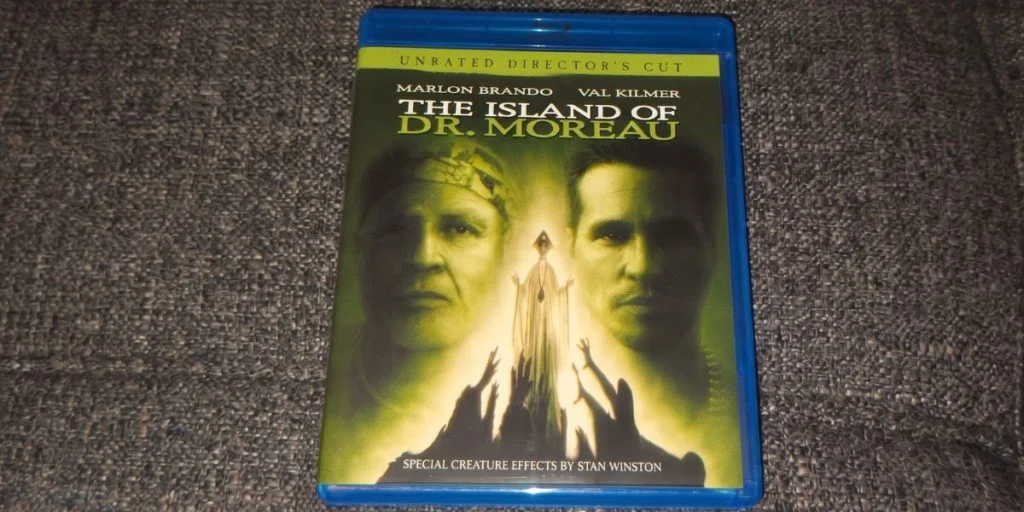
An ambitious adaptation became famous for reasons that had little to do with its story. Three decades later, its behind-the-scenes history still overshadows much of what appeared on screen.

South African filmmaker Richard Stanley had spent years trying to bring H.G. Wells’s The Island of Dr. Moreau to the screen and was originally hired to direct the 1996 science-fiction horror film. But after being removed from the production during its troubled shoot in Australia, he returned in one of the least expected ways possible: disguised as one of the movie’s creatures.
Golden Globes recounts that extras helped Stanley secretly make his way back onto the set beneath an animal costume. He kept the mask on even during breaks and managed to appear on camera before his presence was discovered.
Years later, Stanley looked back on the episode in Lost Soul: The Doomed Journey of Richard Stanley’s Island of Dr. Moreau, a documentary about the film’s notoriously difficult production. “I had completed the full arc from creative person to dog,” he said.
That moment came after years spent developing H.G. Wells’s novel for the screen. Stanley had initially envisioned a smaller science-fiction horror film centered on the unsettling consequences of Dr Moreau’s attempts to combine human and animal life.


Marlon Brando’s involvement transformed the scale. With a major star attached, the project became more expensive and complicated, bringing heavier expectations and a larger production operation.
The cast also refused to stay settled for long. Bruce Willis withdrew, Val Kilmer joined while seeking fewer working days, James Woods departed, and Rob Morrow briefly took the role of Edward Douglas before leaving after only two days. David Thewlis eventually became the stranded diplomat who discovers Moreau’s experiments.
The set kept changing
By the time filming was underway in Cairns, the problems were no longer limited to casting. Brando delayed his work while grieving his daughter’s death, and Stanley faced mounting pressure as the production expanded beyond the film he had originally planned.
Kilmer added another difficult element. According to the account published by Golden Globes, he questioned Stanley’s direction and repeatedly challenged decisions on set, deepening uncertainty around a filmmaker who was already struggling to keep control.
Then the weather intervened. A hurricane hit Cairns, damaging sets and equipment and bringing filming to a halt. New Line Cinema decided the project needed different leadership and dismissed Stanley by fax.
John Frankenheimer, an experienced director known for handling large productions and demanding performers, was brought in with little preparation time. His arrival also meant another round of rewrites, pushing the movie further from Stanley’s original conception.
Fairuza Balk, who played Moreau’s daughter Aissa, strongly opposed Stanley’s removal and attempted to leave the production. She eventually returned, but her relationship with Frankenheimer quickly became difficult.
In Lost Soul, she recalled the hostility in stark terms: “This man hated my guts.”
Brando changed the atmosphere
Brando’s eventual appearance did little to make the production more conventional. He arrived with white facial makeup, loose clothing, gloves and sunglasses, creating a version of Moreau that looked markedly different from a traditional mad-scientist figure.
Brando had dialogue fed to him through an earpiece rather than relying on memorized lines. His interest in Nelson de la Rosa, who played one of Moreau’s creations, became another unusual feature of the shoot.
Brando wanted de la Rosa beside him more often. Subsequent script changes reduced German actor Marco Hofschneider’s role, while de la Rosa appeared increasingly frequently alongside Brando and was dressed in a manner that visually echoed the star.
Relations among the leading figures remained strained. Frankenheimer and Kilmer clashed, while Brando and Kilmer reportedly engaged in contests over who would leave his trailer first. The delays left other members of the cast and crew waiting for shooting to begin.
Against that background, Stanley’s secret return feels less like a strange footnote than a fitting symbol of the entire experience. He had lost the director’s chair but still found a way back onto the set, hidden inside one of the creatures he had originally helped imagine.
Its reputation survived
When The Island of Dr. Moreau arrived in cinemas in 1996, the turmoil surrounding its production did not translate into commercial success. According to Golden Globes, the film cost about 40 million dollars and grossed roughly 27 million dollars.
Its critical reception added another layer to the story. The film received six Razzie nominations, including Worst Picture and Worst Director, while both Kilmer and Brando were nominated for Worst Supporting Actor. Brando won the award, but he did not show up in person to receive it.
Thirty years after its 1996 release, the production remains one of those rare Hollywood stories in which the making of the movie developed a life almost entirely separate from the movie itself.
The most enduring image may still be Stanley beneath that creature mask: the filmmaker who had been removed from his own project quietly finding his way back into the frame.
Sources: Golden Globes; Lost Soul: The Doomed Journey of Richard Stanley’s Island of Dr. Moreau



